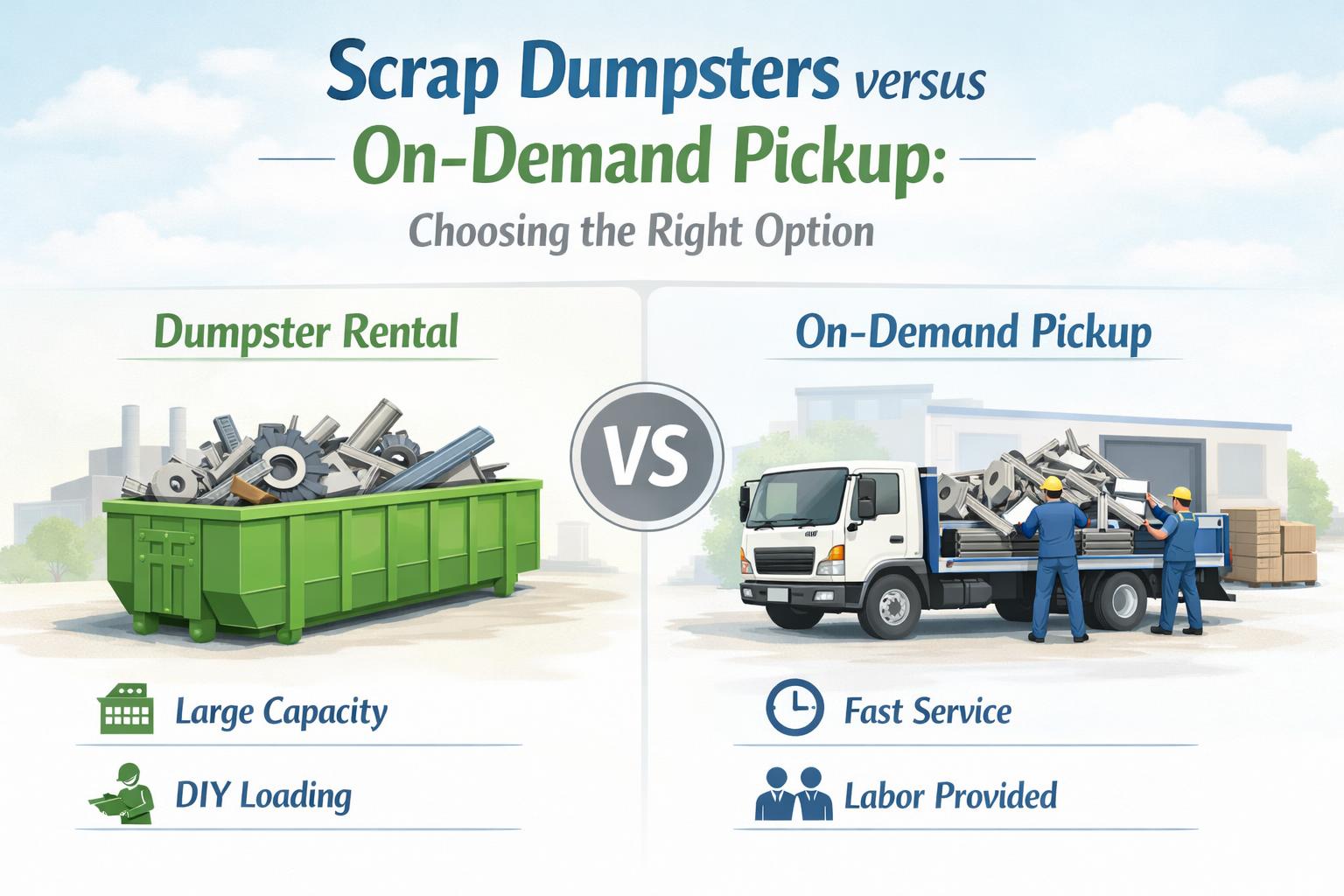
When scrap metal starts piling up at your facility, you face a decision that affects your budget, your workflow, and your available space. Should you rent a scrap dumpster and let materials accumulate until it's full? Or should you schedule on-demand pickup when you have enough material to justify a crew visit?
Both approaches work. Neither is universally better. The right choice depends on your operation's specific circumstances—how much scrap you generate, how fast it accumulates, and what resources you can dedicate to managing it.
This guide breaks down the two main methods for handling commercial scrap metal removal, examines the real trade-offs involved, and helps you determine which option makes sense for your Sacramento or Northern California operation.
Understanding Your Two Main Options
Before diving into comparisons, let's define exactly what each approach involves.
Scrap Dumpsters On-Site
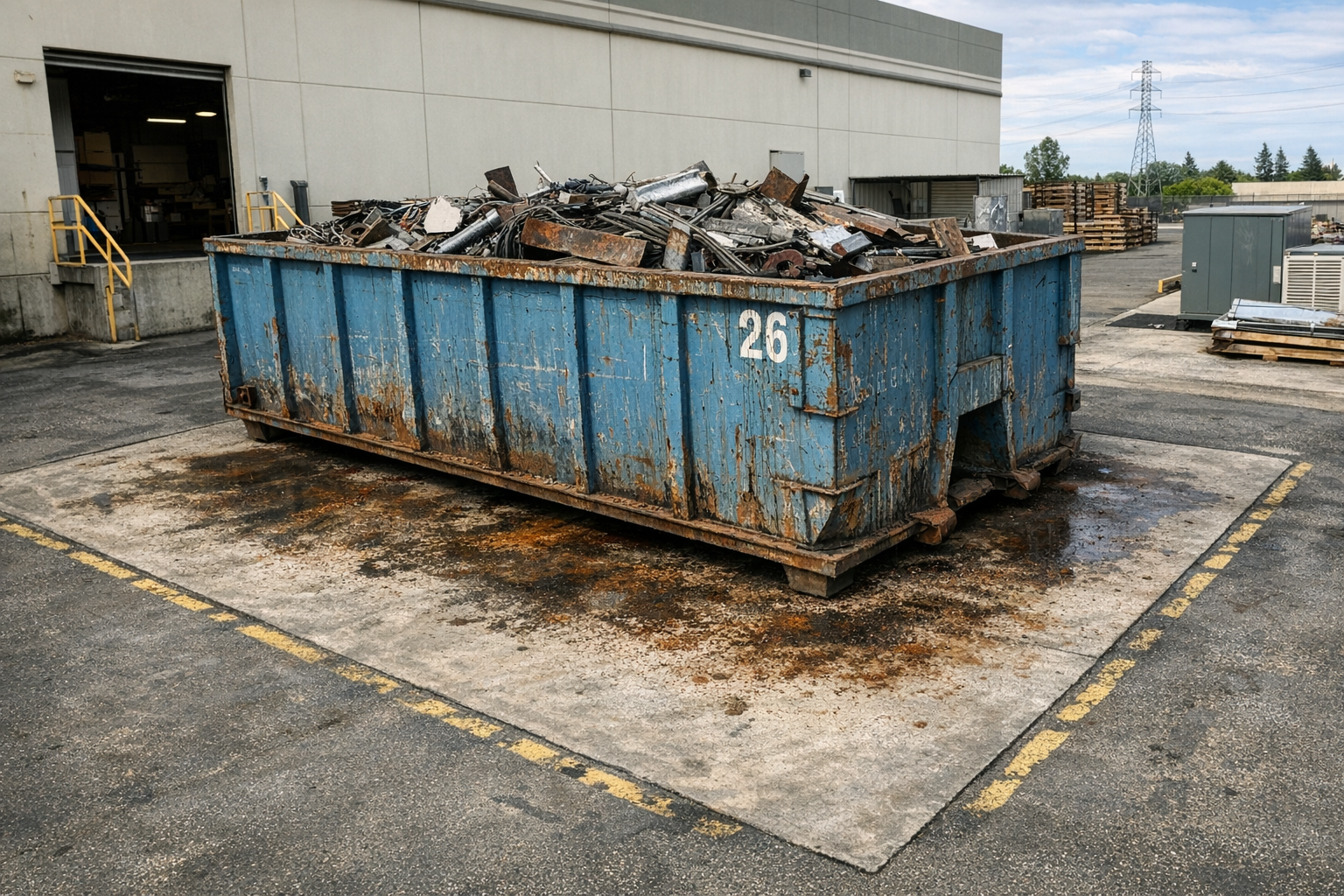
With this model, a container—typically ranging from 10 to 40 cubic yards—sits at your location. Your team deposits scrap metal into the dumpster over time. When the container reaches capacity or a scheduled interval passes, the recycling company swaps it out or hauls it away.
This approach requires:
Dedicated space for the container
Internal labor to move materials to the dumpster
Coordination with the recycling company for pickups
Some basic material sorting (depending on your agreement)
Scheduled On-Demand Pickup
With on-demand pickup, there's no permanent container at your site. Instead, you contact the recycling service when you've accumulated enough material. A crew arrives with their own truck and equipment, evaluates the scrap on-site, loads it themselves, and removes it in a single visit.
This approach requires:
A staging area where materials can accumulate temporarily
Enough material volume to meet pickup minimums (typically around 500 pounds for most providers)
Advance scheduling (though same-week or even same-day service is often available)
The Real Trade-Offs: Space, Cost, and Labor
Every facilities manager or project supervisor weighs these three factors differently. Here's how each approach stacks up.
Quick Comparison: Dumpster vs. On-Demand Pickup
| Factor | Dumpster On-Site | On-Demand Pickup |
| Space Required | Permanent footprint (~22' x 8' for 20-yard container) | Temporary staging area; returns to productive use between pickups |
| Upfront Cost | Monthly rental fees + pickup/swap charges | No rental fees; costs tied to pickup events |
| Labor Burden | Your team handles all material movement and sorting | Pickup crew handles loading; your team only stages materials |
| Best For | High-volume, consistent output; primarily ferrous metals | Variable production; significant non-ferrous materials; space-constrained sites |
| Flexibility | Fixed container location | Stage materials wherever convenient |
| Documentation | Varies by provider | Typically itemized at pickup |
Space Requirements
Dumpster on-site: You need a permanent footprint for the container. A 20-yard dumpster occupies roughly 22 feet by 8 feet of ground space. For operations with tight layouts, loading dock constraints, or multiple waste streams competing for room, this footprint matters.
On-demand pickup: You need temporary staging space that can flex with your production cycle. Materials might spread across pallets, designated floor areas, or outdoor staging zones. The key difference: this space returns to productive use between pickups.
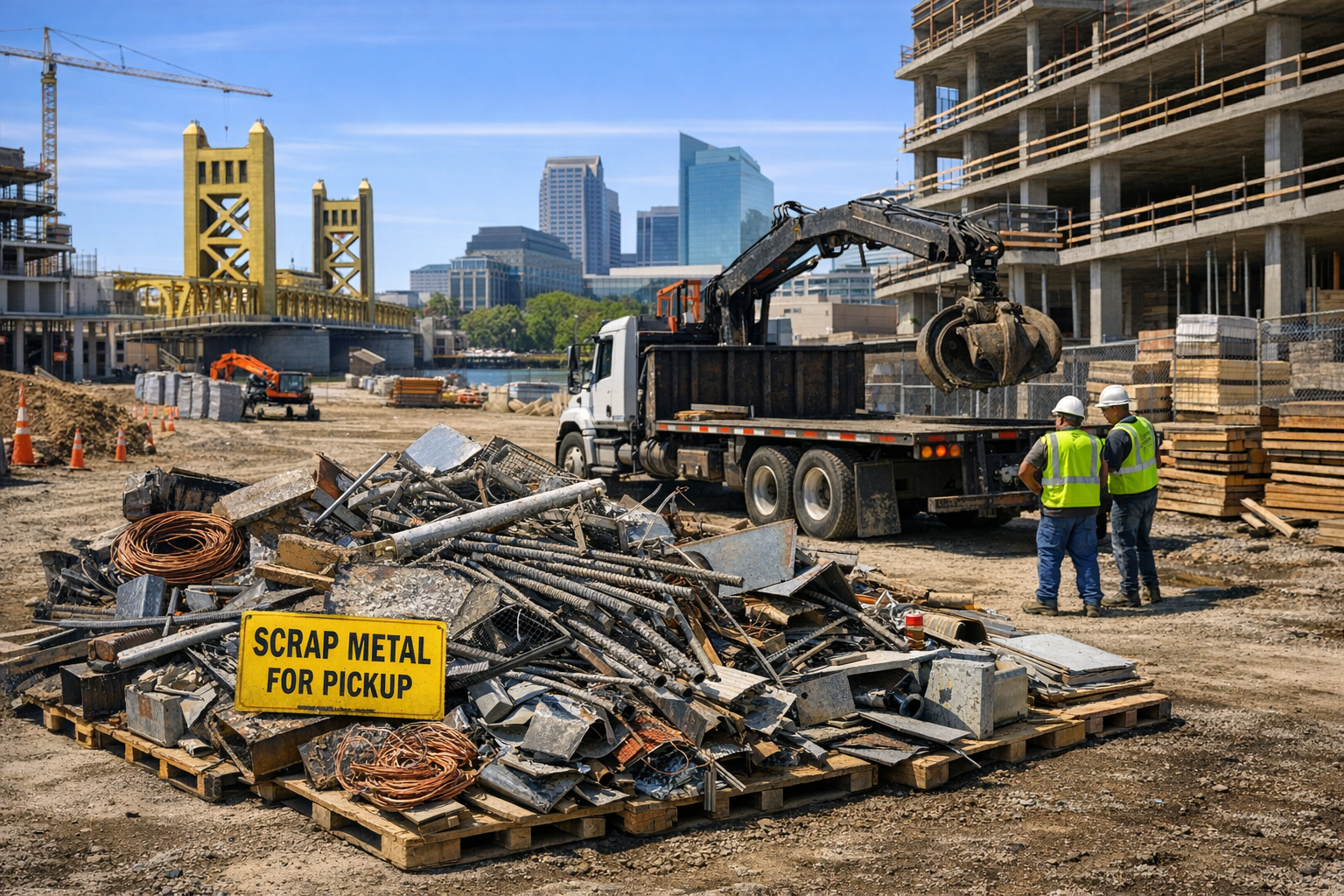
For construction sites especially, where the layout changes as the project progresses, permanent containers can become obstacles. On-demand pickup lets you stage materials wherever makes sense that week.
Cost Considerations
Dumpster on-site: Costs typically include container rental fees (often monthly), pickup/swap charges, and potentially overage fees if you exceed weight limits. Some providers offer "free" containers but factor costs into less favorable material pricing.
On-demand pickup: No rental fees. Costs are tied directly to the pickup event itself. For high-value materials like copper, brass, or clean aluminum, the payout often exceeds any service charges—meaning you receive money rather than pay it [1].
The break-even point depends on your material mix. If you generate mostly low-value steel and iron, a dumpster rental might pencil out. If you produce significant quantities of non-ferrous metals, on-demand pickup often proves more economical.
Labor Impact
Dumpster on-site: Your team handles all movement of materials from point of generation to the dumpster. They also manage basic housekeeping around the container, ensure materials stay sorted appropriately, and coordinate timing with the hauler.
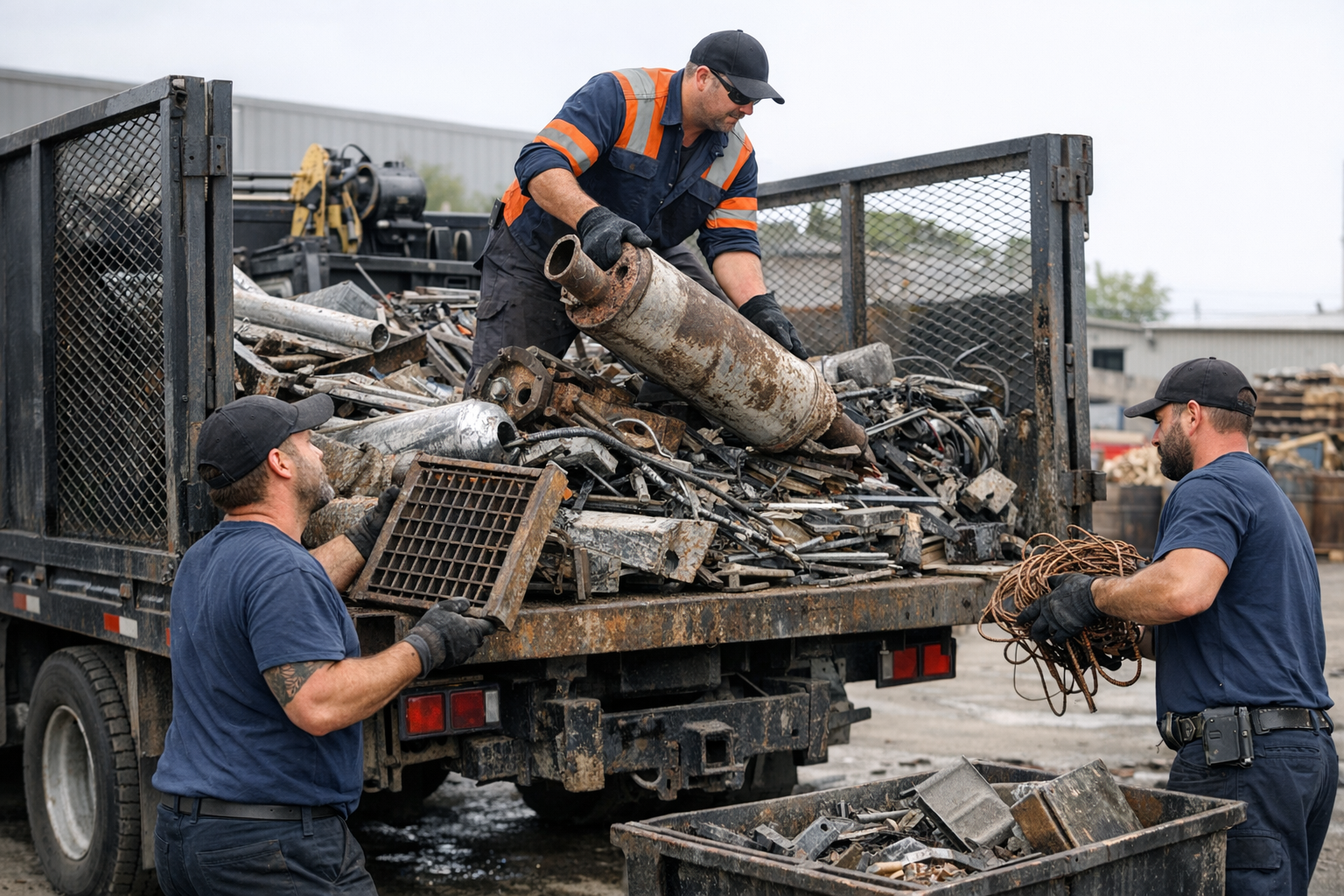
On-demand pickup: The pickup crew handles the heavy lifting. They arrive with equipment, load materials themselves, and leave with everything [2]. Your team's involvement is limited to staging materials in an accessible location and being available to grant site access.
For operations where labor is already stretched thin, the difference is significant. Pulling workers off core tasks to manage scrap handling has real productivity costs that don't always show up on invoices.
Factors That Favor Each Approach
When a Dumpster Makes Sense
Consider an on-site container if your operation has:
Consistent, high-volume output. If you're generating several thousand pounds of scrap weekly without significant fluctuation, a permanent container prevents material from backing up.
Primarily ferrous metals. Steel and iron have lower per-pound values. The convenience of continuous disposal may outweigh any pricing advantage from aggregating larger loads.
Adequate dedicated space. If you have room that isn't needed for other purposes, the footprint cost is minimal.
Staff already assigned to waste management. If someone's job already includes managing materials and coordinating haulers, the incremental burden of dumpster oversight is low.
When On-Demand Pickup Wins
Consider scheduled pickup if your operation has:
Variable production cycles. Renovation projects, equipment upgrades, or seasonal work create uneven scrap volumes. Paying for a container during slow periods wastes money.
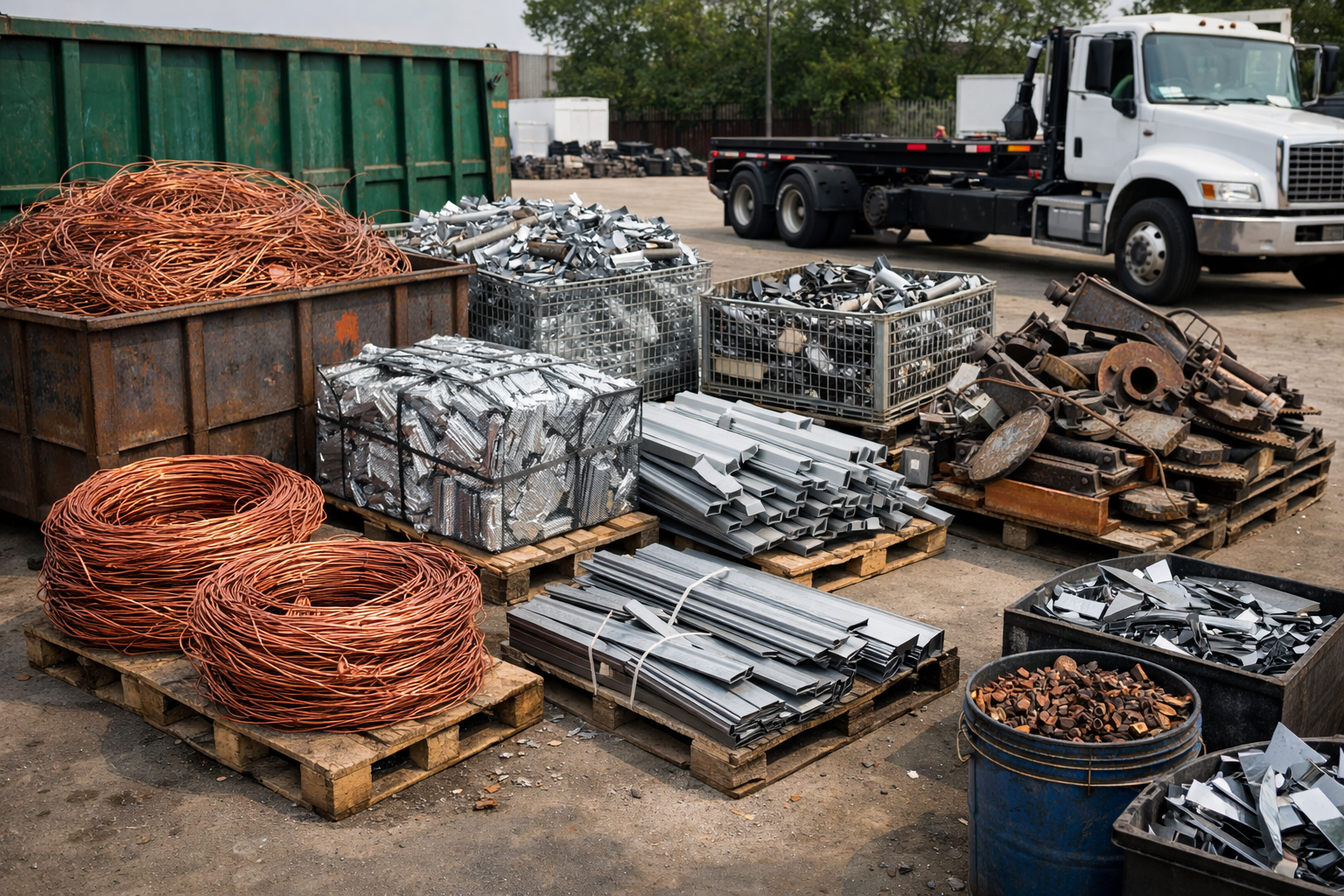
Significant non-ferrous materials. Copper wire, brass fittings, aluminum scrap—these materials command substantially higher prices and benefit from proper evaluation at pickup [3].
Space constraints. Loading docks, active work areas, and customer-facing zones often can't sacrifice permanent space to a dumpster.
Limited internal labor capacity. When every worker-hour matters, having a crew handle the loading makes sense.
Project Scenarios: Which Choice Works Better
Real-world examples illustrate how these factors combine.
Scenario 1: Active Construction Site
A general contractor is six months into a commercial build in the Sacramento area. The site generates scrap continuously—rebar cut-offs, conduit scraps, ductwork trimmings, copper wire from electrical rough-in.
The challenge: Site layout changes constantly. The staging area for concrete differs from the staging area for framing materials. A fixed dumpster location that made sense in month one creates logistical headaches by month three.
Better choice: On-demand pickup. The contractor stages materials in whatever location works that week. When volume justifies it, a mobile recycling crew arrives, evaluates everything on-site, handles removal, and provides documentation for CALGreen compliance purposes. No need to relocate containers or work around permanent obstacles.
Scenario 2: Manufacturing Facility with Consistent Output
A metal fabrication shop produces approximately 3,000 pounds of steel scrap weekly, with minimal variation. The material is predominantly ferrous—cut-offs, failed parts, obsolete tooling.
The challenge: Scrap accumulates daily. Without a removal system, the shop floor becomes cluttered and hazardous. The team needs a simple, predictable solution.
Better choice: On-site dumpster with scheduled weekly or bi-weekly swaps. The container sits in a designated area. Workers deposit scrap as they generate it. The hauler maintains a regular schedule. Minimal coordination required.
Scenario 3: Tire Shop with Mixed Metals
An automotive tire center in Northern California accumulates aluminum rims, steel wheels, lead wheel weights, and occasional copper from brake line repairs. Volume varies with seasonal tire-change rushes.
The challenge: Material mix includes high-value aluminum alongside lower-value steel. A dumpster provider might offer a blended rate that undervalues the aluminum. Space behind the shop is limited.
Better choice: On-demand pickup. The shop stages materials in their small back area. When volume builds—especially after a seasonal rush—they schedule a pickup. The crew separates and evaluates materials properly, ensuring fair compensation for the aluminum while still removing the steel [4].
Scenario 4: Hospital Equipment Replacement
A healthcare facility is replacing 100+ patient beds across multiple departments. The project generates a one-time surge of metal waste—bed frames, rails, mechanisms—that needs quick removal to avoid disrupting patient care.
The challenge: The facility can't dedicate permanent space to a dumpster. The project has a compressed timeline. Staff cannot be pulled from patient care to handle heavy materials.
Better choice: On-demand pickup with rapid turnaround. A mobile recycling team coordinates arrival, handles all removal, and clears the space within the project timeline. No rental period extending beyond actual need. This approach has proven effective for large healthcare projects—one Sacramento-area provider completed removal of 125 hospital beds within 72 hours [5].
The Hidden Factor: Documentation and Compliance
California's construction and demolition recycling requirements mandate that at least 65% of project debris be diverted from landfills [6]. For contractors subject to CALGreen or similar regulations, documentation matters as much as the actual recycling.
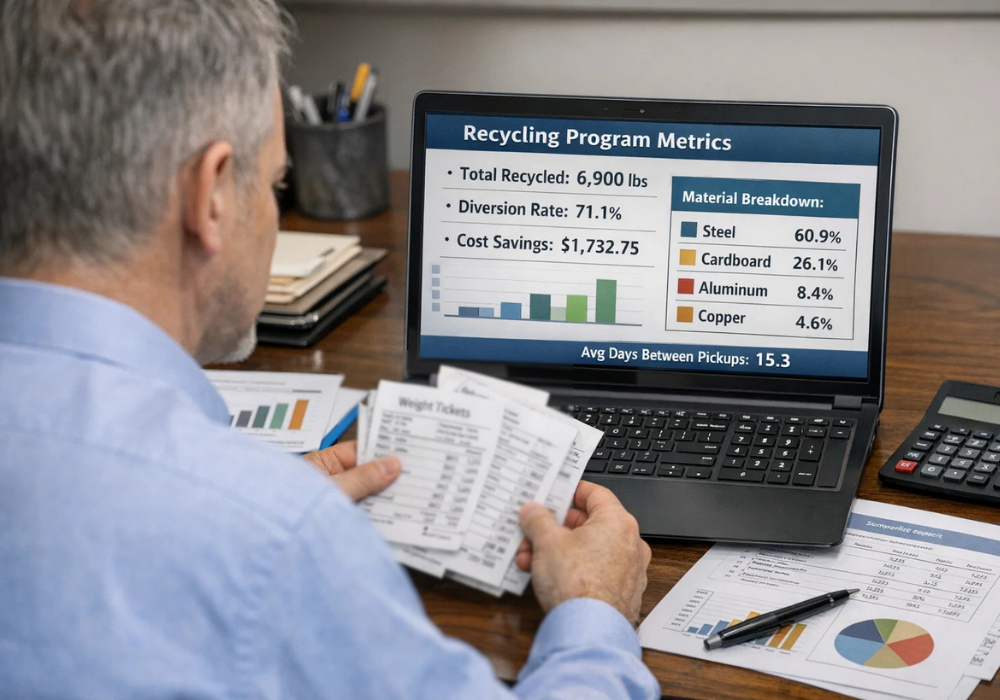
Dumpster approach: Documentation depends on your hauler's practices. Some provide detailed weight tickets; others offer only basic pickup receipts. You may need to request specific compliance documentation.
On-demand pickup: A professional mobile recycling service typically provides itemized documentation at the time of pickup—material types, weights, and disposal verification [7]. This paperwork serves compliance requirements and audit trails.
If your operation must demonstrate recycling percentages, ask specifically about documentation practices before choosing either approach.
Making the Decision: Questions to Ask Yourself
Before committing to either model, work through these questions:
How much scrap do you generate monthly? Low volumes may not justify a dumpster rental; extremely high volumes may require one.
How consistent is that volume? Variable production cycles favor on-demand flexibility.
What's your material mix? High percentages of non-ferrous metals benefit from proper evaluation at pickup.
What space can you dedicate? Consider both square footage and location convenience.
Who will handle the materials internally? If labor is constrained, crew-based pickup offloads significant work.
What documentation do you need? Compliance requirements may dictate which approach serves you better.
How quickly do you need materials removed? Both approaches can accommodate urgency, but response times vary by provider.
A Third Option: Hybrid Approaches
Some operations benefit from combining both models.
A warehouse might maintain a small dumpster for routine steel scrap while scheduling separate pickups for accumulated copper and aluminum. This captures the convenience of continuous ferrous disposal while ensuring proper valuation of higher-value materials.
A construction company might use dumpsters during intensive phases and switch to on-demand pickup during slower periods—avoiding rental costs when generation drops.
The best recycling partners accommodate these hybrid arrangements rather than forcing you into a single model.
Getting Expert Input Before You Decide
Here's something most businesses don't realize: you don't have to figure this out alone.
A recycling service that understands commercial operations can assess your situation and recommend the approach that actually fits—not just the approach that's easiest for them to deliver.
Before ordering any container or committing to a service model, consider requesting a quick consultation. A brief conversation about your material types, volumes, space constraints, and operational priorities can prevent costly mismatches.
The right partner will tell you honestly whether your situation calls for a dumpster, scheduled pickups, or something in between.
Call to Action
Ready to determine which scrap removal option makes sense for your operation? Willis Recycling can evaluate your situation and recommend the approach that fits your space, budget, and workflow. Call (916) 271-2691 to request a quick recommendation before you commit to any container or service agreement.
Frequently Asked Questions
What's the typical minimum for on-demand scrap pickup?Most commercial recyclers require around 500 pounds minimum for a scheduled pickup, though this varies by provider and material type. Regular customers with consistent volume may qualify for smaller recurring pickups. When in doubt, call ahead with an estimate of what you have—a good provider will tell you whether it makes sense to wait and accumulate more or schedule now.
Can I switch between dumpster service and on-demand pickup?Yes. Your scrap removal approach should adapt as your operation changes. Project-based businesses often switch models depending on current work. A good recycling partner accommodates these shifts rather than locking you into rigid contracts. Many Sacramento-area businesses adjust their approach seasonally based on production cycles.
How do I know if my materials qualify for payment versus a service charge?Material value depends on type, volume, and current market conditions. Non-ferrous metals like copper and aluminum typically generate payment. Mixed ferrous loads may result in either payment or a service charge depending on quantity. An on-site evaluation provides clarity before anything is removed—you'll know exactly where you stand before committing.
What happens if I have a mix of materials and don't know how to sort them?Professional recycling services handle mixed loads. While pre-sorting can improve your payout, it's not required. The pickup crew will separate and evaluate materials on-site, ensuring each type is properly categorized. This is one advantage of working with experienced recyclers rather than general waste haulers.
How quickly can on-demand pickup be scheduled?Many providers offer same-week scheduling, with some accommodating same-day requests for urgent situations. Response time varies based on location and current demand. For time-sensitive projects, communicate your timeline when requesting service—most established recyclers can work with tight deadlines when given advance notice.
About Willis Recycling
Willis Recycling is a family-owned mobile recycling service based in Sacramento, serving Northern California businesses since 2017. With nearly two decades of combined industry experience, the team specializes in on-site scrap metal and cardboard pickup for construction firms, auto shops, healthcare facilities, and commercial operations throughout the Greater Sacramento region and Central Valley. All services include ID-verified intake and transparent documentation to ensure compliance and fair evaluation for every customer.
Cited Works
[1] Institute of Scrap Recycling Industries — "Scrap Specifications Circular: Guidelines for Nonferrous Scrap." https://www.isri.org/recycling-commodities/scrap-specifications-circular
[2] Willis Recycling — "Commercial Scrap Metal Pickup Sacramento: Same-Day Service." https://www.willisrecycling.com/commercial-scrap-metal-pickup-sacramento/
[3] iScrap App — "Current Scrap Metal Prices." https://iscrapapp.com/prices/
[4] Willis Recycling — "Materials We Handle." https://www.willisrecycling.com/
[5] Willis Recycling — "Recent Projects: Kaiser Permanente Hospital Bed Removal." https://www.willisrecycling.com/
[6] California Department of Resources Recycling and Recovery — "Construction and Demolition Debris Recycling Requirements." https://calrecycle.ca.gov/condemo/
[7] Willis Recycling — "How It Works: On-Site Evaluation and Documentation." https://www.willisrecycling.com/