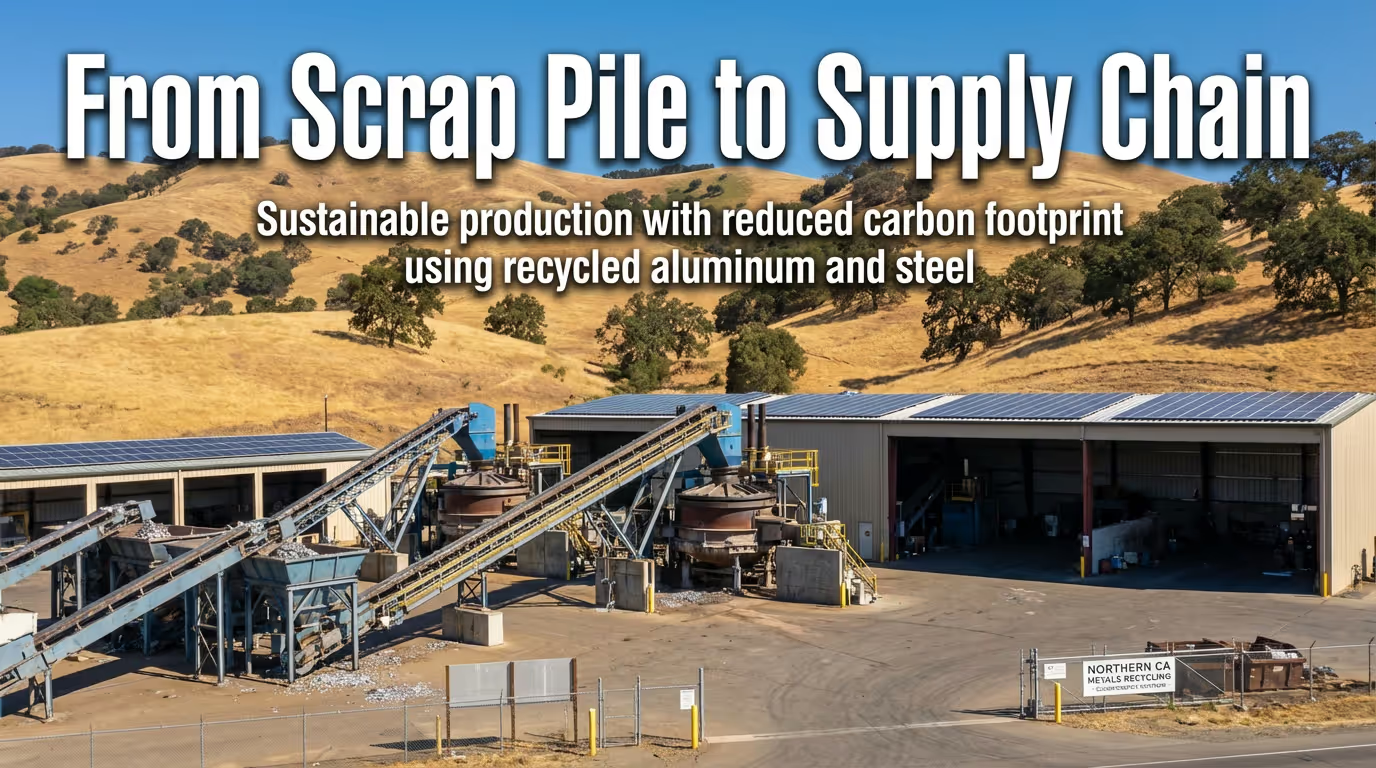
Manufacturers use recycled metals manufacturing to cut production costs, reduce energy consumption by up to 95%, and meet sustainability requirements. Recycled aluminum, steel, and copper maintain the same quality as virgin materials while lowering emissions and providing price stability against volatile commodity markets.
The Business Case for Recycled Metals in Manufacturing
Manufacturing operations across California face mounting pressure to balance cost control with environmental responsibility. Recycled metals manufacturing offers a solution that addresses both priorities.
The numbers tell a compelling story. According to the U.S. Environmental Protection Agency, secondary steel production uses approximately 74% less energy than producing steel from iron ore.[1] The U.S. Department of Energy reports even more dramatic savings for aluminum—secondary aluminum production requires 90% less energy than primary production.[1]
These energy savings translate directly to your bottom line. When you're sourcing materials for production runs, recycled content typically costs less than virgin ore while delivering identical performance characteristics. Metals like aluminum, copper, and steel can be recycled repeatedly without losing their intrinsic properties, making them chemically identical to virgin metals.[2]
For facility managers and sustainability directors, this creates a rare win-win: lower material costs paired with verifiable environmental benefits.
How Recycled Metals Cut Production Costs
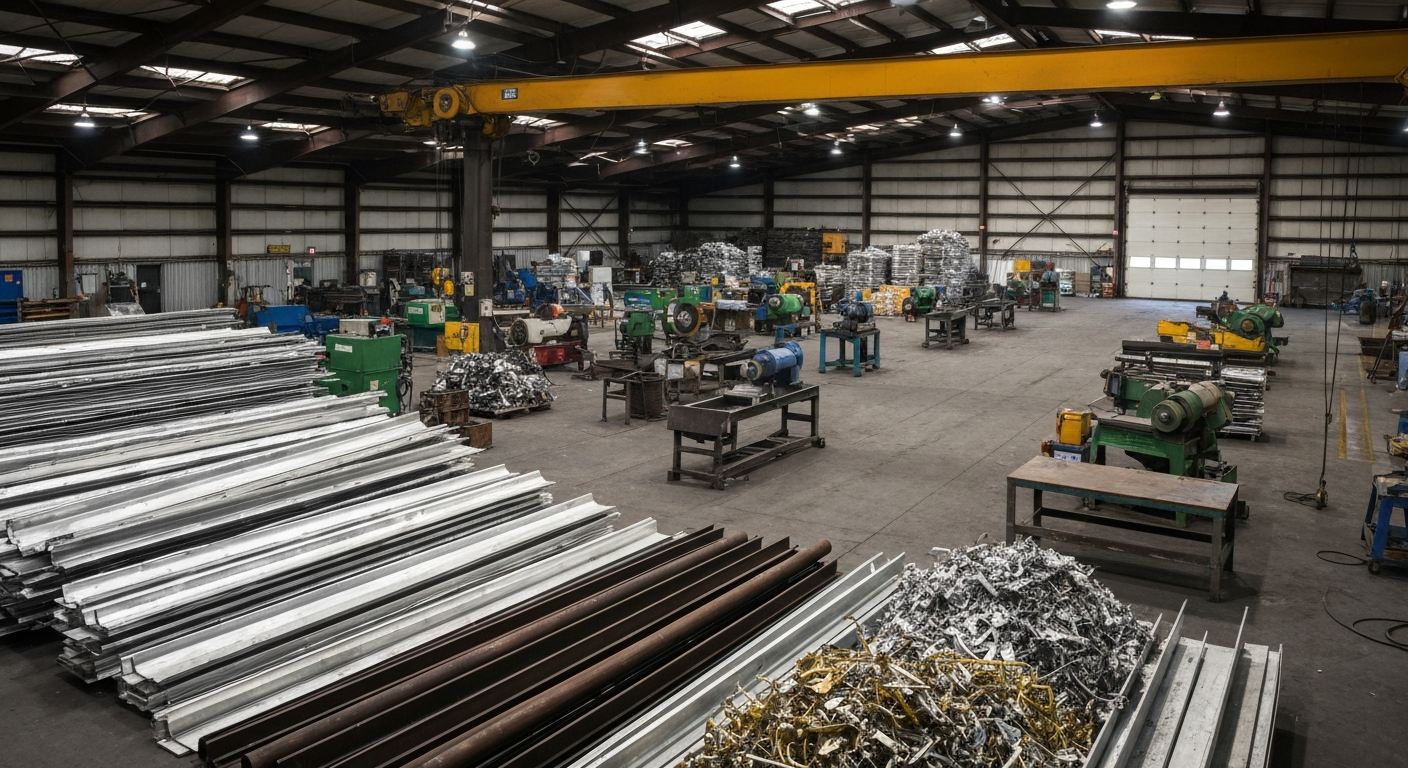
Cost predictability matters when you're managing a manufacturing operation. Virgin metal prices fluctuate with mining output, geopolitical factors, and extraction costs. Recycled metals provide more stable pricing.
Research published in ScienceDirect found that obtaining one ton of copper through urban mining costs an average of $3,000, significantly lower than virgin mining.[3] For aluminum, the cost difference is even more pronounced—recycled aluminum production costs range from $0.20 to $0.50 per kilogram, while primary aluminum production costs between $2.50 and $3.50 per kilogram.[4]
These savings compound over production cycles. If your facility uses 50 tons of aluminum annually, switching to recycled content could save $100,000 or more in material costs alone.
The environmental savings are equally measurable. The Recycled Materials Association (ReMA) reports that using recycled aluminum saves up to 95% of the energy required for producing new aluminum from virgin materials, with similar savings for copper (85%) and steel (74%).[5]
Energy efficiency directly impacts your operational budget. Recycling one ton of steel saves the energy equivalent of 3.6 barrels of oil.[6] At scale, these savings add up quickly.
These savings demonstrate why more manufacturers are shifting toward recycled metals manufacturing as a long-term cost-reduction strategy.
Recycled Metal Quality Matches Virgin Material
This consistent quality is one of the strongest reasons industries adopt recycled metals manufacturing for durable, high-performance applications.
One common misconception needs addressing: recycled metals aren't inferior to virgin materials.
The reality is different. For most manufacturing applications, recycled metals deliver identical performance. Steel, aluminum, and copper retain their molecular structure through multiple recycling cycles.[7] A beam made from recycled steel performs the same as one made from virgin ore.
This makes recycled metals suitable for high-precision applications across automotive, aerospace, and electronics manufacturing.[2] The metallurgical properties remain consistent, which means your production specifications don't change when you switch to recycled content.
The circular economy principles here are straightforward. About 75% of all aluminum ever produced remains in use today through repeated recycling cycles.[4] Steel maintains a global recycling rate above 85%, making it one of the most reused materials globally.[8]
For quality control purposes, modern recycling processes include rigorous purification steps. Electrolysis and other techniques remove contaminants, ensuring recycled metal matches or exceeds virgin material standards.[9]
Environmental Impact That Regulators Notice
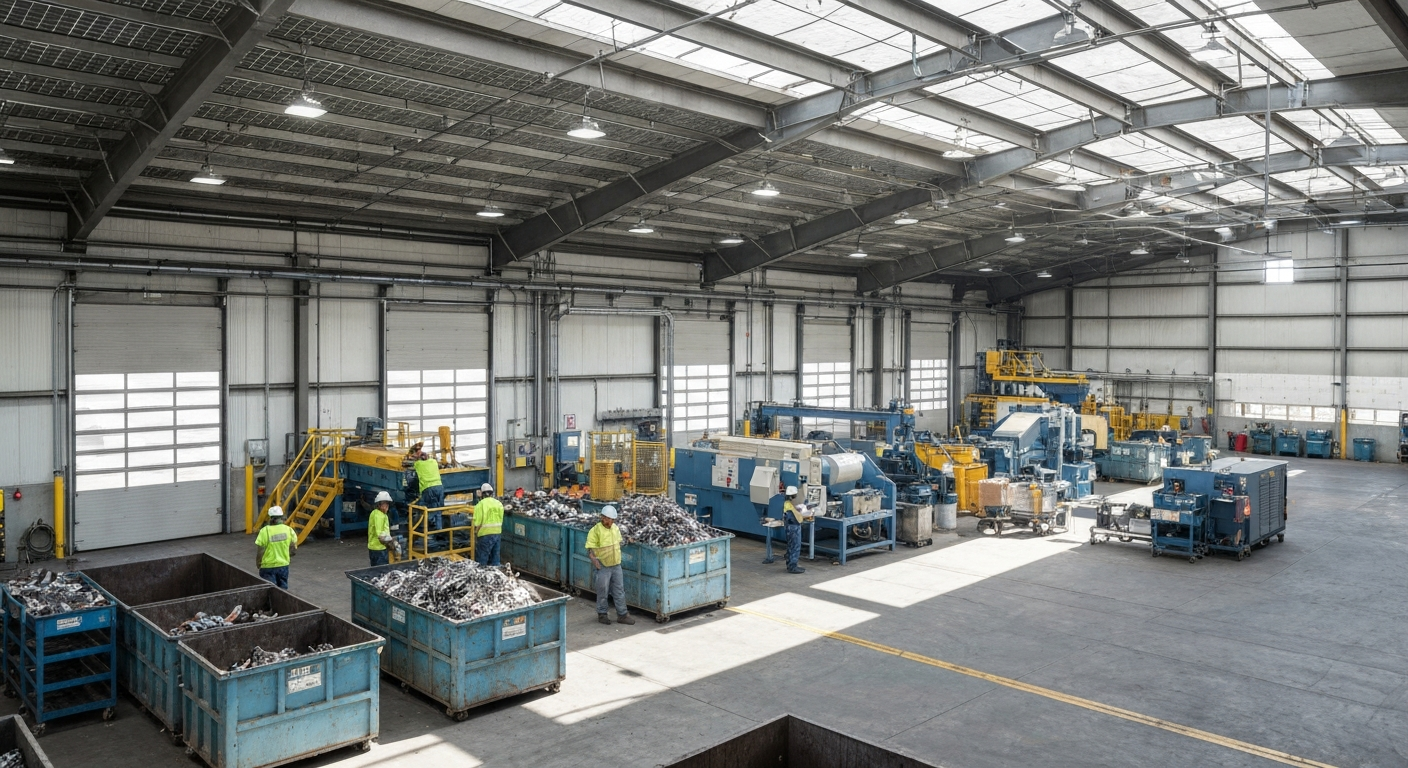
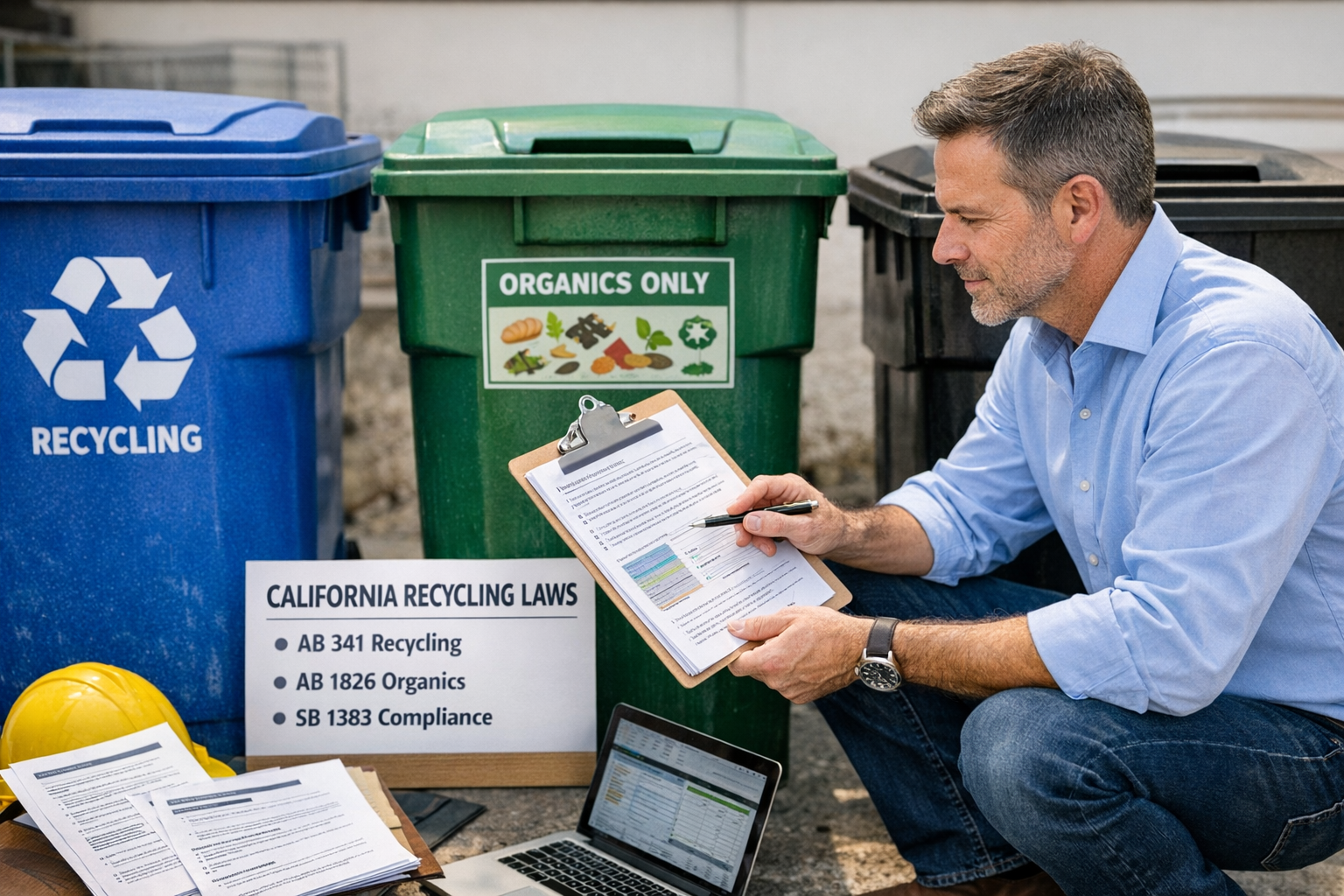
California manufacturers operate in an increasingly regulated environment. Assembly Bill 793, which took effect in 2022, established minimum recycled content requirements for plastic beverage containers—starting at 15% and rising to 50% by 2030.[10] While this legislation targets plastics, it signals a broader regulatory trend toward recycled content mandates.
The environmental case for recycled steel and recycled aluminum is substantial. According to Stena Recycling, using steel scrap instead of virgin ore reduces CO2 emissions by 58%, and using aluminum scrap cuts CO2 emissions by 92% compared to raw aluminum.[11]
At the industry level, these reductions matter. Metal recycling reduces greenhouse gas emissions by approximately 29 million tons of CO2 annually—equivalent to removing 6.3 million cars from the roads.[9]
When scaled across statewide industrial operations, recycled metals manufacturing plays a crucial role in achieving California’s carbon-reduction goals.
Recycling one ton of steel conserves 1.4 tons of iron ore, 0.8 tons of coal, and 0.3 tons of limestone.[11] These resource savings reduce your facility's environmental footprint while supporting compliance with current and future sustainability regulations.
Documenting your recycled content usage creates an audit trail that satisfies both customers and regulators. Many manufacturers now face customer demands for sustainability reporting, and recycled metal content provides clear, quantifiable data points.
Building a Circular Supply Chain Strategy
Smart manufacturers view scrap metal not as waste but as inventory. Every offcut, failed part, and retired component represents material value that can re-enter your supply chain.
Mobile recycling services make this practical for Northern California operations. Instead of accumulating scrap until you have enough to justify transportation costs, on-site pickup transforms your scrap generation into a regular revenue stream.
Consider what's leaving your facility as waste:
Aluminum machining scraps from production lines
Steel offcuts from fabrication work
Copper wire and components from electrical assemblies
Brass fittings and parts from various processes
Each material type has distinct market value. Copper consistently ranks among the most valuable common scrap metals.[12] Aluminum processes quickly—recycled aluminum can be transformed into new products within 60 days.[12]
The operational model is simple: regular pickups prevent scrap accumulation, free up floor space, and generate consistent payments. For facilities in Sacramento and the surrounding Central Valley, mobile pickup eliminates the need to transport materials to distant recycling centers.
This ecosystem approach—where your manufacturing waste feeds back into the supply chain through recycled metals manufacturing—reduces reliance on virgin material markets while creating a more resilient production system.
Audit Your Scrap Streams for Hidden Value
Many manufacturing operations undervalue their scrap streams. A systematic audit often reveals missed opportunities.
Start by tracking what leaves your facility:
Daily or weekly scrap generation by material type
Current disposal or recycling arrangements
Pricing you're receiving for recyclable materials
Hidden costs (transportation, storage, labor)
Compare your current situation against market rates. Scrap metal prices fluctuate, but knowing the baseline helps you negotiate better terms and identify the most valuable materials.
Some facilities discover they're paying for disposal of materials that should generate revenue. Others find they're selling mixed scrap when segregated materials would command premium pricing.
The California regulatory environment increasingly favors documented recycling programs. Even if your industry doesn't face specific recycled content mandates today, establishing tracking systems now positions you ahead of future requirements.
For manufacturers looking to optimize scrap handling, mobile pickup services offer several advantages: no minimum load requirements, regular service schedules that match your production rhythm, and documentation that supports sustainability reporting.
Properly categorizing scrap not only increases revenue but also strengthens your facility’s integration with recycled metals manufacturing supply chains.
Reducing Your Carbon Footprint Through Metal Recycling
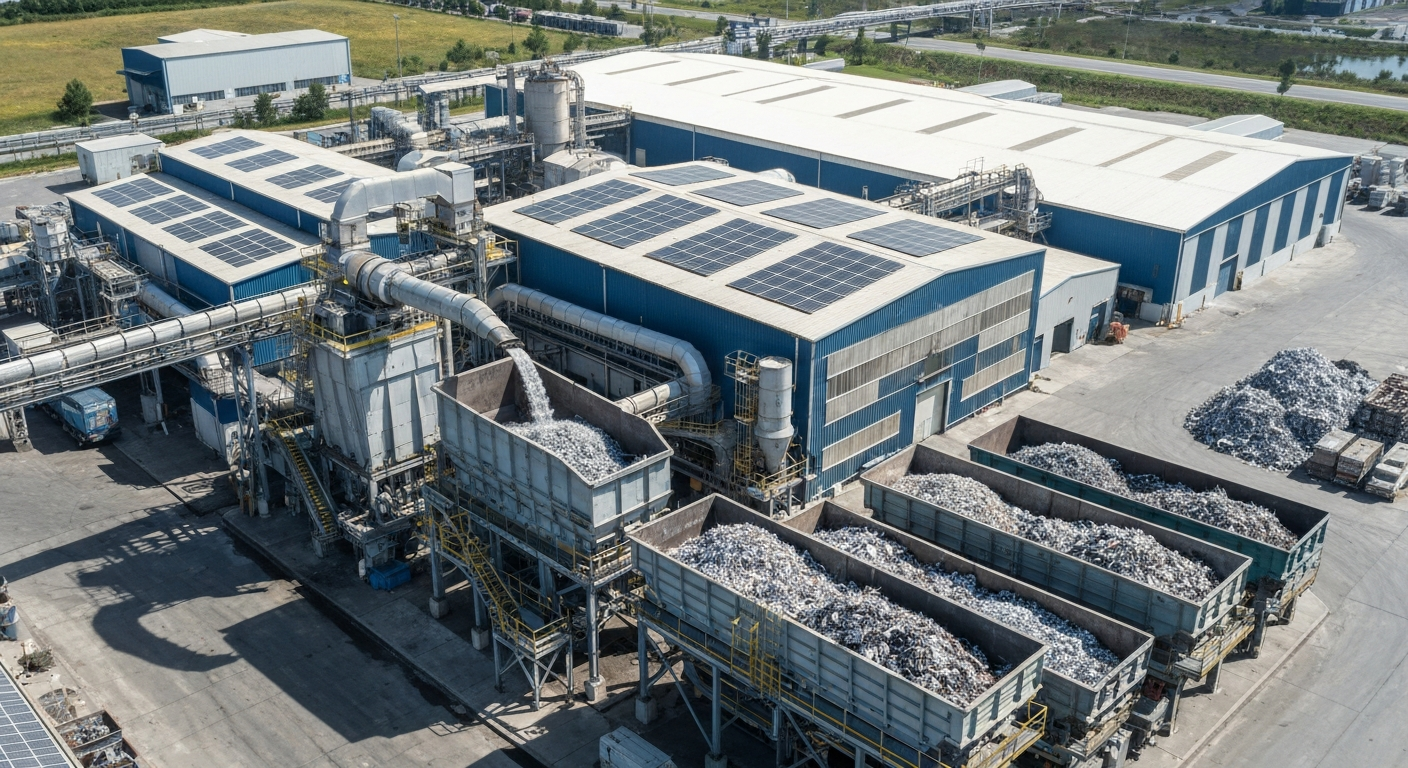
The phrase "reducing carbon footprint" matters more to your stakeholders each year—from customers to investors to community members.
Metal recycling provides concrete metrics. When you use recycled aluminum, you're documenting a 95% energy savings compared to virgin production.[1] For steel, the figure is 74%.[1] These aren't estimates—they're verified by federal agencies including the EPA and Department of Energy.
The National Institute of Standards and Technology (NIST) highlights advanced recycling technologies and decarbonization strategies as essential components of sustainable metal manufacturing.[8] As more industries commit to carbon reduction targets, documenting recycled content in your products becomes a competitive advantage.
Manufacturing with recycled metals also reduces water consumption. Recycled aluminum production requires significantly less water than primary production, an increasingly important consideration in California's water-conscious environment.[4]
Your scrap metal recycling program contributes to a larger sustainability ecosystem. Each ton of steel recycled prevents 1.67 tons of CO2 emissions.[11] When aggregated across your annual production, these reductions become material to your environmental reporting.
Getting Started with Recycled Metal Programs
Implementing a recycled metal program doesn't require complex infrastructure changes. For most Northern California manufacturers, the path forward is straightforward.
Begin by assessing your current metal inputs. Which materials could be sourced with recycled content? Aluminum, steel, copper, and brass are widely available in recycled form without quality compromises.
Next, evaluate your scrap outputs. What's your facility generating that could be recovered? Even small volumes add up over time, and regular pickup services make collection practical for operations of any size.
Contact suppliers about recycled content options. Many metal distributors now stock recycled materials at competitive prices. If your specifications allow flexibility, recycled content often costs less while meeting the same performance standards.
For scrap collection, mobile recycling services eliminate logistical barriers. On-site pickup means you don't need dedicated staff to haul materials offsite or storage space for accumulation.
Documentation matters. Track both your recycled content purchases and your scrap recovery volumes. These metrics support sustainability reporting and demonstrate your commitment to circular economy principles.
California manufacturers have an advantage—the state's established recycling infrastructure and progressive regulations support recycled metals manufacturing initiatives that lower costs and strengthen sustainability compliance.
Contact Willis Recycling to schedule an assessment of your scrap metal streams and explore mobile pickup options that fit your production schedule.
Frequently Asked Questions
Q: What types of metals can manufacturers recycle without quality loss?
A: Aluminum, steel, copper, brass, and bronze can all be recycled indefinitely without degrading their essential properties. These metals maintain their molecular structure through multiple recycling cycles, making them chemically identical to virgin materials. Steel has a global recycling rate above 85%, while approximately 75% of all aluminum ever produced remains in use today through repeated recycling. For manufacturing applications requiring specific strength, conductivity, or corrosion resistance, recycled metals perform identically to virgin materials at lower costs.
Q: How long does it take to turn scrap metal into new manufacturing materials?
A: The metal recycling timeline varies by material type and processing requirements. Recycled aluminum can be transformed into new products within 60 days from collection through manufacturing. Steel recycling typically takes 4-8 weeks depending on sorting, processing, and remelting requirements. The process includes collection, sorting by type and composition, shredding or compacting, melting at material-specific temperatures, purification to remove contaminants, and solidification into forms ready for manufacturing use.
Q: Are there regulations requiring manufacturers to use recycled content?
A: California leads the nation in recycled content regulations. Assembly Bill 793, effective since 2022, requires plastic beverage containers to contain minimum recycled content—15% initially, rising to 25% by 2025 and 50% by 2030. While current metal recycling mandates are limited, the regulatory trend favors documented recycling programs. Several states have proposed similar legislation for various materials, and California's progressive stance suggests future expansions. Establishing recycled content tracking systems now positions manufacturers ahead of likely future mandates.
Q: How do manufacturers document recycled content for sustainability reporting?
A: Manufacturers document recycled content through supplier certifications, purchase records showing recycled material specifications, weight or volume tracking of recycled inputs, and third-party verification when required by specific regulations. Many metal suppliers now provide documentation confirming recycled content percentages, which feeds into corporate sustainability reports, carbon footprint calculations, and customer disclosures. For scrap metal programs, service providers typically supply pickup records showing material types and volumes collected, creating an audit trail for both procurement and waste reduction claims.
Q: What's the difference between primary and secondary metal production?
A: Primary production creates metal from virgin ore through energy-intensive mining, extraction, and refining processes. Secondary production uses recycled scrap metal, bypassing resource extraction and requiring significantly less energy. According to the U.S. Energy Information Administration, secondary steel production uses 74% less energy than producing steel from iron ore, while secondary aluminum production requires 90% less energy than primary production. Secondary production typically costs less, generates fewer emissions, and produces materials with identical properties to primary production outputs.
About the Author
Author Byline: Written by the Willis Recycling team. Willis Recycling specializes in mobile scrap metal recycling services for Northern California manufacturers, construction contractors, and commercial operations. Our expertise in aluminum, steel, copper, and brass recycling helps businesses optimize material recovery while reducing environmental impact.
Review Note: This article presents industry data from authoritative sources including the U.S. Environmental Protection Agency, U.S. Energy Information Administration, and peer-reviewed research. Material costs and energy savings figures are current as of November 2024 and verified through government and industry sources.
YMYL Disclaimer: This article provides general information about metal recycling in manufacturing operations. Specific cost savings, regulatory compliance requirements, and operational implementations vary by facility, location, and industry segment. Manufacturers should consult with qualified recycling professionals and legal advisors regarding specific compliance obligations and operational changes.
Works Cited
[1] U.S. Energy Information Administration — "Recycling is the primary energy efficiency technology for aluminum and steel manufacturing." https://www.eia.gov/todayinenergy/detail.php?id=16211. Accessed: 2025-11-24.
[2] Metalbook — "Recycled Metals: Smart, Sustainable Choice with Metalbook." https://www.metalbook.com/blogs/recycled-metals-vs-virgin-metals-environmental-and-economic-benefits/. Accessed: 2025-11-24.
[3] ScienceDirect — "Comparing the costs and benefits of virgin and urban mining." https://www.sciencedirect.com/science/article/pii/S2096232021000287. Published: 2021-05-27. Accessed: 2025-11-24.
[4] Okon Recycling — "What is Aluminum Recycling and Why Analyze Its Costs?" https://www.okonrecycling.com/industrial-scrap-metal-recycling/steel-and-aluminum/aluminum-recycling-costs/. Published: 2025-06-05. Accessed: 2025-11-24.
[5] Richmond Steel — "Scrap Metal Recycling & the Circular Economy." https://richmondsteel.ca/scrap-metal-recycling-circular-economy/. Published: 2024-04-19. Accessed: 2025-11-24.
[6] U.S. Environmental Protection Agency — "Environmental Factoids." https://archive.epa.gov/epawaste/conserve/smm/wastewise/web/html/factoid.html. Accessed: 2025-11-24.
[7] Metals Cut 4U — "Can Metals Be Recycled?" https://metalscut4u.com/blog/post/can-metals-be-recycled.html. Published: 2025-01-28. Accessed: 2025-11-24.
[8] National Material Company — "The Circular Economy of Metal Processing Sustainability." https://www.nationalmaterial.com/the-circular-economy-of-metal-processing-sustainability/. Published: 2025-06-16. Accessed: 2025-11-24.
[9] Okon Recycling — "Metal Recycling: Types, Process, Benefits & Challenges." https://www.okonrecycling.com/industrial-scrap-metal-recycling/steel-and-aluminum/metal-recycling-importance/. Published: 2025-09-19. Accessed: 2025-11-24.
[10] California Department of Resources Recycling and Recovery — "Manufacturer of Postconsumer Recycled (PCR) Plastic Reporting Requirements." https://calrecycle.ca.gov/bevcontainer/bevdistman/manufacturerofpcr/. Accessed: 2025-11-24.
[11] Stena Recycling — "The value of recycling metals for sustainability." https://www.stenarecycling.com/news-insights/insights-inspiration/guides-articles/the-value-of-recycling-metals/. Published: 2025-07-02. Accessed: 2025-11-24.
[12] Okon Recycling — "Best Metals to Recycle for Cash: A Guide to High-Value Scrap." https://www.okonrecycling.com/industrial-scrap-metal-recycling/steel-and-aluminum/best-metals-to-recycle/. Accessed: 2025-11-24.
[1] U.S. Energy Information Administration — "Recycling is the primary energy efficiency technology for aluminum and steel manufacturing." https://www.eia.gov/todayinenergy/detail.php?id=16211. Accessed: 2025-11-24.
[2] Metalbook — "Recycled Metals: Smart, Sustainable Choice with Metalbook." https://www.metalbook.com/blogs/recycled-metals-vs-virgin-metals-environmental-and-economic-benefits/. Accessed: 2025-11-24.
[3] ScienceDirect — "Comparing the costs and benefits of virgin and urban mining." https://www.sciencedirect.com/science/article/pii/S2096232021000287. Published: 2021-05-27. Accessed: 2025-11-24.
[4] Okon Recycling — "What is Aluminum Recycling and Why Analyze Its Costs?" https://www.okonrecycling.com/industrial-scrap-metal-recycling/steel-and-aluminum/aluminum-recycling-costs/. Published: 2025-06-05. Accessed: 2025-11-24.
[5] Richmond Steel — "Scrap Metal Recycling & the Circular Economy." https://richmondsteel.ca/scrap-metal-recycling-circular-economy/. Published: 2024-04-19. Accessed: 2025-11-24.
[6] U.S. Environmental Protection Agency — "Environmental Factoids." https://archive.epa.gov/epawaste/conserve/smm/wastewise/web/html/factoid.html. Accessed: 2025-11-24.
[7] Metals Cut 4U — "Can Metals Be Recycled?" https://metalscut4u.com/blog/post/can-metals-be-recycled.html. Published: 2025-01-28. Accessed: 2025-11-24.
[8] National Material Company — "The Circular Economy of Metal Processing Sustainability." https://www.nationalmaterial.com/the-circular-economy-of-metal-processing-sustainability/. Published: 2025-06-16. Accessed: 2025-11-24.
[9] Okon Recycling — "Metal Recycling: Types, Process, Benefits & Challenges." https://www.okonrecycling.com/industrial-scrap-metal-recycling/steel-and-aluminum/metal-recycling-importance/. Published: 2025-09-19. Accessed: 2025-11-24.
[10] California Department of Resources Recycling and Recovery — "Manufacturer of Postconsumer Recycled (PCR) Plastic Reporting Requirements." https://calrecycle.ca.gov/bevcontainer/bevdistman/manufacturerofpcr/. Accessed: 2025-11-24.
[11] Stena Recycling — "The value of recycling metals for sustainability." https://www.stenarecycling.com/news-insights/insights-inspiration/guides-articles/the-value-of-recycling-metals/. Published: 2025-07-02. Accessed: 2025-11-24.
[12] Okon Recycling — "Best Metals to Recycle for Cash: A Guide to High-Value Scrap." https://www.okonrecycling.com/industrial-scrap-metal-recycling/steel-and-aluminum/best-metals-to-recycle/. Accessed: 2025-11-24.