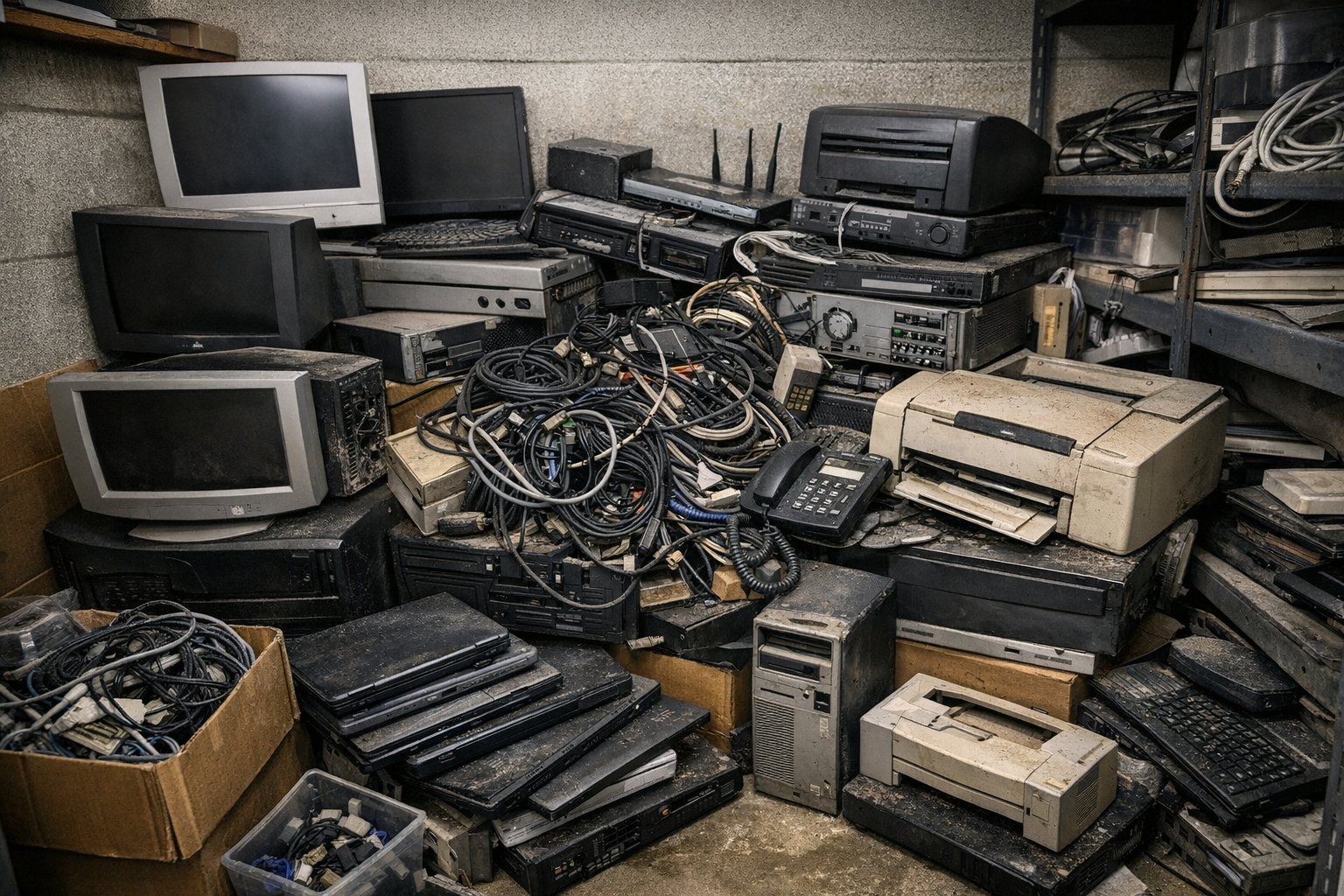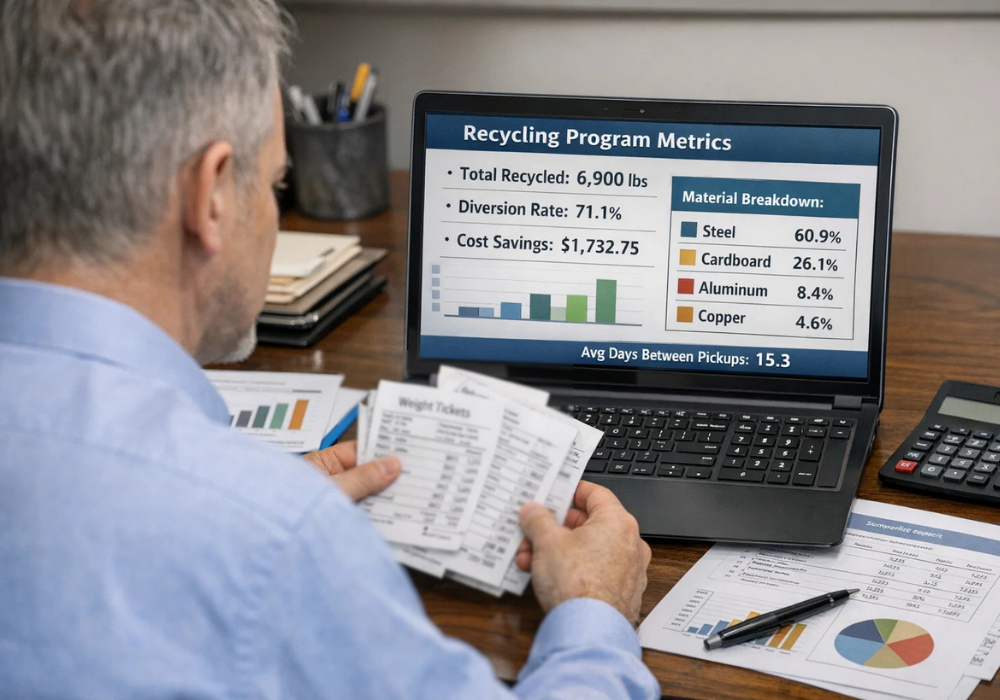
Picture a typical Thursday morning at a Sacramento warehouse: the scrap metal hauler was supposed to arrive at 9 a.m. but hasn't shown. The cardboard company is scheduled for next week—maybe. And the e-waste vendor? They need two weeks' notice and charge extra if you miss their narrow pickup window. Meanwhile, pallets of flattened cardboard are blocking the loading dock, copper wire offcuts are piling up in the corner, and a stack of old monitors from last month's IT refresh still hasn't moved.
This is the reality for operations managers across Northern California who find themselves coordinating three, four, or five separate recycling vendors just to handle the materials their facilities generate.
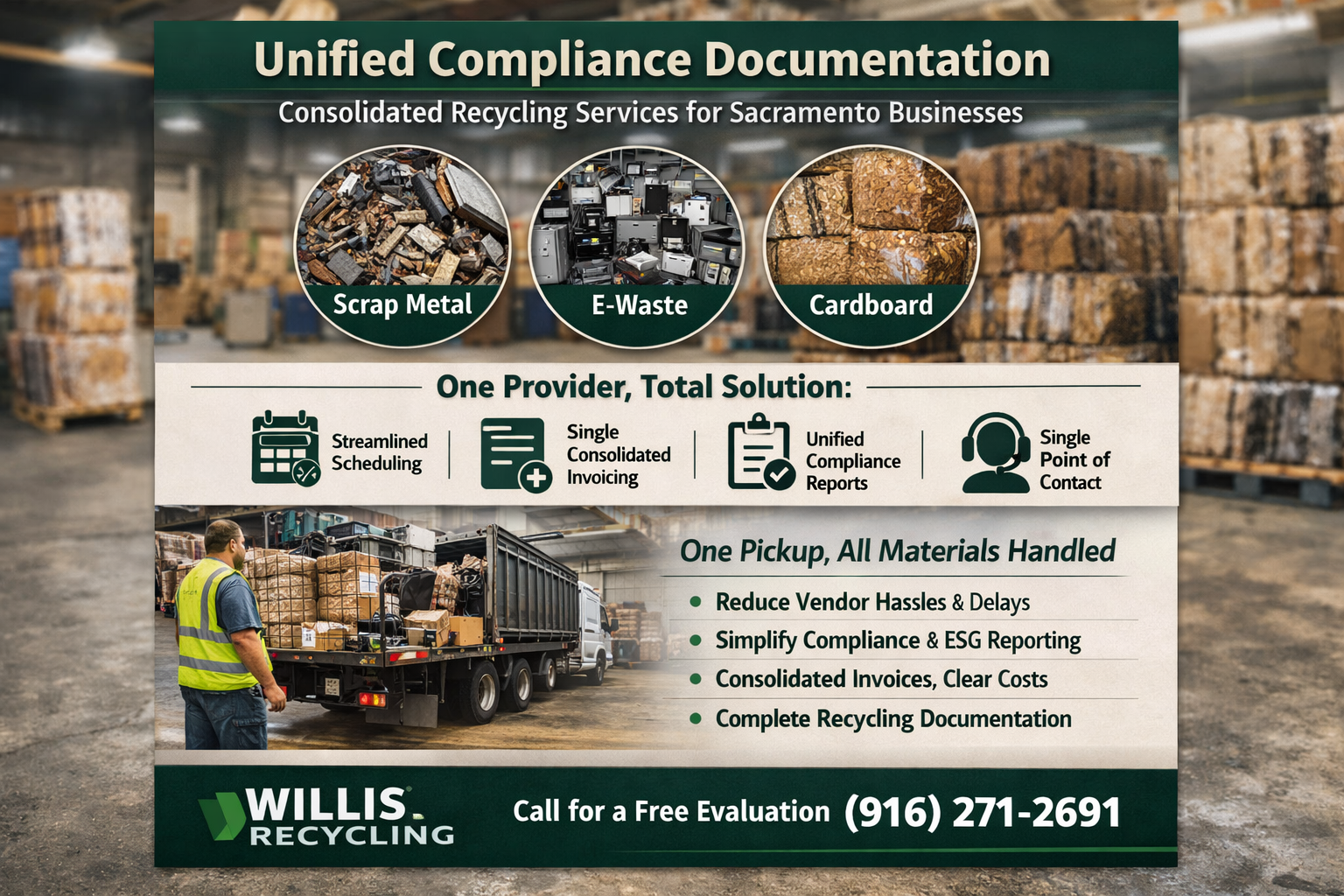
There's a simpler approach. Consolidating your metal, e-waste, and cardboard recycling under one provider eliminates the coordination headaches while delivering cleaner records for compliance and ESG reporting.
The Hidden Costs of Multiple Recycling Vendors in Sacramento
Operations managers and facilities directors know this frustration firsthand. The scrap metal company comes on Tuesdays. The cardboard hauler shows up every other Thursday—sometimes. The e-waste vendor requires scheduling two weeks in advance and charges extra for anything outside their narrow pickup window.
Each vendor means another set of contacts to manage, another invoice to process, another scheduling conflict to navigate. When something goes wrong—a missed pickup, a billing discrepancy, a compliance question—you're tracking down the right person at the right company while your warehouse fills up with materials that need to move.
This fragmented approach creates real operational drag:
Multiple points of contact for scheduling, questions, and problem resolution
Inconsistent pickup schedules that complicate facility planning
Separate invoicing systems requiring additional accounts payable processing
Fragmented documentation that makes compliance reporting time-consuming
No unified view of your organization's total recycling activity
For construction firms, retailers, hospitals, and manufacturing facilities throughout Sacramento and Northern California, these inefficiencies add up. Staff time gets consumed by vendor coordination rather than core responsibilities. Materials pile up waiting for the next scheduled pickup. And when audit time arrives, assembling a complete picture of your recycling efforts becomes an excavation project through multiple filing systems.
How One Provider Simplifies Everything
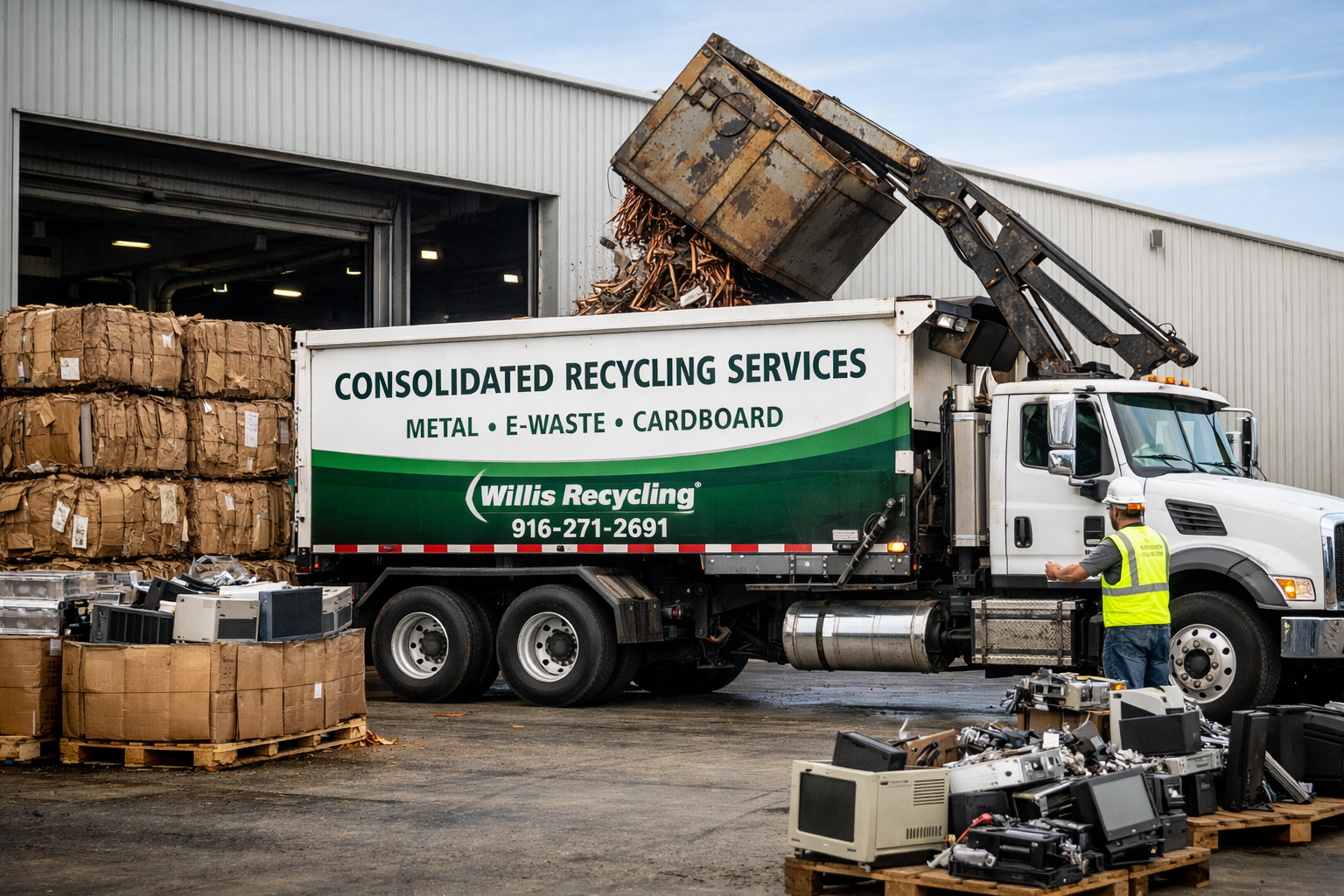
Working with a single recycling partner that handles multiple material streams changes the equation entirely. Instead of managing relationships with several vendors, you have one point of contact who understands your facility, your schedule, and your specific needs.
Streamlined Scheduling
One provider means one scheduling conversation. Whether you need copper wire picked up from a construction site, cardboard bales cleared from a warehouse loading dock, or outdated computer equipment removed from an office, the same team coordinates it all.
Many businesses find they can combine pickups—having metal, e-waste, and cardboard collected in a single visit rather than three separate trips across three different weeks. For a distribution center clearing out old racking, this might mean one truck handles the steel shelving, the electronic inventory scanners, and the accumulated packaging material in one coordinated effort.
This flexibility matters particularly for operations with variable output. Construction projects generate different materials at different phases. Retail operations see cardboard volumes spike during seasonal restocking. A consolidated provider can adjust to your actual needs rather than forcing you into rigid schedules designed for their convenience.
Unified Invoicing
Processing one invoice instead of four or five reduces accounts payable workload and simplifies budget tracking. You get a clear picture of total recycling costs—and potential returns—in a single document rather than piecing together information from multiple sources.
For businesses that receive compensation for valuable scrap materials, consolidated service also simplifies the revenue side. Instead of tracking separate payments from different vendors for copper here and aluminum there, you have one settlement covering all materials collected.
Single Point of Accountability
When issues arise—and they inevitably do—having one relationship to manage makes resolution faster. There's no finger-pointing between vendors about whose responsibility something was. Your provider owns the entire relationship and has every incentive to solve problems quickly.
This accountability extends to compliance. One provider can ensure all materials are handled according to applicable regulations and provide documentation that covers your complete recycling activity, not just fragments of it.
How Consolidated Recycling Works in Practice
Understanding what happens during a consolidated pickup helps illustrate why this approach works better than juggling multiple vendors.
When you schedule with a consolidated provider, their team arrives with the right equipment to handle whatever combination of materials you have—whether that's gaylords of mixed scrap, palletized cardboard bales, or loose electronic equipment. They evaluate everything on-site, load it onto their truck, and handle the sorting and processing so your team doesn't have to become recycling specialists.
The key difference from single-material vendors: you're not waiting for three different trucks on three different days. You're not explaining your facility layout to a new driver every time. And you're not wondering which vendor to call when a material doesn't fit neatly into one category.
Common Material Combinations for Northern California Businesses
Businesses across different industries generate predictable combinations of recyclable materials. Handling them through a single provider creates natural efficiencies:
Metal Plus E-Waste Plus Cardboard
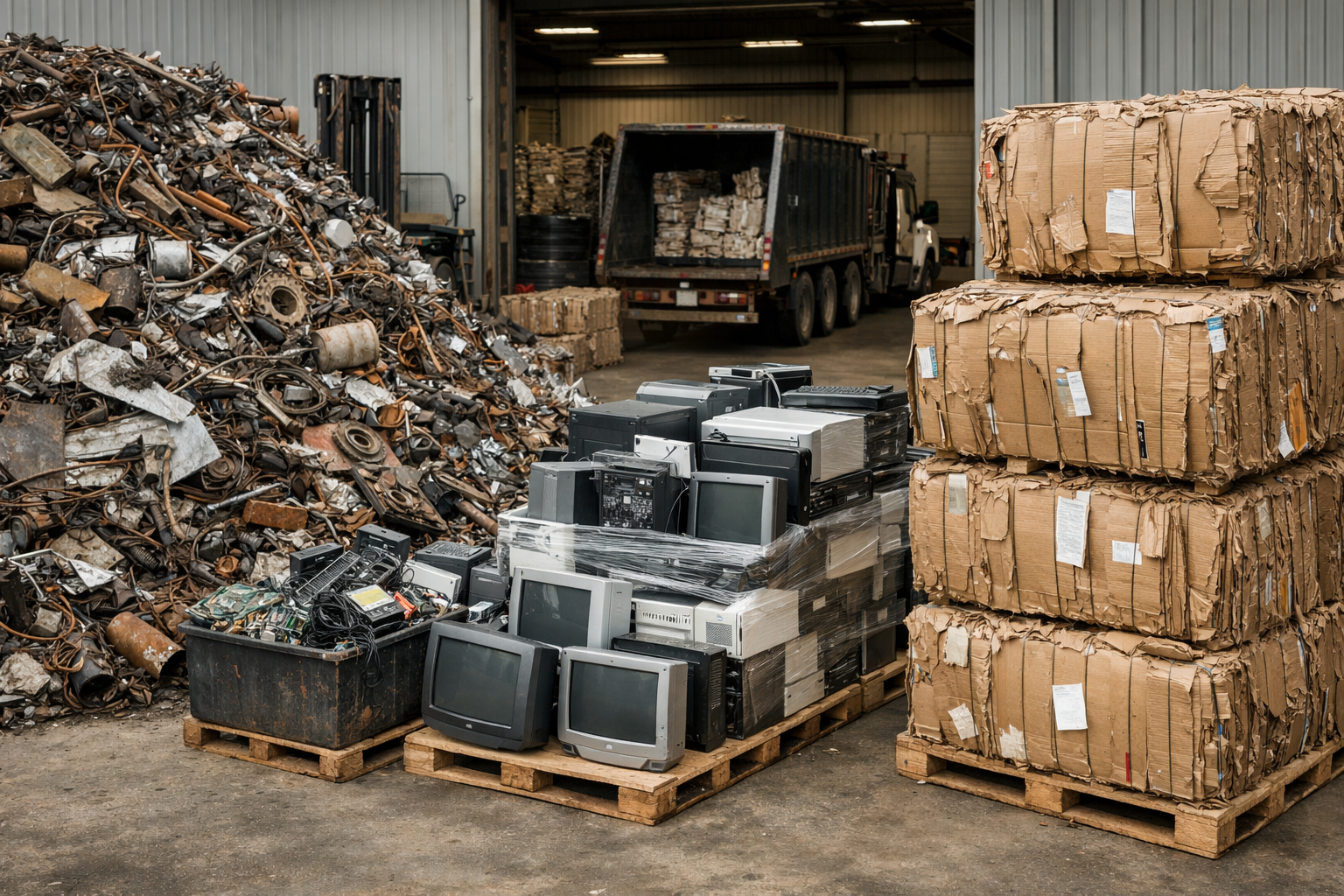
This combination appears frequently in warehouse operations, distribution centers, and manufacturing facilities throughout Sacramento and the Central Valley. Equipment upgrades generate e-waste. Shipping and receiving creates cardboard volume. And ongoing operations produce scrap metal from maintenance, construction, and equipment replacement.
A warehouse clearing out old racking systems, for example, might have steel shelving, electronic inventory systems, and mountains of packaging material all requiring removal. One provider handles the entire cleanout rather than requiring three separate arrangements.
Construction Scrap Plus Equipment Plus Packaging
Construction and demolition projects generate diverse material streams throughout their lifecycle. Copper wire, steel beams, and aluminum flashing create scrap metal. Old HVAC systems and electrical equipment include recyclable components. And material deliveries produce substantial cardboard and packaging waste.
For construction project managers working under CALGreen requirements—which mandate that at least 65% of construction and demolition debris be diverted from landfills [1]—consolidated service simplifies compliance documentation. One provider can deliver unified records showing total diversion across all material categories, making it easier to demonstrate compliance at project closeout.
Retail and Distribution Operations With Seasonal Variation
Retail businesses and distribution centers see their recycling needs fluctuate dramatically with seasonal inventory cycles. Holiday restocking generates cardboard volumes many times higher than normal. Store renovations produce metal fixtures and electronic display equipment. Ongoing operations create steady baseline volumes of both.
A provider equipped to handle all these materials can scale service up during peak periods and maintain appropriate scheduling during quieter times—without requiring you to coordinate between multiple vendors who each only handle one piece of the puzzle.
Healthcare Facilities With Complex Material Streams
Hospitals and medical facilities generate a unique mix: metal bed frames and equipment, electronic monitoring systems and computers, plus substantial cardboard from supply deliveries. These environments also require minimal operational disruption during pickups.
When Willis Recycling serviced 125 hospital beds for Kaiser Permanente in under 72 hours [2], the ability to handle the entire project through one relationship made that rapid turnaround possible. Coordinating multiple vendors for a job that size under a tight timeline would have added significant complexity.
The Compliance and ESG Reporting Advantage
Beyond operational efficiency, consolidated recycling service delivers significant benefits for regulatory compliance and sustainability reporting.
Unified Documentation
Environmental regulations increasingly require businesses to track and report their waste diversion activities. California's recycling requirements for commercial operations, construction projects, and specific material streams mean many businesses need detailed records of what was recycled, when, and through what channels.
Working with multiple vendors means assembling documentation from multiple sources—different formats, different levels of detail, different reporting periods. A single provider delivers unified documentation that covers all material streams in consistent format, dramatically simplifying compliance reporting.
For construction projects specifically, CALGreen compliance requires documentation showing that the 65% diversion threshold was met [1]. Having all recyclable materials—metal, cardboard, equipment—documented on unified reports from one provider makes demonstrating compliance straightforward rather than a scramble through multiple vendor files.

ESG Reporting Clarity
For organizations with Environmental, Social, and Governance reporting requirements, recycling data feeds directly into sustainability metrics. Investors, customers, and corporate leadership increasingly expect clear documentation of waste reduction and diversion efforts.
Consolidated service means you can generate comprehensive recycling reports without the manual work of aggregating data from multiple vendors. Total tonnage recycled, breakdown by material type, environmental impact estimates—all available from one source rather than requiring reconciliation across multiple vendor systems.
Audit Readiness
Whether facing internal sustainability audits, customer supply chain reviews, or regulatory inspections, having complete recycling records readily available matters. One provider relationship means one place to go for documentation, one point of contact for auditor questions, and consistent record-keeping across all material streams.
When an auditor asks for your recycling records from the past year, you can pull a complete picture from one source rather than assembling fragments from multiple vendors with different reporting formats.
What Consolidation Looks Like for a Multi-Location Operation
Consider a typical scenario: a Northern California healthcare system managing facilities across multiple Sacramento-area locations. Each facility generates scrap metal from equipment replacement and maintenance, e-waste from IT upgrades and retired medical devices, and substantial cardboard from supply deliveries.
Under a fragmented approach, each facility might work with different vendors for different materials—creating dozens of relationships to manage across the system. Compliance reporting requires pulling documentation from multiple sources at each location. Nobody has a clear picture of total recycling activity or environmental impact across the organization.
Consolidated service transforms this situation. One provider handles all material streams across all locations. Scheduling coordinates through a single point of contact. Documentation flows into unified reports covering the entire system. When leadership asks for the organization's total recycling metrics, the answer comes from one source rather than requiring weeks of data gathering.
Evaluating Your Current Vendor Situation
If you're currently working with multiple recycling vendors, a few questions can help assess whether consolidation makes sense for your operation:
How much staff time goes to vendor coordination? Add up the hours spent scheduling pickups, tracking down contacts, resolving issues, and processing invoices across all your current recycling vendors. That time has real cost—and it's time your team isn't spending on core responsibilities.
How complete is your documentation? When compliance reporting or sustainability audits require recycling records, how easily can you assemble a complete picture? If it requires pulling information from multiple sources and reconciling different formats, consolidation would help.
How well do current schedules match your actual needs? Are you fitting your operations around vendor availability, or is service aligned with your facility's real patterns? Consolidated providers can often offer more flexibility than specialized single-material vendors with rigid schedules.
What's the total cost picture? Beyond direct fees, consider the administrative overhead of multiple vendor relationships and the potential revenue from materials that may currently be handled less optimally. Sometimes consolidation reduces total cost even when individual per-pound rates are comparable.
How often do scheduling conflicts cause problems? If you regularly have materials piling up because one vendor's schedule doesn't align with another's, or because coordinating multiple pickups around your operations is too complicated, consolidation simplifies the logistics.
Making the Transition
Moving to consolidated service doesn't require disrupting current operations. Most businesses find the transition straightforward:
Inventory your material streams. Document what materials you generate, typical volumes, and current handling arrangements. This gives a clear picture of what consolidated service needs to cover and helps your new provider understand your needs from day one.
Review current contracts. Understand your obligations to existing vendors—notice periods, termination provisions, any remaining commitments. Most recycling arrangements don't involve long-term contracts, but it's worth confirming.
Evaluate consolidated providers. Look for experience handling your specific material combinations, flexibility on scheduling, and clear documentation practices. Ask about their capacity for your typical volumes and any minimum requirements.
Start with a pilot if helpful. Some businesses consolidate one facility first, confirming the arrangement works before expanding to other locations. Others transition all at once. Either approach works depending on your situation and comfort level.
Ready to Simplify Your Recycling Operations?
Operations leaders juggling multiple recycling vendors don't have to accept that complexity as permanent. Consolidating metal, e-waste, and cardboard services under one provider eliminates vendor management headaches while delivering cleaner compliance records and more flexible service.
Willis Recycling helps Sacramento-area businesses consolidate their recycling operations—handling scrap metal, cardboard bales, e-waste, and equipment removal through one relationship. With nearly two decades of industry experience and the capacity to handle everything from routine pickups to large-scale projects [2], we make recycling operations simpler.
Review your current recycling contracts and see where consolidation makes sense. Call Willis Recycling at (916) 271-2691 for a fair evaluation of your materials and a conversation about simplifying your recycling operations.
Frequently Asked Questions
Can one recycling provider really handle all these different materials?
Experienced commercial recyclers routinely handle multiple material streams—metals, cardboard, e-waste, and equipment. The key is finding a provider with the equipment, certifications, and capacity for your specific combination. Willis Recycling handles copper, aluminum, steel, cardboard bales, electronic equipment, and HVAC units, allowing most businesses to consolidate three or four material categories under one provider.
Will I get fair value for materials if I use one provider instead of specialists?
Reputable consolidated providers offer competitive market rates for valuable materials like copper, aluminum, and brass. Because they handle multiple material streams, they can often provide better overall value by combining pickups and reducing your total coordination costs—even when individual per-pound rates are comparable to specialist vendors.
How does consolidated service help with compliance documentation?
Instead of assembling records from multiple vendors with different formats and reporting periods, you receive unified documentation covering all materials. This dramatically simplifies CALGreen compliance reporting for construction projects, corporate sustainability metrics, and audit preparation—everything comes from one source in consistent format.
What if my material volumes vary significantly throughout the year?
This is actually where consolidated service shines. A single provider can adjust pickup frequency across all material streams as your needs change—scaling up during busy periods like holiday restocking and maintaining appropriate service during slower times without requiring you to coordinate changes with multiple vendors separately.
Do I need to sort materials before pickup?
While some basic organization helps, consolidated providers typically handle sorting and processing. The Willis Recycling team evaluates and sorts materials on-site, so your staff can focus on core responsibilities rather than becoming recycling specialists. Just gather materials in accessible locations, and the pickup team handles the rest.
About Willis Recycling
Willis Recycling is a family-owned mobile recycling service based in Sacramento, serving businesses throughout Northern California. With nearly two decades of industry experience, our team provides on-site pickup for scrap metal, cardboard bales, e-waste, and equipment—handling the heavy lifting so your crew doesn't have to. We're committed to transparent pricing, proper documentation, and making recycling as simple as possible for operations of all sizes. From routine pickups to large-scale projects like clearing 125 hospital beds in 72 hours, Willis Recycling delivers reliable service when Sacramento businesses need it.
Cited Works
California Building Standards Commission — "CALGreen Construction and Demolition Waste Management Requirements."
https://www.dgs.ca.gov/BSC/CALGreen
Willis Recycling — "Recent Jobs and Service Capabilities." https://www.willisrecycling.com/