When production demands ramp up, warehouse space becomes one of your most valuable assets. For one Sacramento-area manufacturing plant, months of accumulated scrap metal had created a problem that was costing them more than they realized—in both lost floor space and tied-up value.
This case study breaks down how a local manufacturer partnered with Willis Recycling to clear out idle scrap piles, recover thousands in material value, and reclaim critical warehouse floor space—all within five days.
The Problem: Scrap Piles Blocking Production Flow
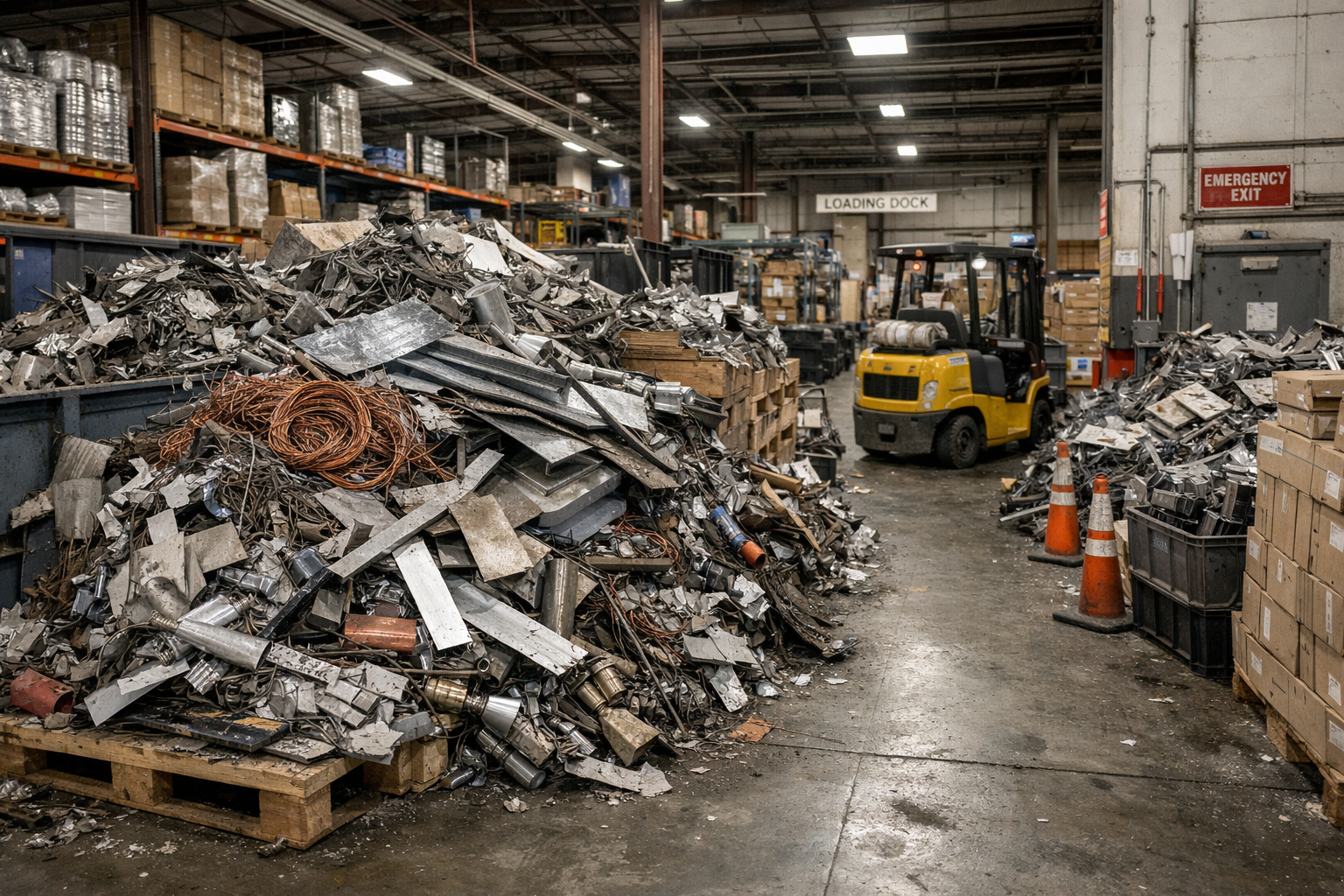
The plant had been stockpiling scrap metal for nearly eight months. What started as a few pallets of aluminum off-cuts and steel remnants had grown into a substantial obstacle that was actively hurting daily operations.
Forklifts couldn't take direct routes anymore. Drivers had to loop around the south side of the warehouse—adding roughly 40 seconds to every trip to the loading dock. Multiply that across dozens of daily runs, and the lost time added up fast.
The situation created several compounding issues:
Blocked access lanes forced inefficient forklift routing and slowed material handling
Safety concerns mounted as workers maneuvered around unstable, stacked piles
Incoming raw materials had nowhere to go, forcing inventory into less-than-ideal overflow areas
Production flow suffered as the layout became increasingly cramped
The plant manager estimated the scrap occupied roughly 2,400 square feet of usable warehouse space—an area that could have stored finished goods ready for shipment, incoming raw materials, or new equipment.
Previous attempts to address the issue had stalled. Hauling materials to a scrap yard meant pulling workers off the production line, renting trucks, and losing an entire shift of productivity. The logistics simply never worked out.
The Assessment: Identifying What Was Actually There
Willis Recycling's team scheduled an on-site evaluation within 48 hours of the initial call. The goal was straightforward: determine exactly what materials were present, estimate total weight and value, and develop a removal plan that minimized disruption to plant operations.
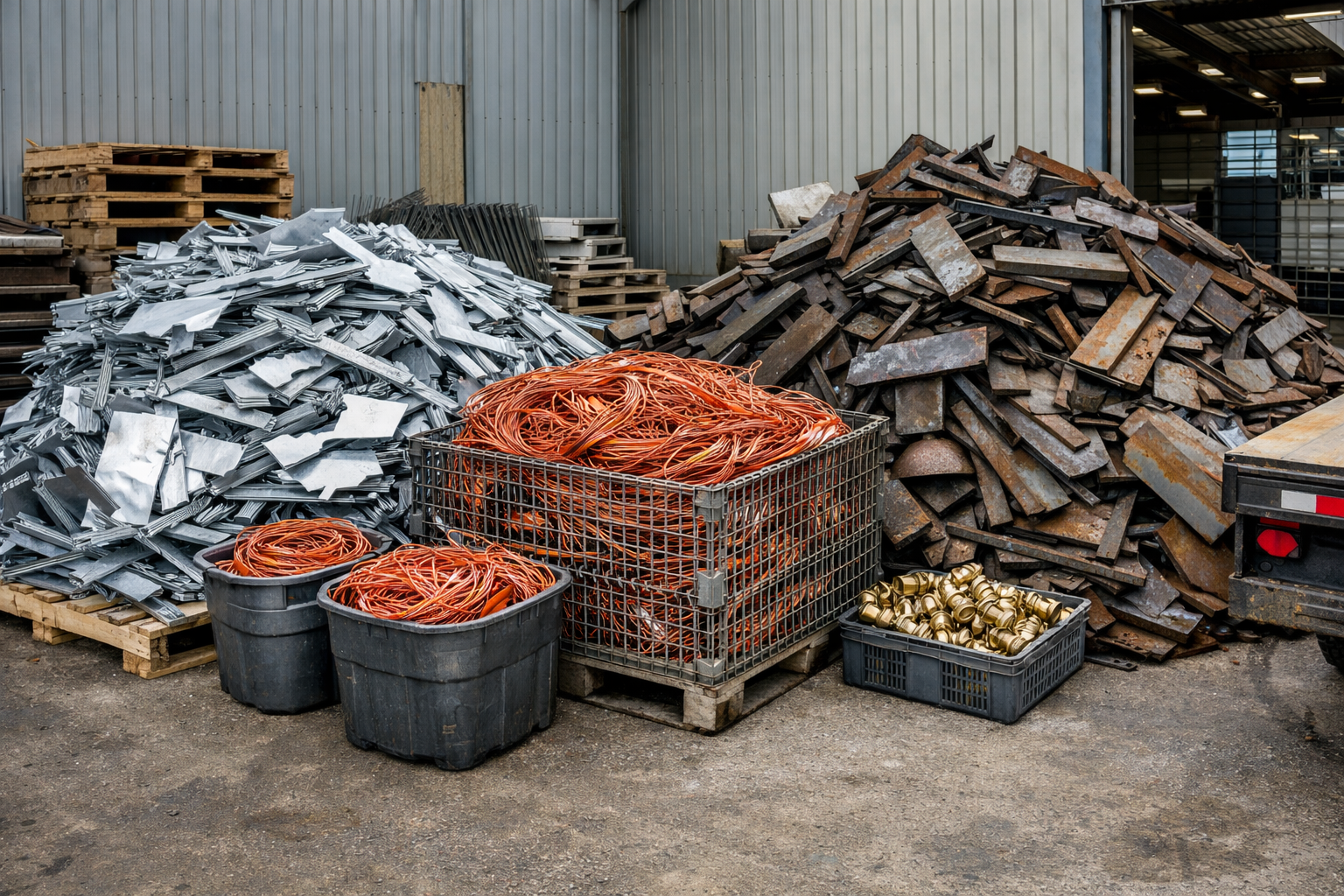
The assessment revealed a mix of materials that had accumulated over time:
| Material Type | Estimated Weight | Condition |
| Aluminum scrap (mixed grades) | 4,200 lbs | Clean, minimal contamination |
| Steel off-cuts | 8,600 lbs | Some painted, mostly bare |
| Copper wire (insulated) | 1,100 lbs | Standard insulation |
| Brass fittings | 340 lbs | Mixed sizes |
| Stainless steel | 720 lbs | Production remnants |
Total estimated weight came to approximately 15,000 pounds of recyclable material.
The copper and aluminum represented the highest-value portion of the haul. According to current scrap metal market data, clean copper wire typically ranges from $2.50 to $3.50 per pound depending on grade, while aluminum scrap falls between $0.40 and $0.90 per pound [4]. Based on these market conditions and the material weights documented, the total recovered value exceeded $4,800—turning what the plant had considered a disposal headache into actual revenue.
The evaluation also mapped how the materials were distributed across the warehouse floor. Some piles were easily accessible; others required moving equipment first. Willis Recycling planned a removal sequence that would cause the least interference with the plant's second-shift operations.
The Mobilization: Getting It Done Fast
Speed mattered. The plant had a major equipment installation scheduled for the following week, and they needed the floor cleared.
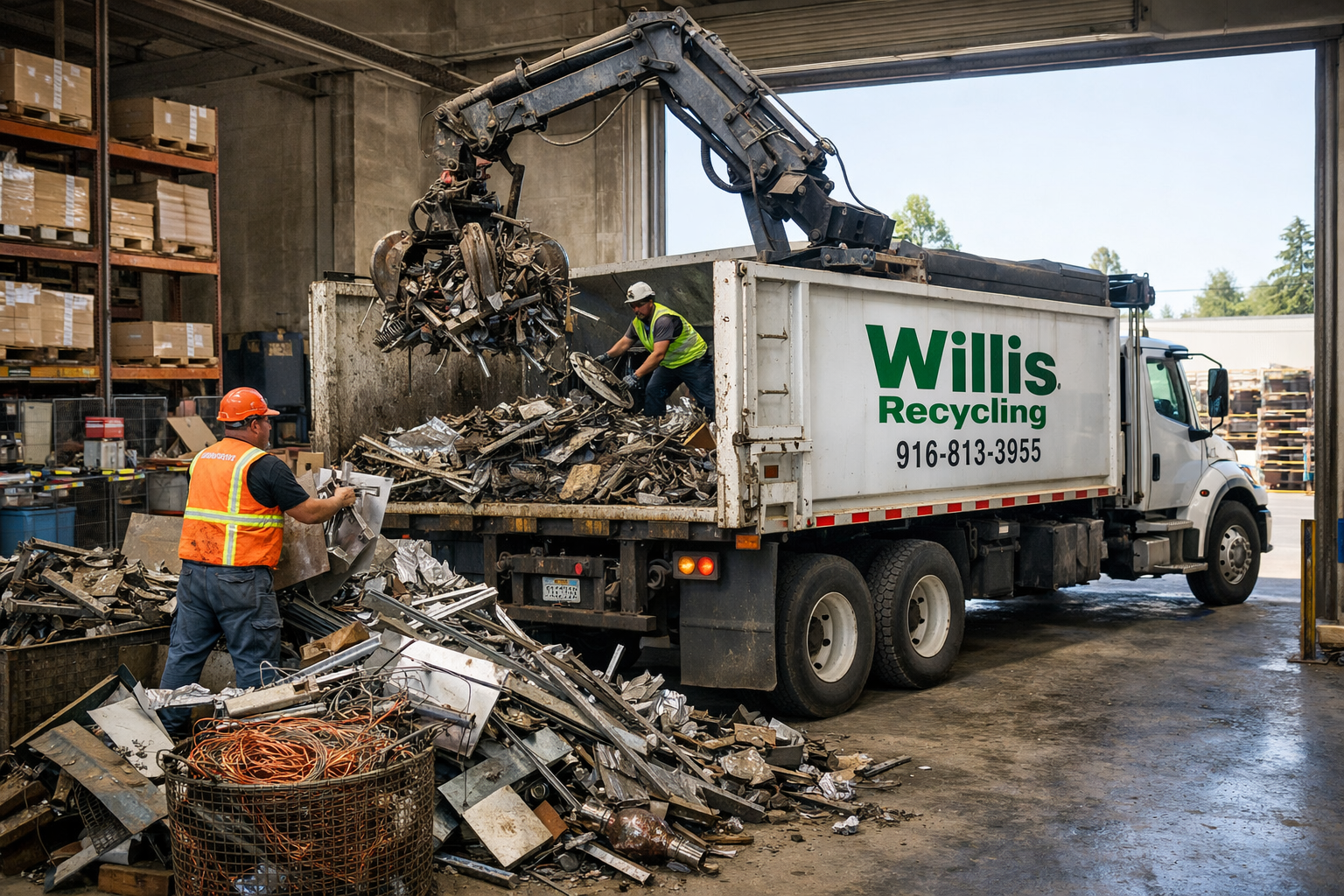
Willis Recycling deployed a two-person crew with a box truck on day one, followed by a larger flatbed on day two for the heavier steel items. The removal happened during evening hours to avoid conflicts with daytime production runs.
Here's how the timeline broke down:
Day One (Evening Shift)
Removed all aluminum, copper wire, and brass
Cleared the northeast corner of the warehouse completely
Provided preliminary weight documentation
Day Two (Evening Shift)
Loaded steel off-cuts and stainless steel remnants
Completed final sweep of remaining materials
Delivered itemized evaluation with weight breakdown by material type
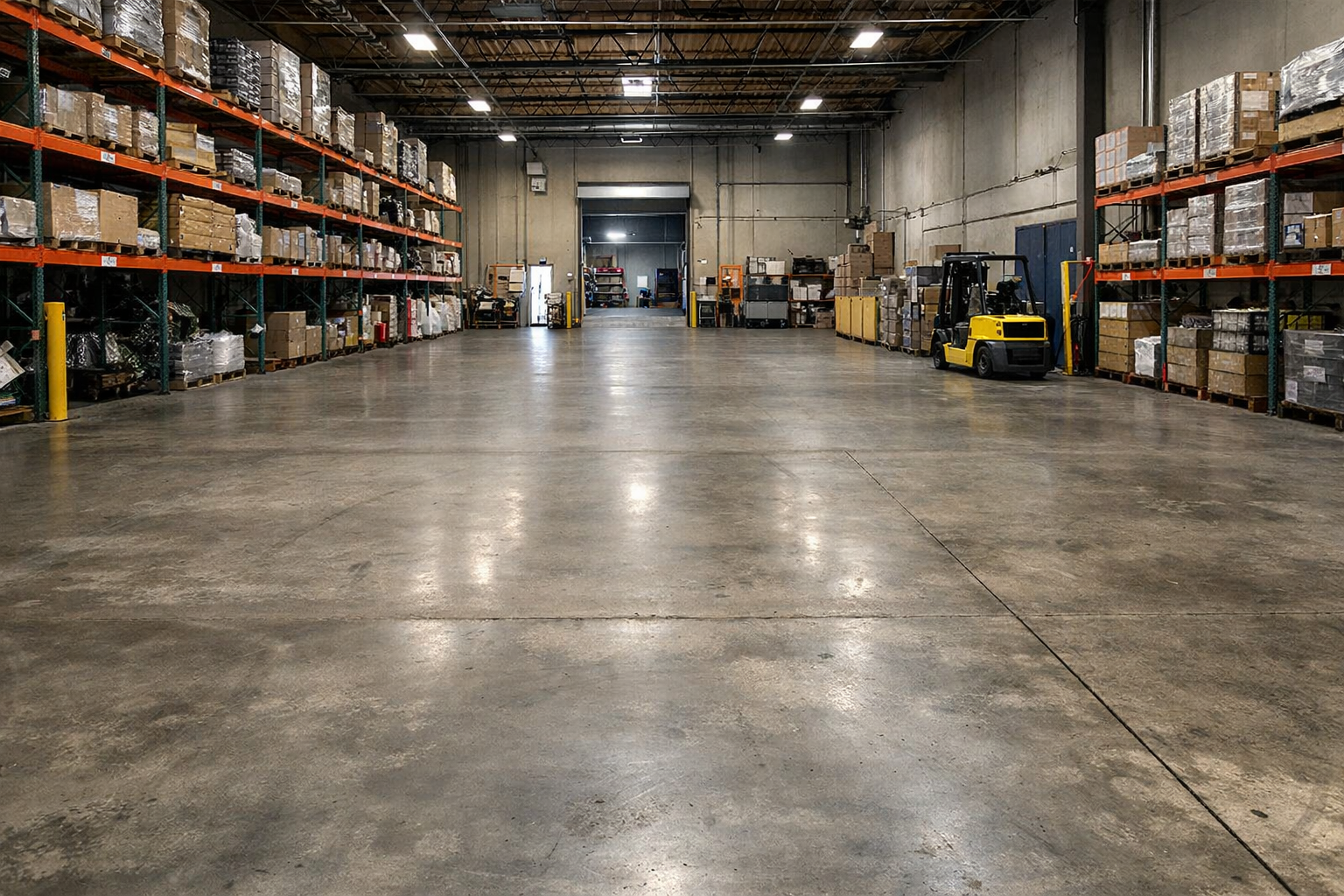
The entire removal process took less than 12 hours of total on-site time spread across two evenings. The floor was clear before the weekend.
The Results: Measurable Value Recovered
The numbers told a clear story.
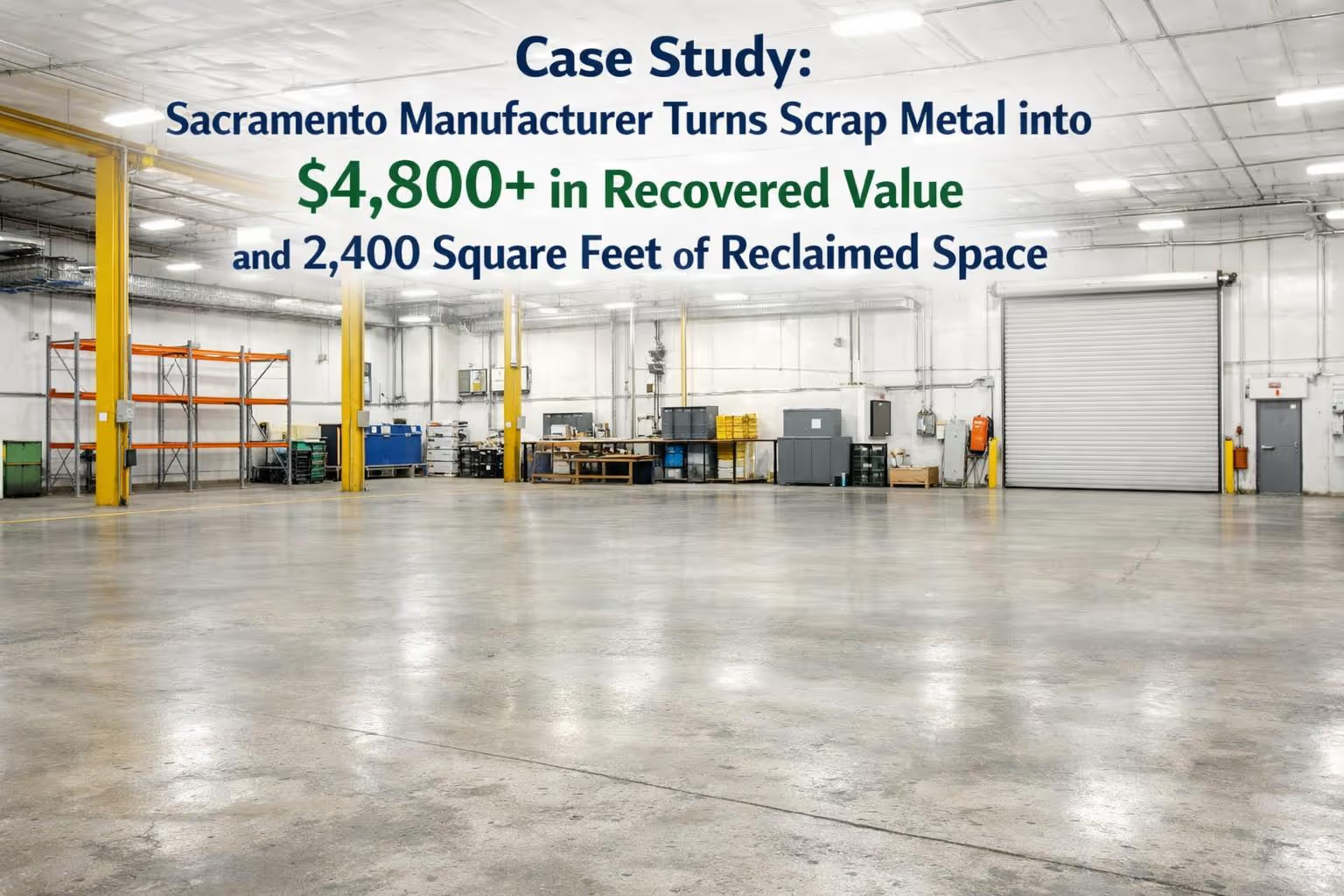
Space reclaimed: 2,400 square feet of warehouse floor space returned to productive use—enough room to stage two full shipping containers of finished product.
Material value recovered: Over $4,800 based on current commodity pricing, with copper and aluminum accounting for the majority of the payout. The plant received an itemized breakdown showing exactly what each material type contributed.
Labor savings: Plant staff spent zero hours on sorting, loading, or transport. No workers were pulled from production duties. No truck rentals. No trips across town.
Timeline: From initial contact to completed removal—five days total. The floor was clear three days before the new equipment arrived.
Operational improvement: With the scrap gone, forklift traffic returned to direct routes. The plant manager estimated the restored workflow saved 15-20 minutes of cumulative travel time per shift.
The plant was able to accept the new equipment delivery on schedule. More importantly, the cleared space allowed for a reorganization of raw material storage that improved workflow going forward.
What Made This Work
Several factors contributed to the smooth outcome:
On-site service eliminated logistics headaches. The plant didn't need to rent trucks, assign workers, or figure out where to take the material. Willis Recycling handled pickup, sorting, and transport at the customer's location [1].
Flexible scheduling protected production. By working during evening hours, the removal process didn't compete with daytime operations or create safety conflicts on the active floor.
Transparent documentation supported internal reporting. The itemized weight breakdown and evaluation gave the plant manager the paperwork needed for internal accounting, compliance records, and waste diversion tracking [2].
Mixed materials weren't a barrier. Instead of requiring the plant to sort aluminum from steel from copper, Willis Recycling's crew handled the separation on-site and ensured each material type was properly categorized for maximum value.
A Practical Takeaway
The plant manager's summary was simple:
"We kept putting this off because nobody had time to deal with it. Eight months of scrap just sitting there. Turns out the whole thing took two evenings, we got the floor back, and they cut us a check. Should have called six months ago."
That sentiment reflects a common pattern. Many manufacturers, warehouses, and industrial facilities let scrap accumulate because the perceived effort of dealing with it outweighs the urgency. The piles grow. The space shrinks. And material that could be generating value just sits there depreciating.
Can Your Facility Replicate This?
If your warehouse has scrap metal taking up floor space, the math likely works in your favor. Here's a quick self-assessment:
Do you have 500+ pounds of scrap metal sitting idle? That's roughly one full gaylord box or two pickup truck beds of material—the typical starting point for commercial pickups [3].
Is the material primarily metal? Aluminum, steel, copper, brass, stainless steel, and similar materials all have recoverable value based on current market conditions.
Is the scrap interfering with operations? Blocked lanes, safety concerns, and storage constraints all carry real costs that don't show up on a balance sheet.
Manufacturing plants, auto shops, construction contractors, and warehouse operations across the Sacramento area face similar situations. The solution doesn't require a major project—it requires one phone call and a few hours of on-site work.
Ready to Clear Your Space?
Willis Recycling provides free on-site evaluations for commercial and industrial scrap throughout Northern California. The process is straightforward: submit your materials info, schedule a convenient time, and let the team handle the heavy lifting.
Call (916) 271-2691 to schedule your evaluation, or send details to info@willisrecycling.com for a quick quote.
Frequently Asked Questions
How quickly can Willis Recycling schedule a commercial pickup?Most commercial pickups in the Sacramento area can be scheduled within the same week, and same-day service is often available depending on current demand. The team works around your schedule to minimize disruption—including evening or weekend removal if your operations run during standard business hours.
Do we need to sort our scrap metal before pickup?Sorting is helpful but not required. Willis Recycling's crew handles the separation and categorization of materials on-site. However, keeping different metal types loosely grouped—copper in one area, aluminum in another—can help maximize the value you receive during evaluation since clean, separated materials typically command better rates.
What documentation will we receive after the pickup?You'll receive an itemized evaluation showing material types, weights, and the corresponding value for each category. This documentation supports internal accounting, compliance reporting, and waste diversion records—useful for facilities tracking sustainability metrics or meeting regulatory requirements.
Is there a minimum amount of scrap required for pickup?Commercial pickups typically start around 500 pounds—roughly equivalent to one full gaylord box or two pickup truck beds of material. For businesses with smaller recurring amounts, regular pickup schedules can often be arranged to consolidate loads and make service practical for both parties.
What areas does Willis Recycling serve?Willis Recycling is based in Sacramento and primarily serves the Greater Sacramento region and Northern California, including Roseville, Elk Grove, Folsom, and surrounding areas. For larger commercial projects, service may extend throughout California depending on scope and volume.
About Willis Recycling
Willis Recycling is a family-owned mobile recycling service based in Sacramento, California. With nearly two decades of combined industry experience, the team specializes in on-site scrap metal and cardboard pickup for businesses throughout Northern California. The company has partnered with Fortune 500 companies, healthcare facilities, construction firms, and local manufacturers—recycling over 70 tons of metal for commercial partners in 2024 alone. Willis Recycling holds a 5.0-star rating on Yelp and follows all California regulations for scrap handling, including ID-verified intake and transparent documentation.
Cited Works
[1] Willis Recycling — "On-site Scrap & Cardboard Pickup." https://www.willisrecycling.com/
[2] Willis Recycling — "How It Works: Step Three."
https://www.willisrecycling.com/
[3] Willis Recycling — "Commercial Scrap Metal Pickup Sacramento: Minimum Requirements and Load Sizes."
https://www.willisrecycling.com/commercial-scrap-metal-pickup-sacramento/
[4] Willis Recycling — "Commercial Scrap Metal Pickup Sacramento: Current Market Rates."
https://www.willisrecycling.com/commercial-scrap-metal-pickup-sacramento/