So you're pulling permits for a Sacramento project. Everything's moving along. Then the building department mentions waste diversion requirements, and you're thinking—what does that actually mean for my job site?
California's not messing around with this one. CALGreen Section 5.408 requires 65% of your construction debris to stay out of landfills [1]. That's not a suggestion. It's state law, enforced through your building permit.
Most contractors hit this the first time during final inspection. No diversion documentation means no certificate of occupancy. The project sits there, done but not done, while you scramble to reconstruct where materials went.
CALGreen construction recycling compliance is the core requirement driving Sacramento contractors to understand diversion rules before project closeout.
Better to understand it upfront.
Meeting CALGreen construction recycling compliance standards early in the project prevents inspection delays and documentation issues.
The CALGreen Mandate Explained
California's Green Building Standards Code covers pretty much everything. New construction, demolitions, and major alterations over $200,000 all fall under the 65% requirement [2]. The City of Sacramento enforces this through two checkpoints: you submit a waste management plan before permits issue, then prove compliance with documentation before final sign-off [3].
What counts toward your 65%? Metals, concrete, wood, cardboard, asphalt—basically anything that's not dirt or vegetation. Excavated soil doesn't factor in, even though you document where it went. Same with land-clearing debris like trees and stumps [4].
The calculation's straightforward. Take your diverted materials (in tons or cubic yards, pick one and stick with it), divide by total waste generated, multiply by 100. You need to hit 65 or better.
Example: You divert 400 tons and landfill 215 tons. That's 400 ÷ (400 + 215) = 65%. You made it, barely.
LEED Takes It Further
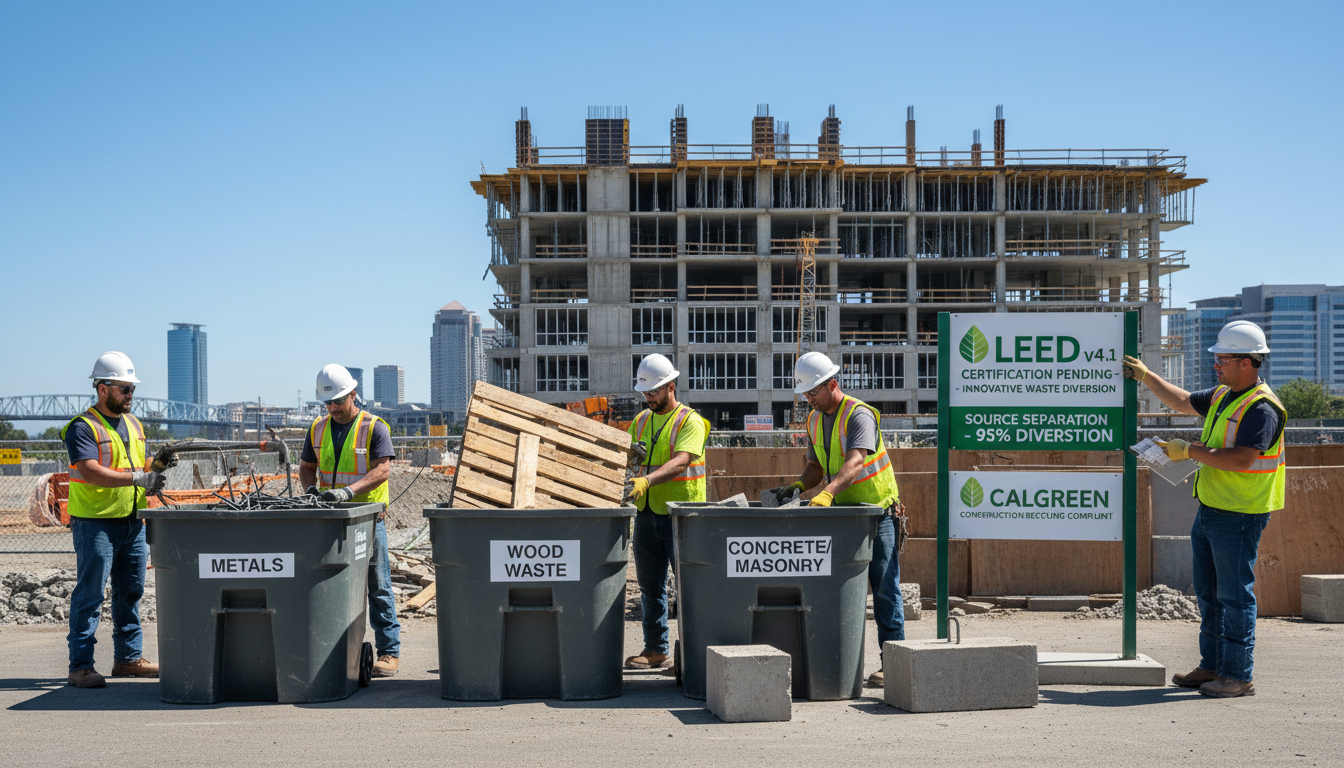
Some Sacramento projects chase LEED certification on top of CALGreen compliance. LEED v4.1 awards points based on diversion rates and material stream documentation [5].
One point for 50% diversion with two documented streams. Two points for 75% with three streams. These credits can bump you from Silver to Gold certification, which matters when you're marketing the building.
Here's where local infrastructure helps. GreenWaste's Florin Perkins facility on Florin Perkins Road diverts over 75% of incoming construction debris and holds third-party certification from the Recycling Certification Institute [6]. That certification matters for LEED—commingled loads need to go to approved facilities or they don't count.
But source separation typically beats commingled. When metals go in one bin, wood in another, concrete in a third, your documentation gets cleaner and your percentages climb.
Many Sacramento contractors pair LEED goals with CALGreen construction recycling compliance strategies to streamline waste diversion and documentation.
What's Actually Coming Off Your Job Site
Let's get specific about materials.
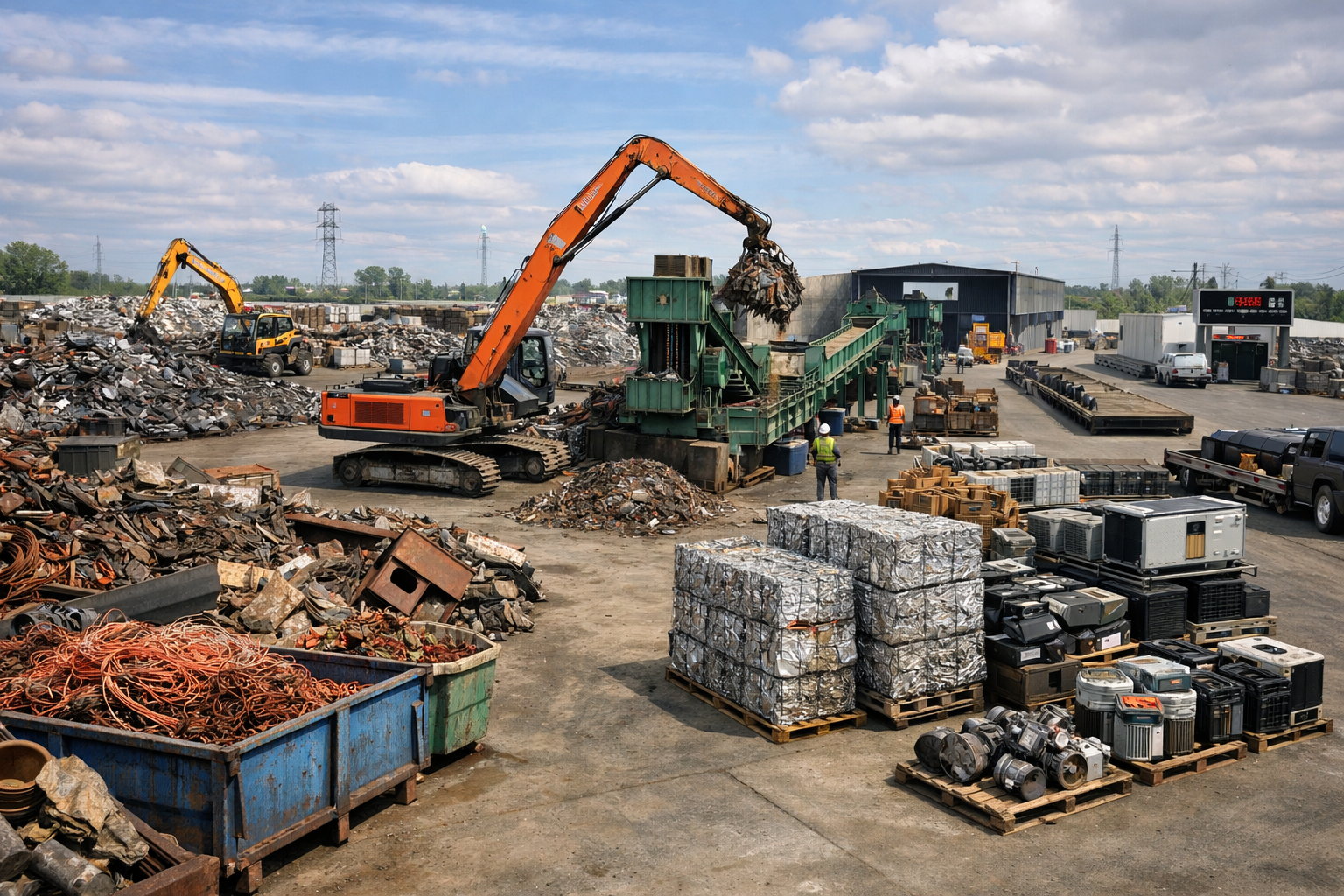
Metals are your highest-value stream. Steel beams, rebar, copper wire, brass fixtures, aluminum trim. For effective construction scrap metal removal, steel alone gets recycled at 98% rates when properly separated [7]. These materials also generate the cleanest weight tickets. A dedicated metal bin with a qualified recycler gives you solid documentation and sometimes offsets hauling costs.
Concrete usually represents your biggest volume. One demolition can generate hundreds of tons. Clean concrete without excessive rebar qualifies for crushing and reuse. Local facilities report 99% recycling rates [8]. If concrete is 60% of your waste by weight and you recycle it all, you're almost at the 65% target before touching anything else.
Wood needs attention but adds up. Keep dimensional lumber dry and separate from contaminated materials. Treated wood may have restrictions depending on your recycler. But clean framing lumber, plywood sheets, and shipping pallets all contribute when sorted properly.
Cardboard is your easy win. Every delivery brings boxes. Breaking them down and keeping them dry creates a straightforward stream. It's lightweight, so it won't carry your percentage by itself. But it adds points without much effort.
A proactive approach to CALGreen construction recycling compliance helps contractors avoid last-minute scrambling and failed inspections.
Setting Up Recycling That Actually Works
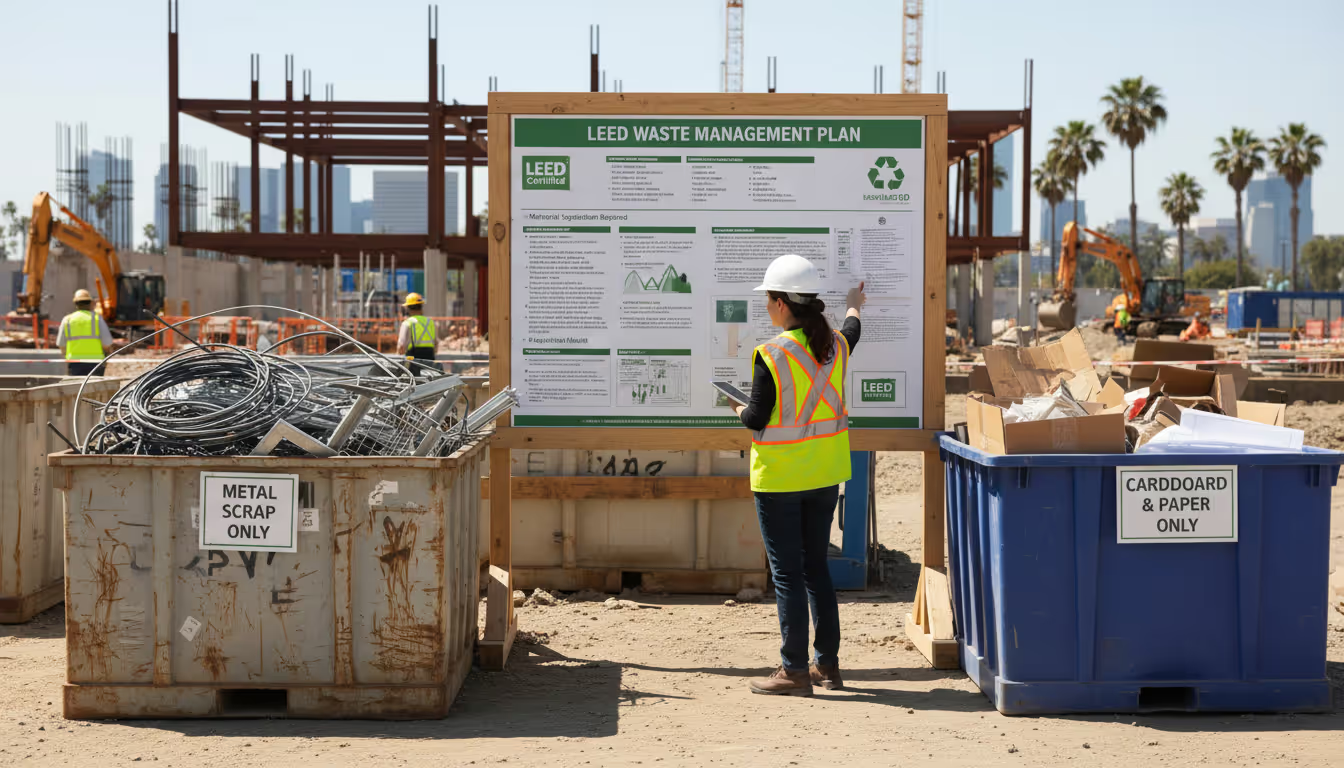
Start this conversation during preconstruction. Your waste management plan needs to outline target materials, estimated percentages, diversion facilities, and whether you're source-separating or using commingled [9].
Most successful Sacramento jobs do a hybrid approach. High-value materials like metals get dedicated bins. Everything else goes mixed to a certified sorting facility.
Physical layout matters more than people expect. Put metal bins near where electricians and plumbers work. Put wood bins near framing areas. When the right container is ten feet away instead of across the job site, materials land where they should.
Label everything clearly. Subcontractors aren't mind readers. "METAL ONLY - NO WOOD OR TRASH" works better than "Recyclables."
Assign someone to monitor bins. Materials get contaminated when people treat recycling containers like general trash. A quick visual check each morning catches problems before an entire load gets rejected.
Proper documentation is the backbone of CALGreen construction recycling compliance, especially when multiple material streams are involved.
Documentation That Passes Inspection
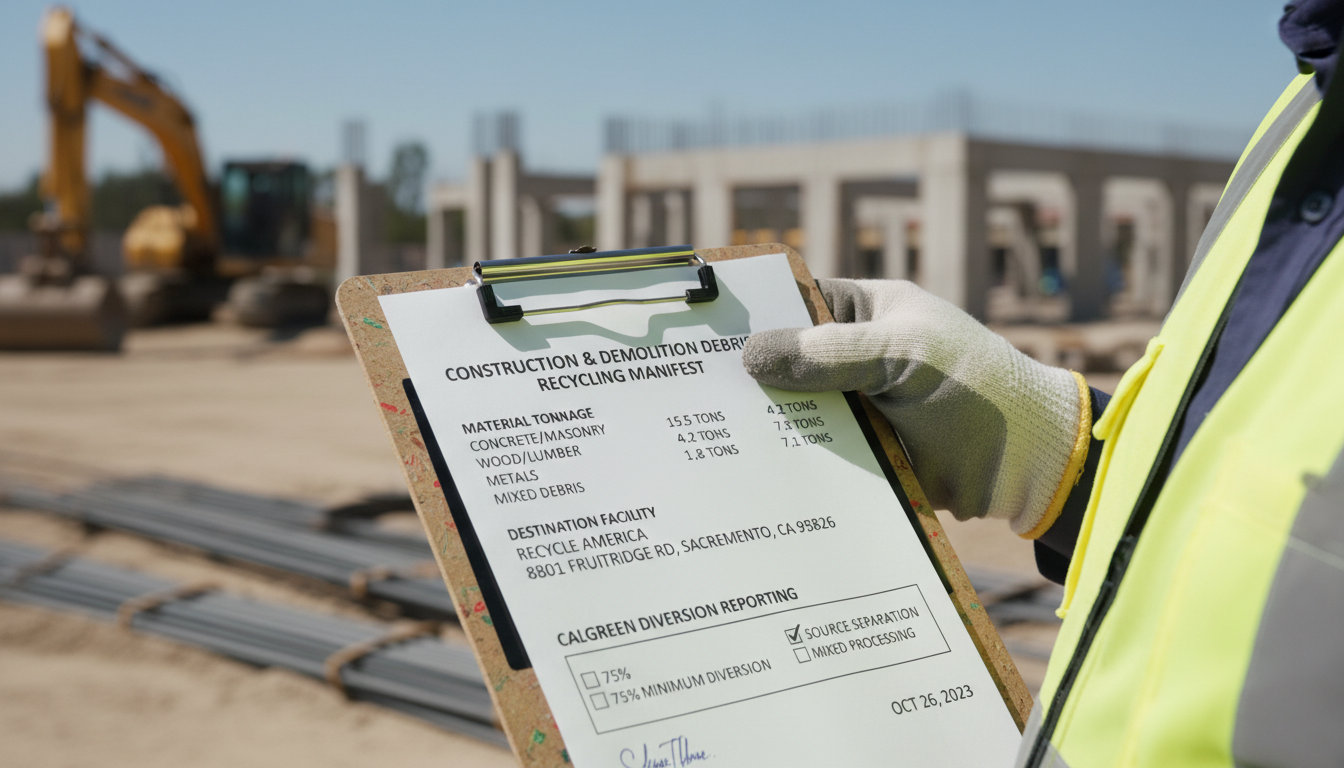
This is where contractors trip up. They do the recycling but can't prove it.
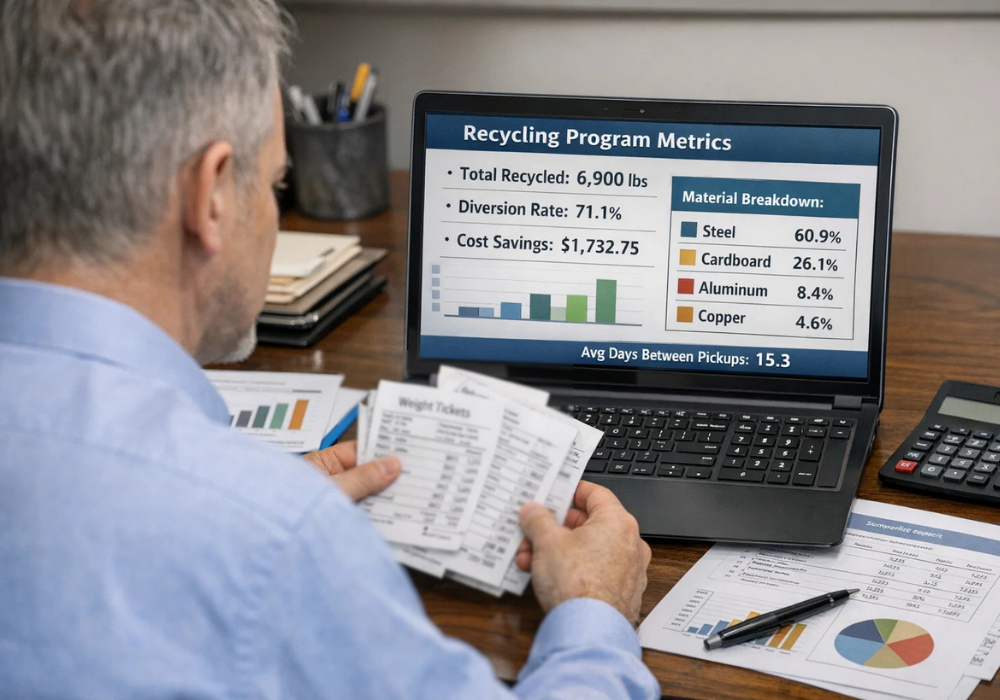
Every load leaving your site needs a weight ticket showing material type, weight, and destination facility. Store these organized by material stream and date. You'll need them for both the building department and LEED reviewers if applicable.
For LEED projects, commingled waste must go to facilities certified by the Recycling Certification Institute [10]. In Sacramento, GreenWaste Florin Perkins holds this certification. Other recyclers may too—just verify before sending material.
Calculate monthly. Don't wait until the end to discover you're at 48% diversion with nowhere left to improve. Monthly tallies let you adjust. If concrete is 70% of your waste but you're only hitting 50% overall diversion, you know where to focus.
Keep good records of where everything went:
Weight tickets from recycling facilities
Disposal receipts from landfills
Facility certifications if needed for LEED
Photos of on-site separation setup
The building department wants to see this before they'll sign off. Make it easy for them.
Missteps in reporting or sorting can jeopardize CALGreen construction recycling compliance, even if the project recycled significant material.
Common Mistakes That Kill Your Numbers
Alternative daily cover doesn't count as diversion. LEED specifically excludes materials used for landfill cover [11]. If your hauler mentions using wood chips or ground concrete for ADC, understand that tonnage doesn't help your percentage.
Contamination ruins loads. One load of metal contaminated with garbage can't be processed. The whole thing goes to the landfill, and you just lost several tons of diversion credit. Keep streams clean.
Calculating at the end is too late. You need monthly check-ins. By the time you realize you're short, there's no more waste to divert.
Not all recyclers provide proper documentation. Some places will take your material but won't give you LEED-compliant paperwork. Verify documentation capabilities upfront.
Choosing experienced recycling partners makes CALGreen construction recycling compliance significantly easier on busy Sacramento construction sites.
Mobile Recycling Partners That Understand Compliance
Sacramento contractors working toward green building requirements need recycling partners who understand the documentation standards. Mobile services that come to your job site, provide proper weight tickets, and understand both CALGreen and LEED requirements make compliance substantially easier than trying to coordinate multiple facilities yourself.
When selecting a recycling partner, ask specifically about:
What documentation they provide for each pickup
Whether they're certified for LEED if applicable to your project
How quickly they can schedule pickups
Their experience with construction projects requiring compliance documentation
The right partner becomes an extension of your project team rather than just another vendor to manage.
Real-world projects show how structured planning leads to successful CALGreen construction recycling compliance outcomes.
A Real Sacramento Project Example
A commercial renovation in Sacramento County recently hit 73% diversion for LEED Silver. The contractor set up four dedicated bins from day one: metals, concrete, wood, and mixed recyclables.
Structural steel and copper went to a mobile recycling service for processing. Clean concrete was crushed locally for base material. Dimensional lumber and cardboard were sorted and baled before pickup.
Final documentation showed roughly 380 tons diverted versus 140 tons landfilled. That cleared both the 65% CALGreen requirement and the 50% LEED threshold for one point.
What made it work? Consistent separation and choosing facilities that provided proper documentation without extra hassle.
The Bigger Environmental Picture
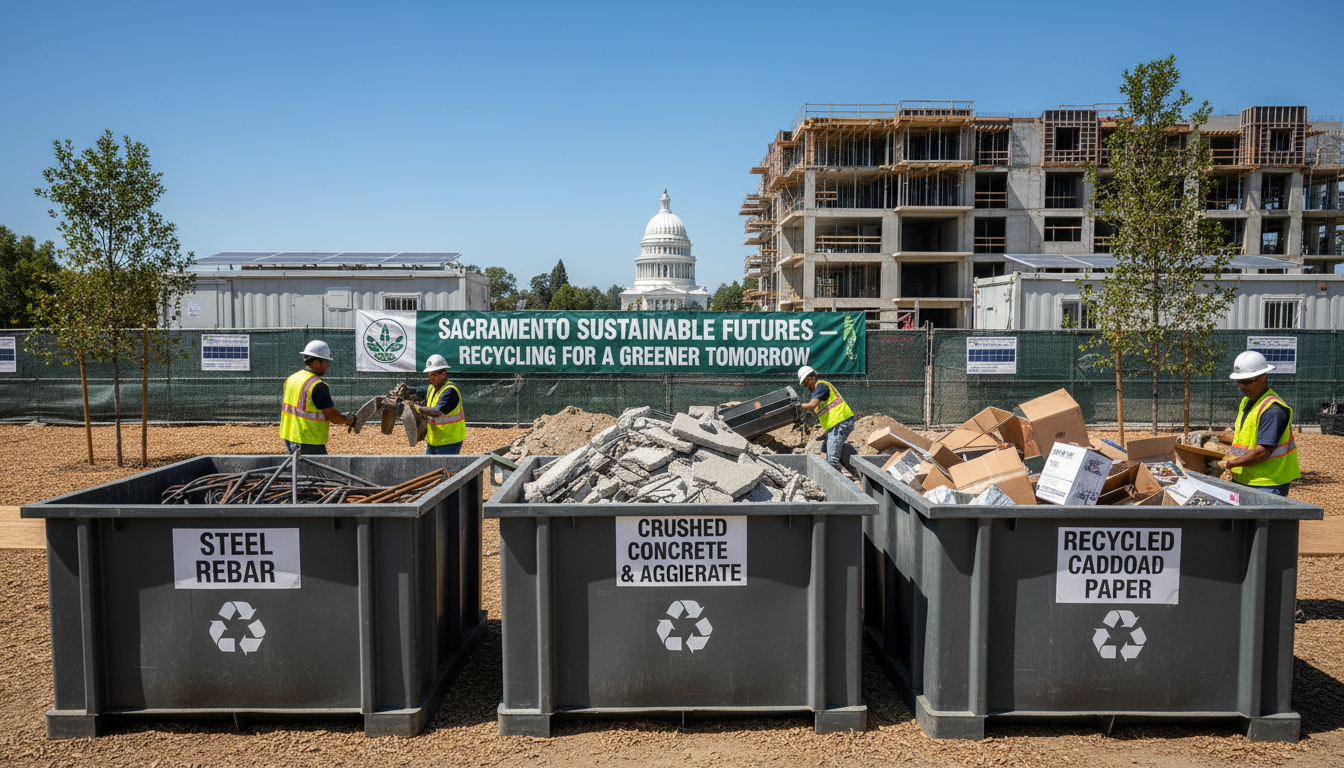
Meeting these requirements does more than satisfy regulators. When Sacramento construction projects divert materials, those resources re-enter manufacturing cycles instead of consuming landfill capacity.
The construction industry generated over 600 million tons of debris in 2018, with approximately three-quarters recovered or recycled [12]. Sacramento projects contributing to that recovery reduce demand for virgin material extraction.
Recycled steel requires dramatically less energy than producing new steel from ore. Crushed concrete becomes road base. Cardboard returns as packaging. Materials stay in circulation.
That's what "reducing carbon footprint" actually means in practice. Not abstract carbon credits, but actual materials staying in use.
Getting Your Sacramento Project Compliance-Ready
Start planning waste management during the design phase if possible. Identify likely material volumes. Research Sacramento-area recycling facilities. Budget time for documentation and monthly tracking.
For projects already underway, it's not too late. Implementing better separation and connecting with qualified recyclers mid-project can still significantly improve your numbers.
Need help setting up compliant construction recycling for your Sacramento project? Contact Willis Recycling at (916) 271-2691 to discuss material pickup services and documentation requirements. We work with contractors throughout Northern California on job sites requiring CALGreen compliance and LEED certification support.
Sacramento has the recycling infrastructure to make this work. You just need to use it strategically.
Understanding common questions is essential for smooth CALGreen construction recycling compliance on Sacramento job sites.
Frequently Asked Questions
What's the difference between CALGreen and LEED requirements?
CALGreen is California's mandatory building code requiring 65% waste diversion—it's state law enforced through your building permit. LEED is a voluntary certification program that awards points for achieving 50% or 75% diversion as part of overall building sustainability. Sacramento projects must meet CALGreen regardless. LEED projects aim higher for certification benefits. Both require documented waste management plans and material tracking.
Which materials count toward the 65% diversion requirement?
Metals (steel, copper, aluminum), concrete, masonry, wood, cardboard, asphalt, and gypsum drywall all count when properly recycled. Excavated soil, land-clearing vegetation, and hazardous materials don't count even though you must document their disposal separately. The key is keeping materials clean and sorted so recycling facilities can actually process them.
How do I calculate my project's diversion rate?
Divide diverted material weight by total waste (diverted plus landfilled), then multiply by 100. Use either weight or volume consistently throughout—not both. Example: 400 tons recycled and 200 tons landfilled equals 400 ÷ 600 = 66.7% diversion. Keep all weight tickets from both recycling facilities and landfills to document your calculation.
Can I use mixed recycling for LEED projects?
Yes, but the sorting facility must hold certification from the Recycling Certification Institute or approved equivalent. Mixed loads count as one material stream unless you get project-specific breakdowns by material type. GreenWaste Florin Perkins in Sacramento holds third-party certification. Source separation typically gives better diversion rates, but certified mixed recycling works if space is limited.
When do I need to submit waste documentation to the City?
Sacramento requires a waste management plan (Part 1) before building permits issue. This outlines your targeted materials, estimated percentages, and diversion facilities. Then you submit a final report (Part 2) with all weight tickets and disposal documentation before final inspection sign-off. No documentation means no certificate of occupancy.
What happens if my project doesn't hit 65%?
Projects below 65% diversion may face compliance holds preventing final inspection approval and certificate of occupancy. The building department can require remediation or additional documentation. Some jurisdictions assess penalties. The enforcement varies, but the safest approach is planning to exceed 65% from the start rather than scrambling at the end.
Do demolition projects have different requirements?
CALGreen applies to construction, demolition projects, and major alterations equally—all need 65% diversion. Demolition often generates higher diversion rates because concrete and metals make up larger percentages of total waste. But the documentation requirements stay the same: waste management plan upfront, proof of diversion at completion.
Where can Sacramento contractors take construction waste for recycling?
GreenWaste Florin Perkins (4201 Florin Perkins Road) handles mixed construction debris with certified sorting. Several local facilities accept source-separated materials: concrete crushers for clean concrete, metal recyclers for ferrous and nonferrous metals, wood processors for clean lumber. Mobile recycling services will come directly to job sites for pickup. Verify documentation capabilities before selecting facilities.
For Sacramento contractors, mastering CALGreen construction recycling compliance ensures faster approvals, cleaner documentation, and smoother project closeouts.
Works Cited
[1] CalRecycle — "Construction and Landscaping." https://calrecycle.ca.gov/organics/slcp/jurisdictions/calgreenmwelo/.
[2] Energy Analytica — "California Green Building Code, CALGreen - Construction waste diversion." https://www.energyanalytica.com/calgreen-construction-waste-diversion/. Published: 2023-05-31.
[3] City of Sacramento — "Construction & Demolition Recycling." https://www.cityofsacramento.gov/public-works/recycling-solid-waste/Commercialwasteservices/construction---demolition-recycling.
[4] Green Badger — "Create a LEED Construction Waste Management Plan." https://getgreenbadger.com/how-to-create-a-construction-waste-management-plan-for-leed/. Published: 2024-04-29.
[5] Canada Green Building Council — "Achieving MRc Construction and Demolition Waste Management in LEED v4.1." https://www.cagbc.org/news-resources/cagbc-news/achieving-mrc-construction-and-demolition-waste-management-in-leed-v4-1/. Published: 2024-12-10.
[6] GreenWaste — "Florin Perkins Resource Recovery Facility Sacramento." https://www.greenwaste.com/facilities/sacramento-c-and-d-recycling/.
[7] Soocial — "20 Construction Waste Statistics That Will Blow Your Mind 2024." https://www.soocial.com/construction-waste-statistics/. Published: 2023-05-13.
[8] GreenWaste — "Florin Perkins Resource Recovery Facility Sacramento." https://www.greenwaste.com/facilities/sacramento-c-and-d-recycling/.
[9] CalRecycle — "Construction and Demolition (C&D) Diversion Informational Guide." https://www2.calrecycle.ca.gov/Docs/Web/126534.
[10] Fuzion — "LEED Construction & Demolition Waste Management Plan." https://fuzionfs.com/resources/leed-construction-and-demolition-waste-management/. Published: 2024-12-18.
[11] LEEDuser — "It's about the plan, not the waste amount diverted." https://leeduser.buildinggreen.com/content/it-s-about-plan-not-waste-amount-diverted. Published: 2021-04-14.
[12] FRONT Materials — "28 Incredible Statistics About Waste Generation." https://www.front-materials.com/news/statistics-about-waste-generation/. Published: 2024-07-24.
About the Author
Willis Recycling serves Sacramento and Northern California businesses with mobile scrap metal and materials recycling services. Since 2017, our team has worked with construction contractors, facility managers, and commercial operations throughout the Central Valley. We understand California's CALGreen compliance requirements and LEED certification standards, providing weight tickets and diversion documentation that contractors need for successful project closeouts. For more information about construction recycling services, contact us at (916) 271-2691.
Compliance Note: CALGreen and LEED requirements were verified through CalRecycle, the Canada Green Building Council, and certified Sacramento-area recycling facilities as of November 2024. Building codes and certification standards may be updated periodically. Consult your project's sustainability consultant and local building department for current, project-specific compliance guidance.