Your scrap metal pile is a safety hazard. Let's fix that.
This article highlights the importance of scrap metal safety best practices and how following scrap metal safety best practices helps prevent workplace injuries.
Every year, American businesses spend over $58 billion on workplace injuries.[1] A big chunk of that? Cuts, strains, and punctures from mishandled scrap metal.[2] Following scrap metal safety best practices significantly reduces these incidents.
The good news? Most scrap injuries are completely preventable.
This guide walks you through the basics. We're talking proper gloves, smarter storage, and knowing when to call the pros. No complicated safety manuals. Just practical steps you can start using today—grounded in scrap metal safety best practices.
Why Scrap Metal Safety Matters (And It's Not Just About Compliance)
Here's what happens when scrap handling goes wrong.
A worker cuts his hand on sheet metal. That's $15,000 in medical costs, plus lost work time. Your insurance rates go up. OSHA might come knocking. And someone on your team is in pain. This is why scrap metal safety best practices are essential.
The Bureau of Labor Statistics tracks this stuff. The most common scrap injuries are:[3]
Cuts and slashes from sharp edges
Strains from lifting heavy pieces
Puncture wounds from metal points
Crushed fingers and hands
Most happen during sorting, moving material between areas, or loading for transport. Implementing scrap metal safety best practices reduces these hazards dramatically.
But there's another angle worth considering. Sacramento facilities that schedule regular professional pickup see fewer of these incidents.[4] Why? Because they're not asking production workers to do heavy lifting and awkward loading. They're keeping their team focused on what they're actually hired to do.
The Four Types of Scrap Hazards You're Dealing With
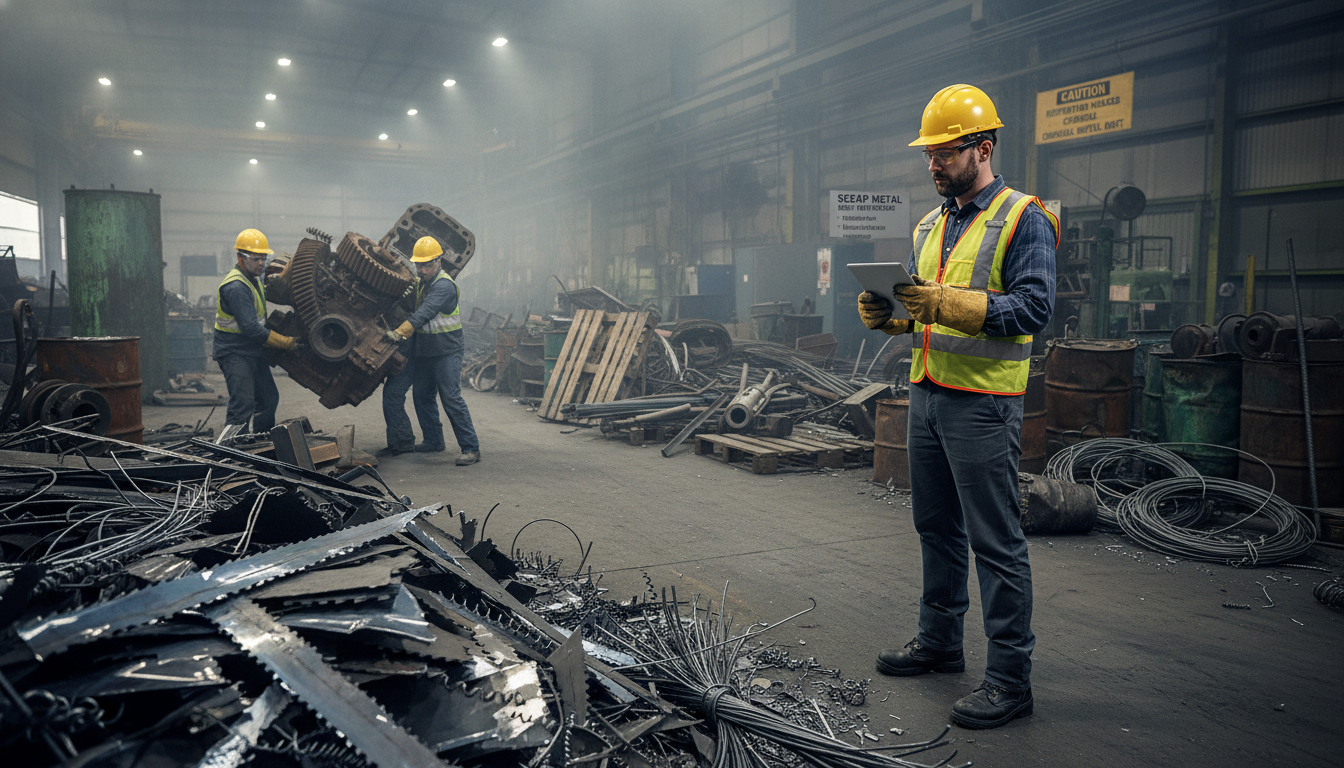
Let's break down what's actually dangerous about that pile of metal in your back lot.
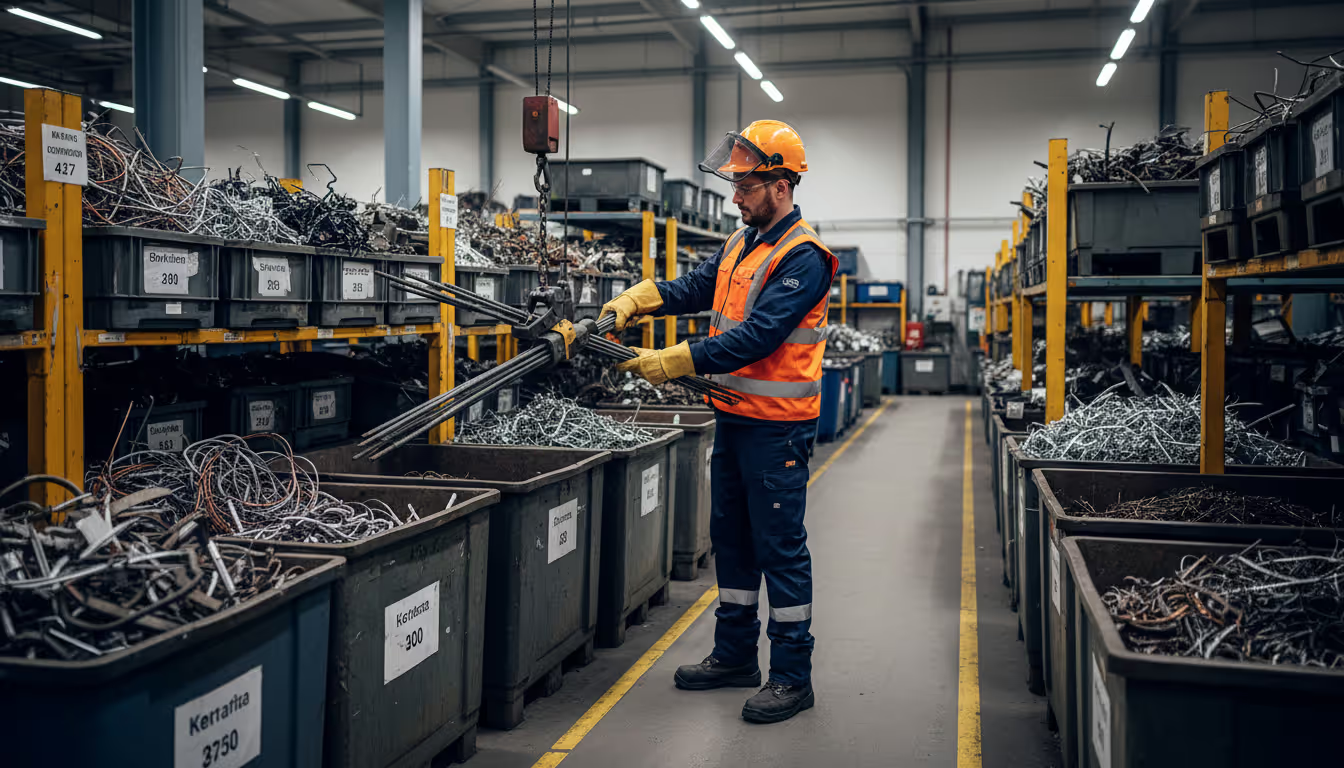
Sharp edges everywhere. Sheet metal, wire ends, metal shavings. All of it creates opportunities for cuts and punctures. This stuff happens most during manual sorting and when workers move material by hand.
Heavy, awkward pieces. Scrap metal is dense. Even small pieces can be surprisingly heavy. Bad lifting technique or pieces that are too heavy leads to back injuries, shoulder strains, and wrist problems. These injuries stick around. They become chronic issues that affect workers for years.[5]
Trip hazards from poor storage. Scrap piled near work areas. Materials blocking walkways. Containers that aren't secured. All of it creates slip, trip, and fall risks. And falls are expensive. According to Liberty Mutual, they're one of the top five causes of workplace injury costs.[1]
Chemical residues and dust. Cutting fluids, oils, metal dust. These create respiratory risks and skin contact issues. OSHA regulates toxic metals like lead, cadmium, and beryllium because even common metals become hazardous when you're exposed to high concentrations.[6]
All these risks are addressed when you adopt scrap metal safety best practices.
What Your Team Needs to Wear (And Why Generic Work Gloves Don't Cut It)
Personal protective equipment is your first line of defense—and a core part of scrap metal safety best practices.
Hands and arms. Get leather or Kevlar gloves. Not regular work gloves. You need something that can handle sharp edges and rough surfaces. Your team should check their gloves before each shift. Worn or damaged gloves? Replace them immediately.
Eyes. Safety glasses with side shields. Non-negotiable. Anyone working near cutting, grinding, or sorting operations needs eye protection. Metal fragments and dust don't care how careful you are.
Feet. Steel-toed safety boots. Add upper foot guards (called metatarsal protection) if you're handling particularly heavy pieces. A dropped chunk of steel can break bones and sideline workers for weeks.
Breathing. When cutting, grinding, or working with dusty materials, you need respirators. Not just any mask. Properly fitted respirators that actually protect against metal dust and chemical vapors. Workers need training on how to use, clean, and store them correctly.[7]
Training workers to use PPE properly is essential to maintaining scrap metal safety best practices.
Storage That Actually Prevents Injuries
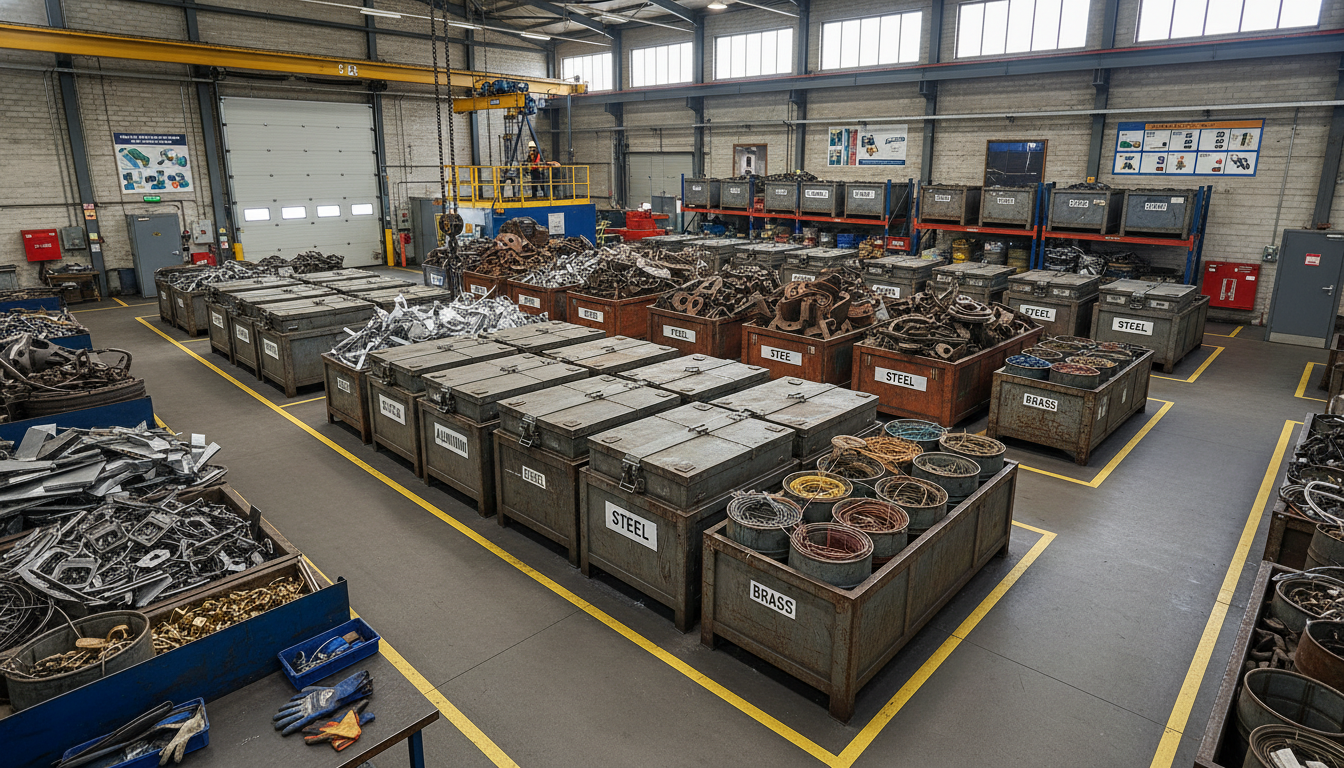
Most handling injuries happen because of poor storage setup. Here's how to fix it.
Create specific spots for different materials. Keep aluminum separate from steel. Copper wire away from brass. Heavy pieces away from light materials. This organization makes sorting safer and increases the value you get when materials are picked up.
Use the right containers. Heavy-duty bins with reinforced walls for dense metals like steel. Containers need secure lids to prevent spills. Size matters too. Big enough to be useful, but not so large they become impossible to move safely.
Keep paths clear at all times. OSHA requires clean, dry floors with proper spacing around stored materials.[8] Mark walkways with floor tape. Enforce a policy that keeps scrap in collection areas, not scattered through work zones.
Stack safely when you must stack. Never stack containers or loose material higher than safe lifting height. Unstable stacks collapse. Collapses crush or pin workers. It's that simple.
The Three Signs It's Time to Call Professional Pickup
Sacramento facilities reduce risk by scheduling regular professional pickup instead of handling everything internally. Here's when that makes the most sense.
Your volume is getting uncomfortable. If your team makes multiple trips to move material, you've got too much on-site. Professional services handle large volumes efficiently with equipment designed for the job.
The materials are awkward or unusually heavy. HVAC units. Steel beams. Large copper components. These present handling challenges. Trained crews with proper equipment manage these loads safely.[4]
You lack the right equipment. Facilities that work with professional recyclers transfer the physical risk to people who do this for a living. The mobile recycling approach means your staff doesn't load trucks or transport materials offsite.
Mobile services bring specialized equipment to your Sacramento facility. Crews handle sorting, loading, and hauling. Most companies complete pickups within the same week you schedule. This approach keeps your team focused on production while professionals manage the high-risk activities.
Training Your Team on What Actually Matters
OSHA says employers must establish formal training programs that teach workers how to spot and avoid scrap metal hazards.[9] Your program should cover these areas.
How to lift properly. Back injuries and strains cost employers billions every year. Train your team to check weight before lifting, use their legs instead of their backs, and ask for help with heavy or awkward pieces. This isn't complicated, but it needs to be reinforced regularly.
Spotting hazards before they become incidents. Workers should watch for sharp edges, chemical residues, unstable piles, and congested work areas. Encourage reporting of unsafe conditions. No penalties for speaking up.
Operating equipment safely. Only trained, authorized workers should operate forklifts, lift trucks, and other material handling equipment near scrap storage areas. Period.
What to do when injuries happen. Everyone needs to know where first aid is located. Post emergency procedures clearly. Run regular drills so the response is automatic, not something people figure out while someone's bleeding.
Why Professional Pickup Actually Reduces Your Risk
Let's talk about the elephant in the room. Or rather, the pile of scrap metal in your back lot.
Scheduling regular professional pickup eliminates many handling risks entirely. Instead of your team managing heavy lifting, loading, and transport, trained professionals handle these tasks with appropriate equipment.
The process is straightforward. You collect material in designated containers at your facility. When you reach pickup volume, the service arrives with trucks and equipment. Their crew does the physical work.
For facilities managing ongoing production or renovation projects, this prevents the buildup that creates safety hazards. Regular pickups keep storage areas organized and walkways clear. Your insurance provider stays happy. Your team stays safe.
How Safety Practices Support Your Environmental Goals
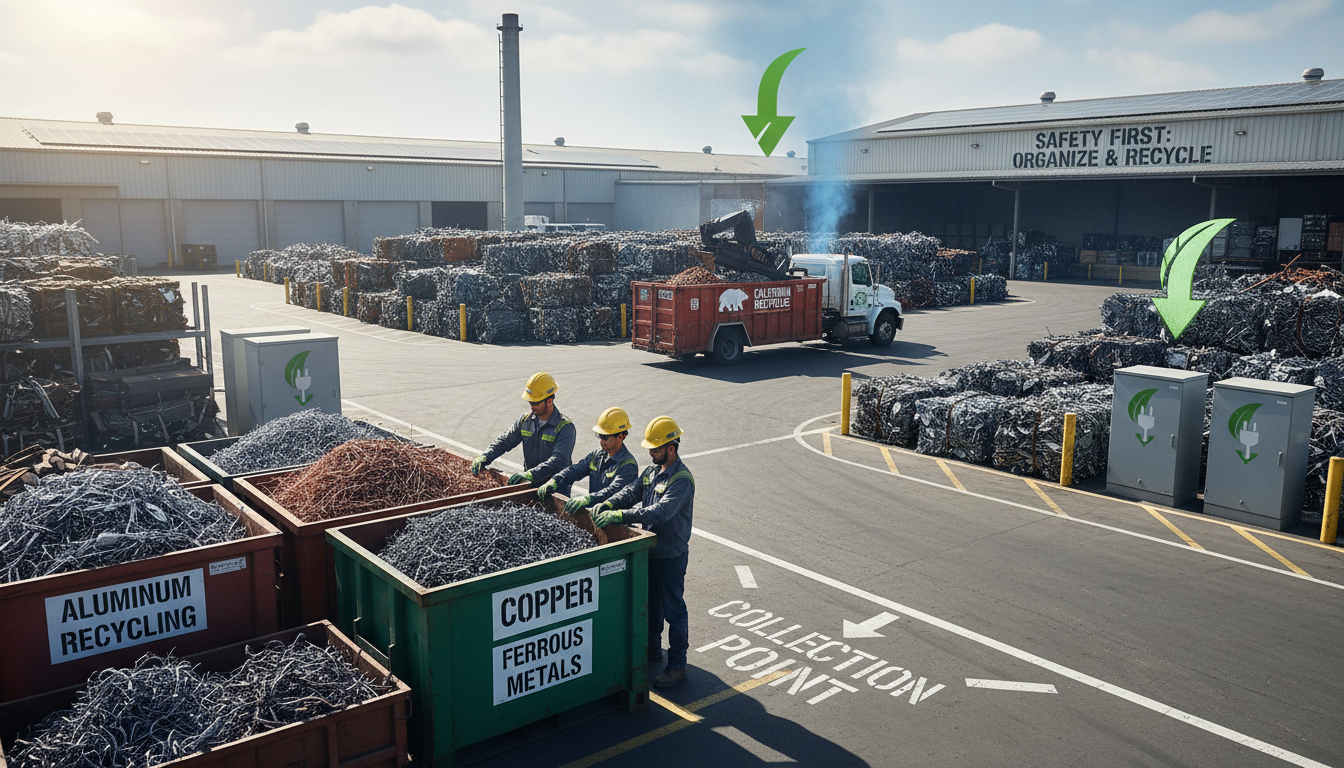
Better scrap metal safety practices support broader sustainability efforts. When you set up clear collection procedures and regular pickup schedules, you're doing two things at once. Protecting your team and participating in California's recycling ecosystem more effectively.
Metal recycling cuts the need for virgin ore mining. It conserves energy. It decreases greenhouse gas emissions. Sacramento businesses that combine safety protocols with professional pickup services get both benefits. Worker protection and environmental impact.
Getting Started With Better Safety Practices
Start with an honest assessment. Walk through your facility and identify where material piles up, how your team currently manages it, and what risks exist in your process.
Then implement the basics:
Proper PPE for everyone handling material
Designated storage areas with clear walkways
Training that emphasizes spotting hazards before incidents happen
Document your procedures. New team members need to understand expectations from day one.
Finally, consider how professional pickup fits your operation. For many Sacramento facilities, scheduled service removes the riskiest parts of scrap management while generating revenue from recyclable materials.
Ready to reduce injuries and streamline your scrap handling? Willis Recycling serves construction contractors, facility managers, and industrial operations throughout Sacramento and Northern California's Central Valley. Call (916) 271-2691 to discuss mobile pickup options that bring professional equipment and trained crews directly to your facility.
Frequently Asked Questions
What causes most scrap metal injuries?
The top causes are cuts from sharp edges, muscle strains from improper lifting, and puncture wounds from metal points. According to Bureau of Labor Statistics data, these account for the majority of scrap metal handling injuries across all industries. Most occur during sorting, moving material between areas, or loading for transport. Using proper PPE and correct lifting techniques prevents most of these incidents.
How often should scrap metal be picked up?
Pickup frequency depends on your volume and available storage space. Most Sacramento facilities schedule pickups every 2-4 weeks. If material starts piling up in walkways or workers struggle with container access, you need more frequent service. Regular pickup prevents the buildup that creates safety hazards and keeps your facility organized.
What's the difference between facility storage and professional pickup?
Facility storage means your team handles all sorting, moving, and loading of scrap materials using your own equipment and labor. Professional pickup means trained crews arrive with specialized equipment to handle sorting, loading, and hauling. The second option transfers physical risk to professionals while your team stays focused on production work.
Do small facilities really need formal safety training?
Yes. OSHA requires employers to establish training programs regardless of facility size. Training doesn't need to be elaborate, but workers must understand how to spot hazards, use PPE correctly, lift safely, and respond to emergencies. Document all training sessions and provide refreshers annually.
What containers work best for scrap metal storage?
Heavy-duty bins with reinforced walls for dense metals like steel and iron. Containers need secure lids, appropriate size for your volume, and compatibility with your handling equipment. Non-ferrous metals like copper and brass often need separate containers due to their higher value and theft potential. Choose containers based on what materials you generate most.
How does professional pickup reduce workplace injuries?
Professional recycling crews bring specialized equipment designed for heavy loads and have specific training in safe scrap handling. By eliminating the need for facility staff to manually load, transport, and manage awkward materials, mobile pickup services transfer high-risk activities to professionals. Facilities using regular pickup report fewer safety incidents related to material handling.
Works Cited
[1] AFL-CIO — "Death on the Job: The Toll of Neglect, 2024." https://aflcio.org/reports/dotj-2024.
[2] The Fabricator — "Managing scrap metal safety." https://www.thefabricator.com/thefabricator/article/safety/take-a-safety-stance-when-managing-scrap. Published: 2013-02-28.
[3] U.S. Bureau of Labor Statistics — "Injuries, Illnesses, and Fatalities." https://www.bls.gov/iif/.
[4] Willis Recycling — "The Mobile Recycling Advantage." https://www.willisrecycling.com/mobile-recycling/.
[5] VelocityEHS — "Key Insights from OSHA Injury and Illness Data." https://www.ehs.com/2025/05/key-insights-from-osha-2024-injury-and-illness-data/.
[6] Moley Magnetics — "OSHA Safety Guidelines for Scrap Metal Recyclers." https://moleymagneticsinc.com/osha-safety-guidelines-for-scrap-metal-recyclers/. Published: 2023-09-25.
[7] The Fabricator — "Managing scrap metal safety." https://www.thefabricator.com/thefabricator/article/safety/take-a-safety-stance-when-managing-scrap. Published: 2013-02-28.
[8] Carolina Recycling Association — "Three material handling solutions to address workforce challenges." https://www.cra-recycle.org/2022/01/three-material-handling-solutions-to-address-workforce-challenges/. Published: 2022-01.
[9] OSHA — "Green Job Hazards - Recycling: Waste Management and Recycling." https://www.osha.gov/green-jobs/recycling/waste-management.
About the Author
Willis Recycling has served Sacramento and Northern California's Central Valley since 2017, providing mobile scrap metal pickup services to construction contractors, facility managers, hospitals, and industrial operations. Our team specializes in on-site recycling that reduces handling risks while maximizing material value for commercial clients. We handle everything from aluminum and copper to insulated wire and equipment decommissioning, bringing professional crews and specialized equipment directly to your facility.