When material costs spike or supply lines tighten, operations managers across Northern California feel the pressure immediately. Budgets get squeezed. Disposal costs climb. And all that scrap metal piling up in the corner of your facility? It just sits there, taking up space that could be put to better use.
Here's what many Sacramento-area businesses overlook: that scrap isn't just waste waiting for disposal. It's a potential revenue stream sitting idle on your property.
Efficient scrap management turns a cost center into a source of recovered value. For manufacturers, contractors, and facility managers dealing with volatile material markets, that shift matters more than ever.
Why Scrap Accumulates—and What It Actually Costs You
Most businesses don't set out to stockpile scrap metal. It just happens. Copper wiring from equipment upgrades. Aluminum offcuts from fabrication. Steel frames from decommissioned machinery. Old HVAC units nobody got around to removing.
The pile grows because removing it feels like one more task competing for limited time and attention. But letting scrap accumulate carries real costs:
Floor space gets eaten up. Every square foot occupied by scrap is space that could hold inventory, equipment, or materials you actually need.
Safety hazards develop. Metal scraps create trip hazards, obstruct pathways, and complicate emergency egress. OSHA doesn't look kindly on cluttered facilities.
Value degrades over time. Some metals corrode or become contaminated when stored improperly, reducing what they're worth when you finally get around to moving them.
Disposal costs add up. If you eventually haul that material to a landfill, you pay twice—once for the dumpster rental, once for the dump fees. Meanwhile, the recoverable value walks out the door.
The facilities that handle scrap efficiently don't treat it as an afterthought. They build removal into their regular operations.
Turning Scrap Into Recovered Value
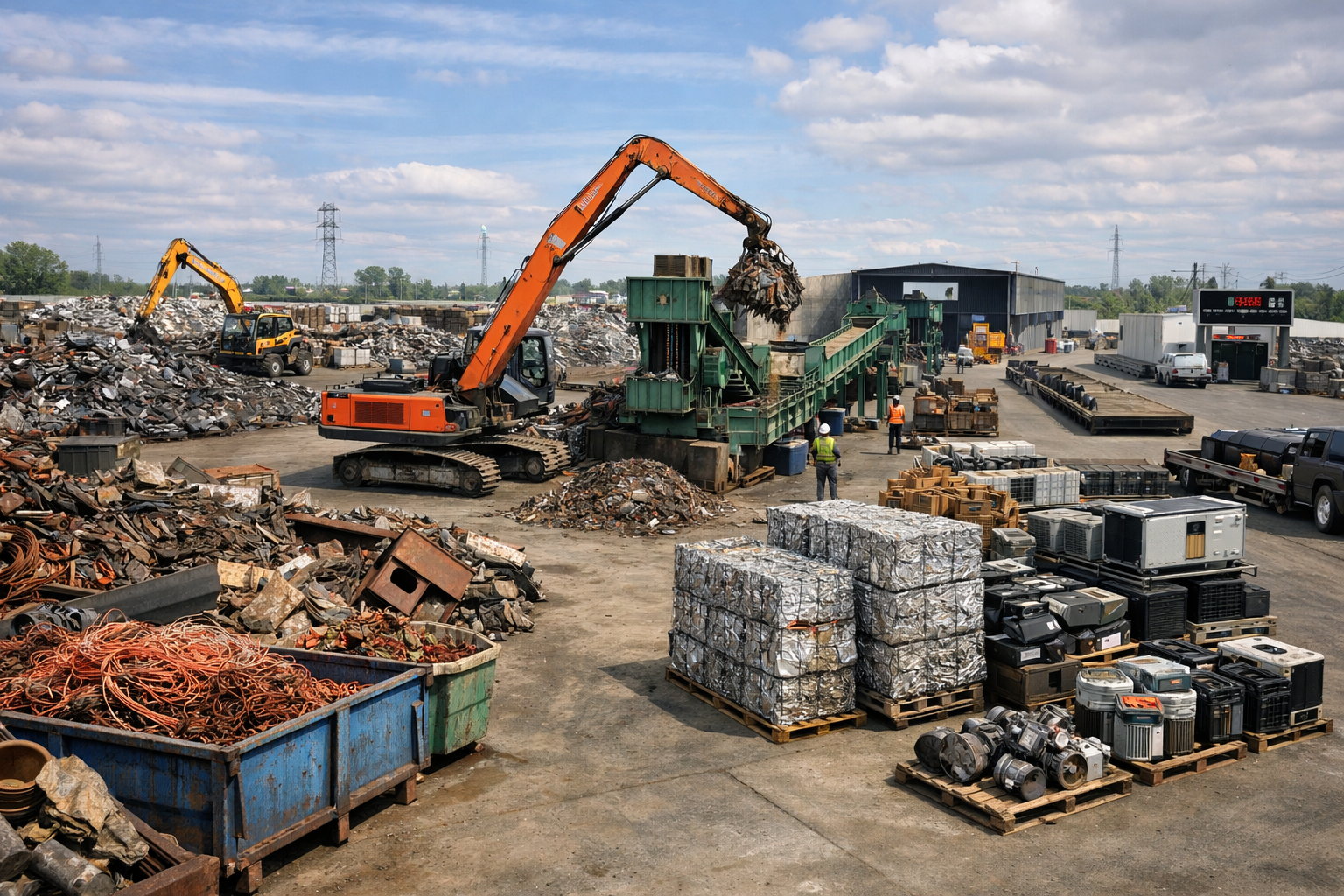
The math on scrap recovery is straightforward. Certain metals—copper, brass, aluminum, stainless steel—hold significant value per pound. Even mixed ferrous scrap (plain steel and iron) contributes when volumes are large enough.
Current market conditions determine exactly what that value looks like. Commodity prices fluctuate based on global demand, energy costs, and recycling capacity [1]. But the underlying principle stays constant: metal that gets recycled has value, and someone's going to capture it.
The question is whether that someone is you or the hauler charging you to take it away.
What typically holds value:
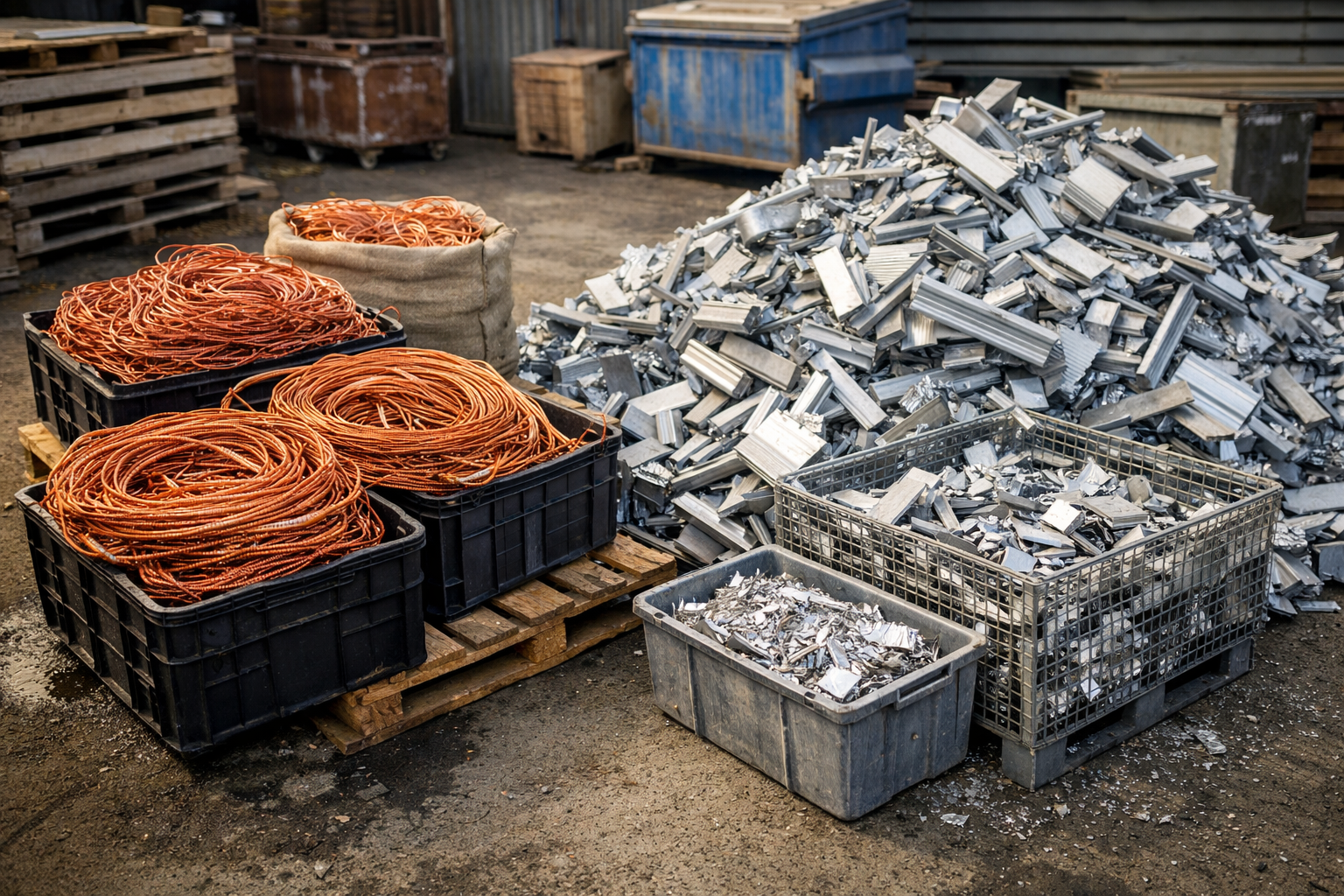
Copper wire and tubing – Consistently among the highest-value scrap materials. Clean, uninsulated copper commands premium rates.
Brass fixtures and fittings – Plumbing components, valves, and hardware made from brass recycle well.
Aluminum – Lightweight and energy-intensive to produce from raw ore, which makes recycled aluminum worth recovering [2].
Stainless steel – Grade matters, but quality stainless commands solid prices.
Insulated wire – Takes more processing than bare copper, but still carries value when quantities justify handling.
What often gets overlooked:
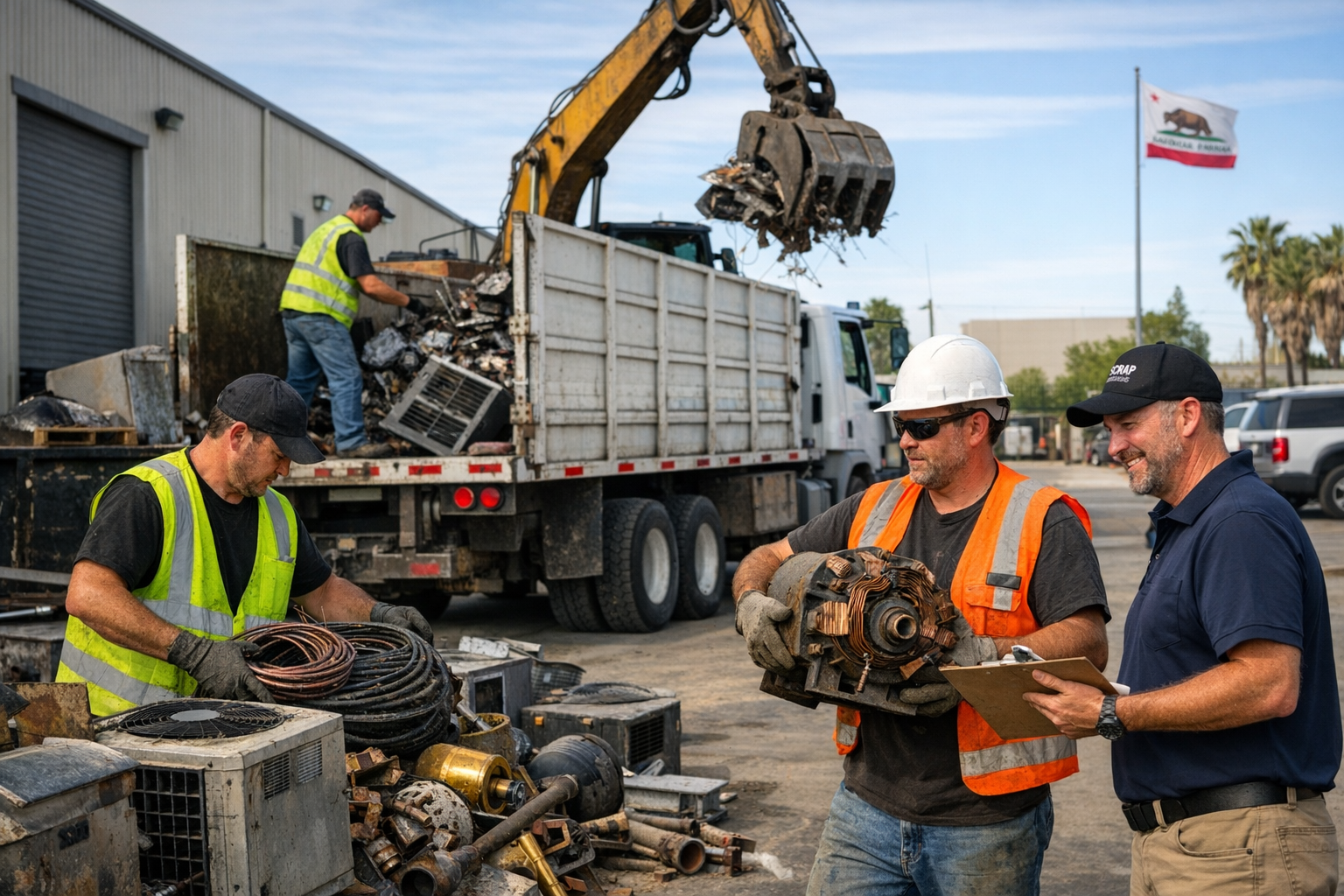
Old HVAC equipment (contains copper, aluminum, and sometimes brass)
Decommissioned machinery with mixed metal components
Vehicle batteries (lead-acid batteries have established recycling value)
Electric motors (copper windings inside)
Facilities that track their scrap streams—knowing roughly what materials they generate and in what quantities—position themselves to capture maximum value rather than leaving money on the table.
The Case for Regular Removal Over Stockpiling
Some operations try to maximize payout by waiting until they've accumulated massive quantities before arranging pickup. On paper, this makes sense: bigger loads mean better leverage.
In practice, the stockpiling approach often backfires.
Market timing is unpredictable. Waiting for "better prices" assumes you can predict commodity swings. Most businesses can't. Meanwhile, that material occupies space and creates headaches for months.
Contamination risks increase. The longer scrap sits, the more likely it gets mixed with other materials, rained on, or otherwise degraded. Contaminated scrap grades down in value.
Operational disruptions compound. Scrap that blocks access, creates safety concerns, or clutters work areas costs you in ways that don't show up on a scrap receipt.
Cash flow delays. Value locked up in a scrap pile is value you can't use elsewhere in your operation.
Regular scheduled pickup—whether weekly, monthly, or on whatever cadence matches your material flow—keeps operations clean, captures value consistently, and eliminates the management burden of tracking a growing stockpile.
What Efficient Scrap Management Actually Looks Like
For Sacramento-area businesses generating consistent scrap volumes, efficient management follows a predictable pattern:
1. Know what you're generating.
Spend an hour walking your facility. Note where scrap accumulates, what materials show up, and roughly how fast the piles grow. This baseline understanding shapes everything else.
2. Separate what's separable.
You don't need to become a metallurgist. But keeping copper separate from steel, or aluminum separate from iron, typically improves the value you recover. If separation isn't practical given your operation, a good recycling partner handles mixed loads—you just may not get the same per-pound rate.
3. Designate collection areas.
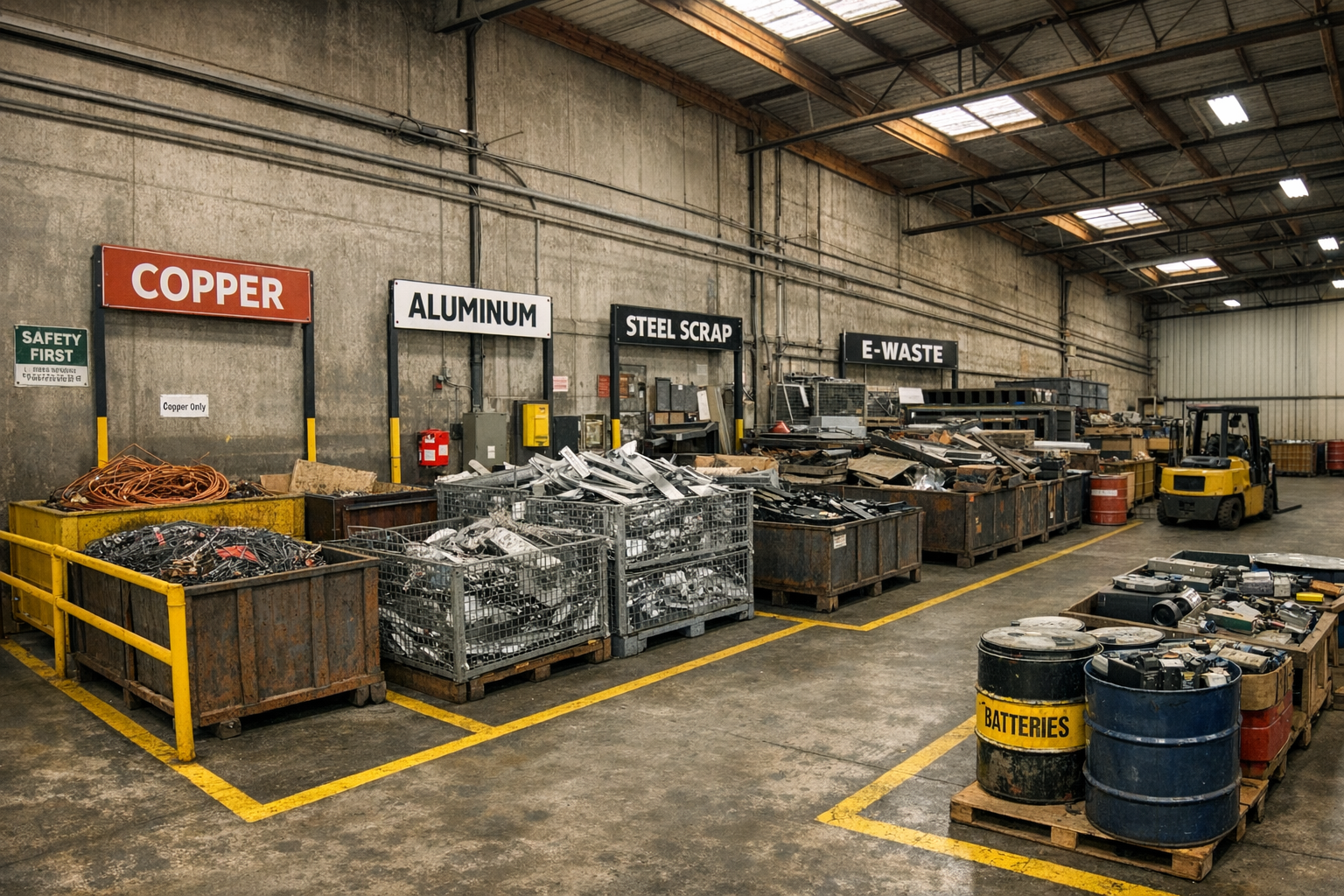
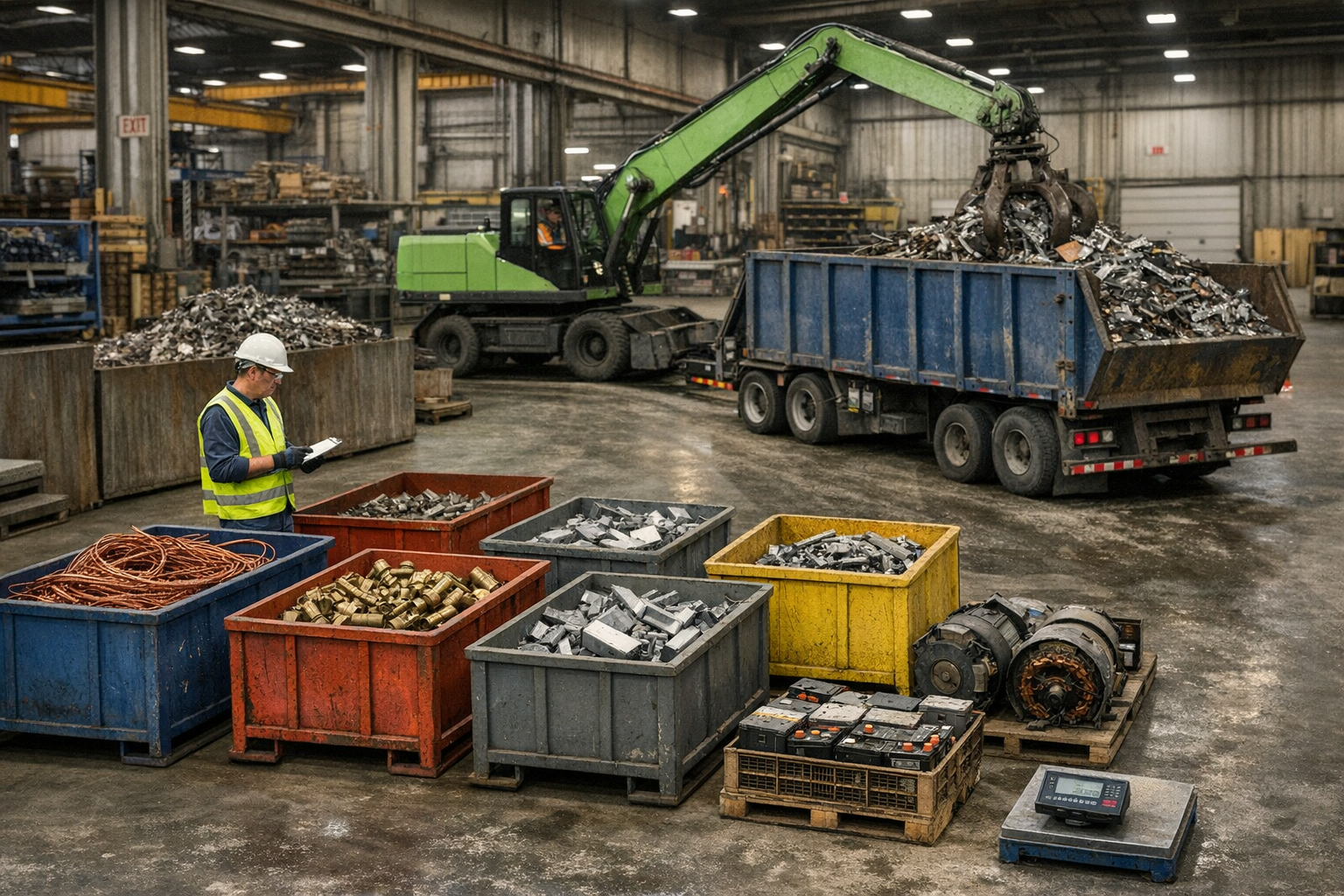
Clear staging zones keep scrap contained, reduce safety hazards, and make pickup efficient. When the recycler arrives, they're not hunting through your facility for scattered material.
4. Establish a removal schedule.
Consistency beats optimization. A regular pickup cadence—whether every two weeks or once a month—removes the mental overhead of deciding "is it time yet?" and prevents accumulation problems.
5. Get documentation.
Proper weight tickets and material breakdowns support your financial records, feed into any sustainability reporting requirements, and provide the paper trail auditors or regulators might request.
None of this requires significant capital investment or specialized expertise on your end. It's mostly a matter of establishing systems that make scrap flow out of your facility as smoothly as products flow in.
The Regional Advantage: Why Local Partners Matter
When scrap needs to move, geography shapes your options.
National waste management companies exist, but their business models optimize for scale and standardization. They're set up to serve accounts generating predictable waste streams that fit their routing and pricing structures. Smaller or variable loads often get deprioritized.
Regional recyclers operate differently. They're built around relationships with local businesses, flexible scheduling, and direct knowledge of the Sacramento market.
Faster turnaround. A call today can often become a pickup this week, not next month.
Realistic minimums. Local operators can often accommodate smaller loads that national players would decline or charge premium fees to handle.
Face-to-face accountability. When your recycling partner operates in your community, reputation matters. Poor service gets around fast.
Less transportation overhead. Material that doesn't cross state lines to reach processing means lower logistics costs, which can translate to better rates for you.
For Sacramento, Elk Grove, Roseville, and Central Valley operations, working with a regional recycler typically means better service, faster response, and pricing that reflects actual market conditions rather than corporate formulas.
Connecting Scrap Management to Broader Cost Control
Material costs aren't going down. Global demand for metals continues to grow. Mining new ore requires massive capital investment and faces increasing environmental scrutiny. Energy costs for primary metal production remain high—recycling aluminum, for instance, uses roughly 95% less energy than producing it from bauxite [2].
These dynamics mean recycled metal stays in demand. And they mean your scrap—properly managed—holds value that shouldn't walk out the door in a dumpster.
Beyond direct recovery value, efficient scrap management contributes to operations in less obvious ways:
Cleaner facilities run better. Clutter creates friction. It slows movement, complicates inventory management, and creates maintenance headaches.
Compliance gets easier. California's environmental requirements continue expanding. Facilities that already manage materials responsibly face fewer surprises when regulations tighten.
Sustainability reporting has substance. More customers and partners want to see environmental metrics. Documented recycling volumes give you real numbers to report, not vague claims.
Insurance and safety audits go smoother. Organized facilities with clear material handling practices raise fewer red flags during inspections.
Scrap management isn't glamorous work. But it's the kind of operational discipline that separates well-run facilities from chaotic ones.
Start Where You Are
You don't need a perfect system to start capturing value from scrap. You need a first step.
Look at what's accumulating in your facility right now. Copper wire. Aluminum trim. Steel offcuts. Old equipment someone's been meaning to deal with for months.
That material has value. Getting it evaluated and removed puts cash back in your budget, clears space for productive use, and eliminates a management headache you've been carrying longer than necessary.
Ready to clear space and recover value? Call Willis Recycling at (916) 271-2691 to discuss pickup options for your facility.
Frequently Asked Questions
How do I know if my scrap is worth enough to justify pickup?
Most commercial operations accumulate enough material over time to meet pickup thresholds. A quick conversation about what materials you have and approximate quantities clarifies whether a scheduled pickup makes sense or whether you should wait until you've accumulated more. Photos help—text or email a few pictures of your scrap pile and get a realistic assessment.
Do we need to sort materials before pickup?
Sorting isn't required, but it typically improves what you recover. Keeping copper separate from steel, or brass separate from aluminum, lets each material get priced at its appropriate grade. If sorting isn't practical for your operation, mixed loads can still be handled—you'll receive an evaluation based on the mix.
What happens during an on-site pickup?
A trained crew arrives at your location with the equipment needed to load and transport your materials. They evaluate what you have, provide weight-based pricing according to current market rates, and handle all the heavy lifting. You receive documentation showing materials collected and settlement terms. The whole process is designed to minimize disruption to your operations.
Can we set up recurring pickups?
Absolutely. Facilities with consistent scrap generation often benefit from scheduled pickups—weekly, biweekly, or monthly depending on volume. Regular service keeps material from accumulating, maintains clear work areas, and eliminates the need to remember to call each time. Scheduling gets established during your initial conversation.
What documentation do we receive?
Every pickup includes an itemized record of materials collected, weights, and valuation. This documentation supports your financial records, feeds into sustainability reporting if your organization tracks recycling metrics, and provides the paper trail that auditors or regulators might request.
About Willis Recycling
Willis Recycling is a family-owned mobile recycling service with nearly two decades of industry experience. Based in Sacramento, we provide on-site pickup, fair evaluations, and transparent documentation for commercial and industrial clients throughout Northern California. Our team has partnered with Fortune 500 companies, construction firms, and manufacturers across the region—recycling over 70 tons of metal in 2024 alone. We understand that reliable service and compliance matter to operations professionals managing complex facilities.
Cited Works
[1] U.S. Geological Survey — "Mineral Commodity Summaries 2024." https://pubs.usgs.gov/periodicals/mcs2024/mcs2024.pdf
[2] Aluminum Association — "Recycling."
https://www.aluminum.org/recycling