When your company relocates, downsizes, or renovates, the pile of old desks, filing cabinets, computers, and random office debris can feel overwhelming. Most facility managers default to calling a junk hauler, paying by the truckload, and watching everything disappear. That approach gets the job done, but it leaves money on the table—sometimes a lot of it.
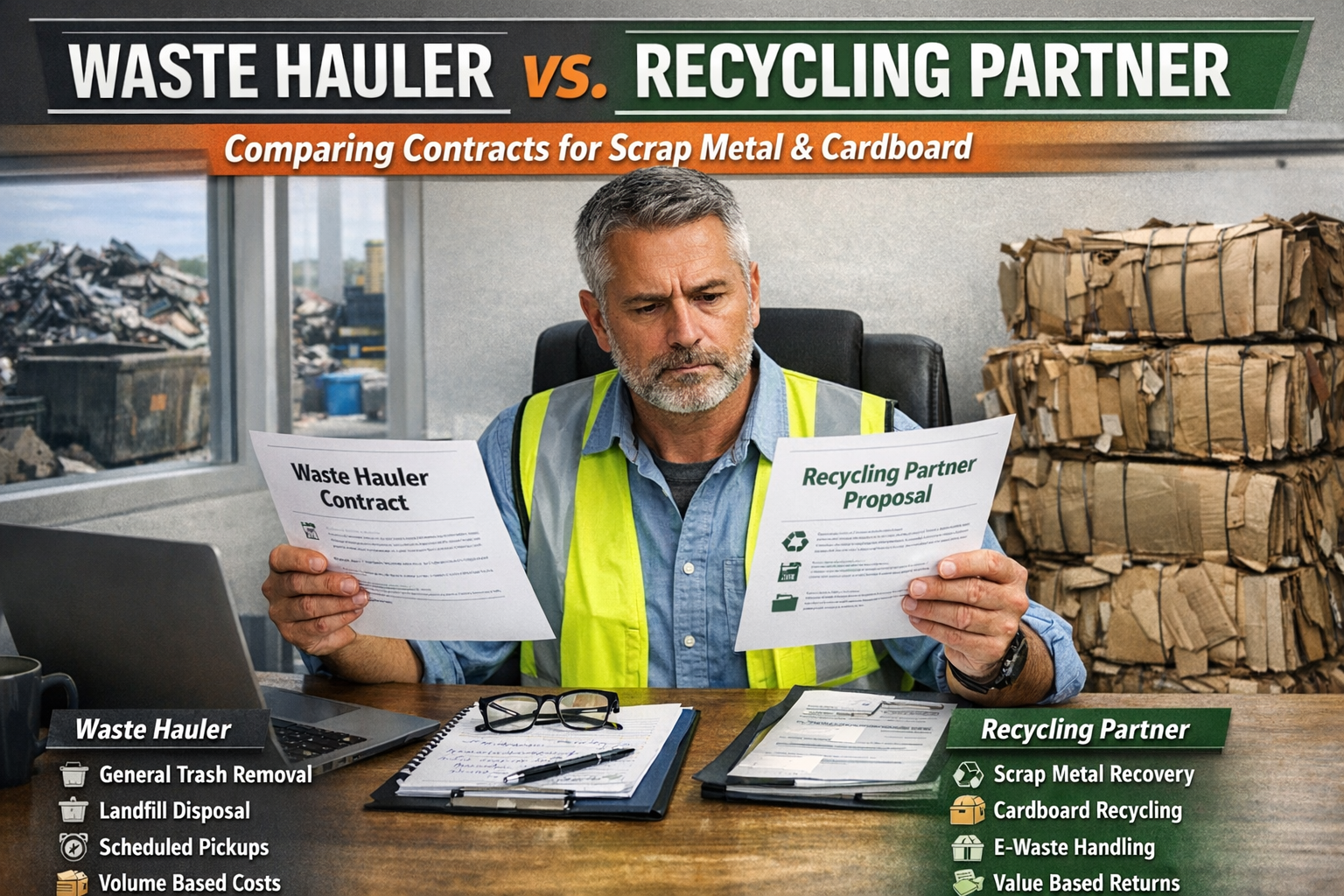
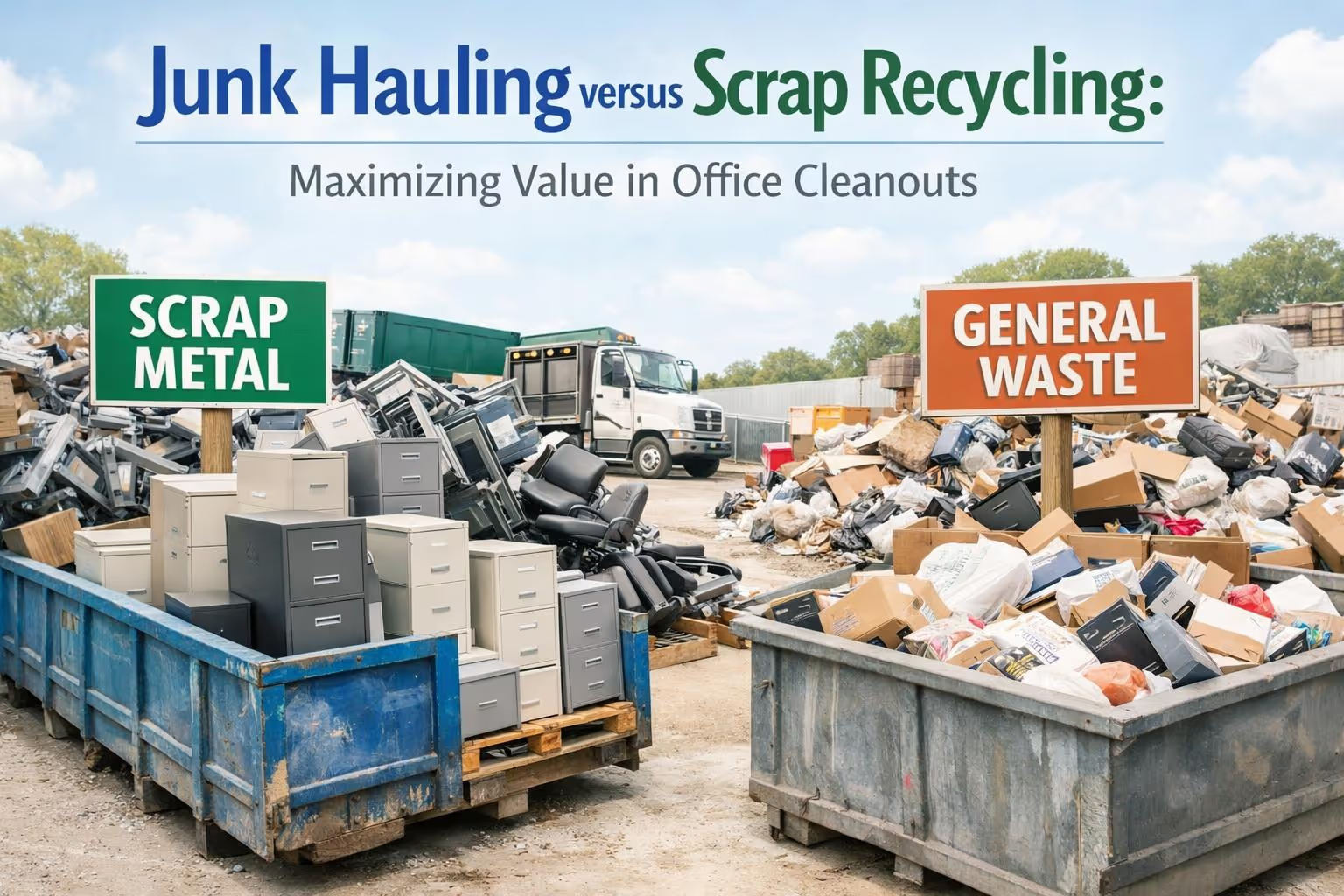
Junk hauling versus scrap recycling represents two fundamentally different ways to handle office cleanouts. One treats everything as waste. The other recognizes that mixed into that pile of outdated furniture and broken equipment sits valuable metal, recyclable electronics, and materials that shouldn't cost you money to remove.
Understanding the difference can turn a budget drain into a cost-neutral project—or even generate revenue for your business.
What Actually Happens During a Typical Office Cleanout
Picture a standard corporate office preparing to vacate a 10,000-square-foot space. The inventory looks something like this:
40 metal desks and workstations
25 filing cabinets (mostly steel)
15 desktop computers and monitors
8 rolling office chairs with metal frames
3 server racks with outdated equipment
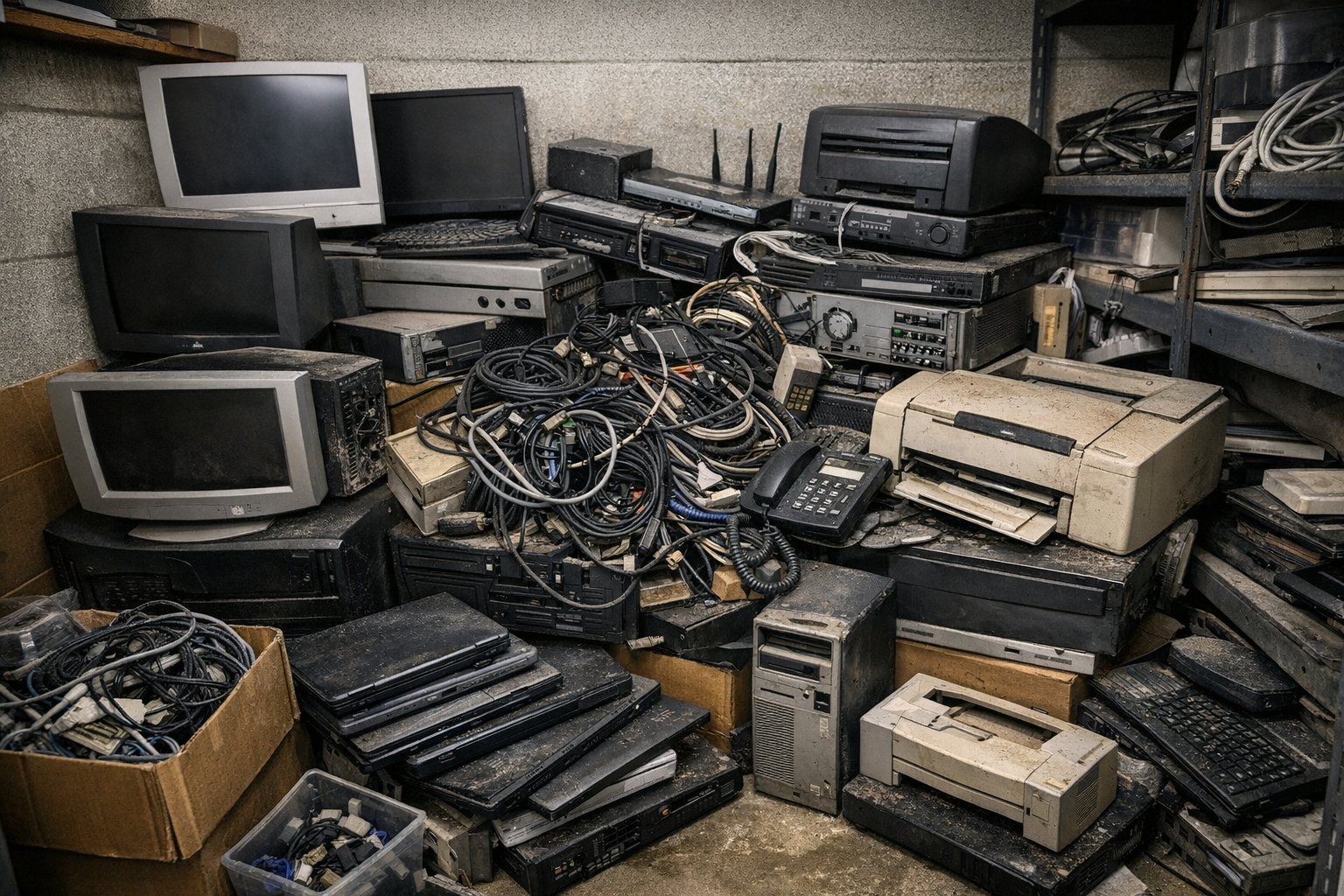
Miscellaneous items: old printers, phone systems, cable trays, light fixtures
Mixed in with all of that: cardboard boxes, packing materials, broken furniture with no salvage value, and general trash.
When a junk removal company arrives, they see volume. They quote based on how many truck loads they'll need to haul everything away. Whether the truck contains steel filing cabinets worth money or worthless particle board, the price stays the same—or sometimes increases if the load is heavy.
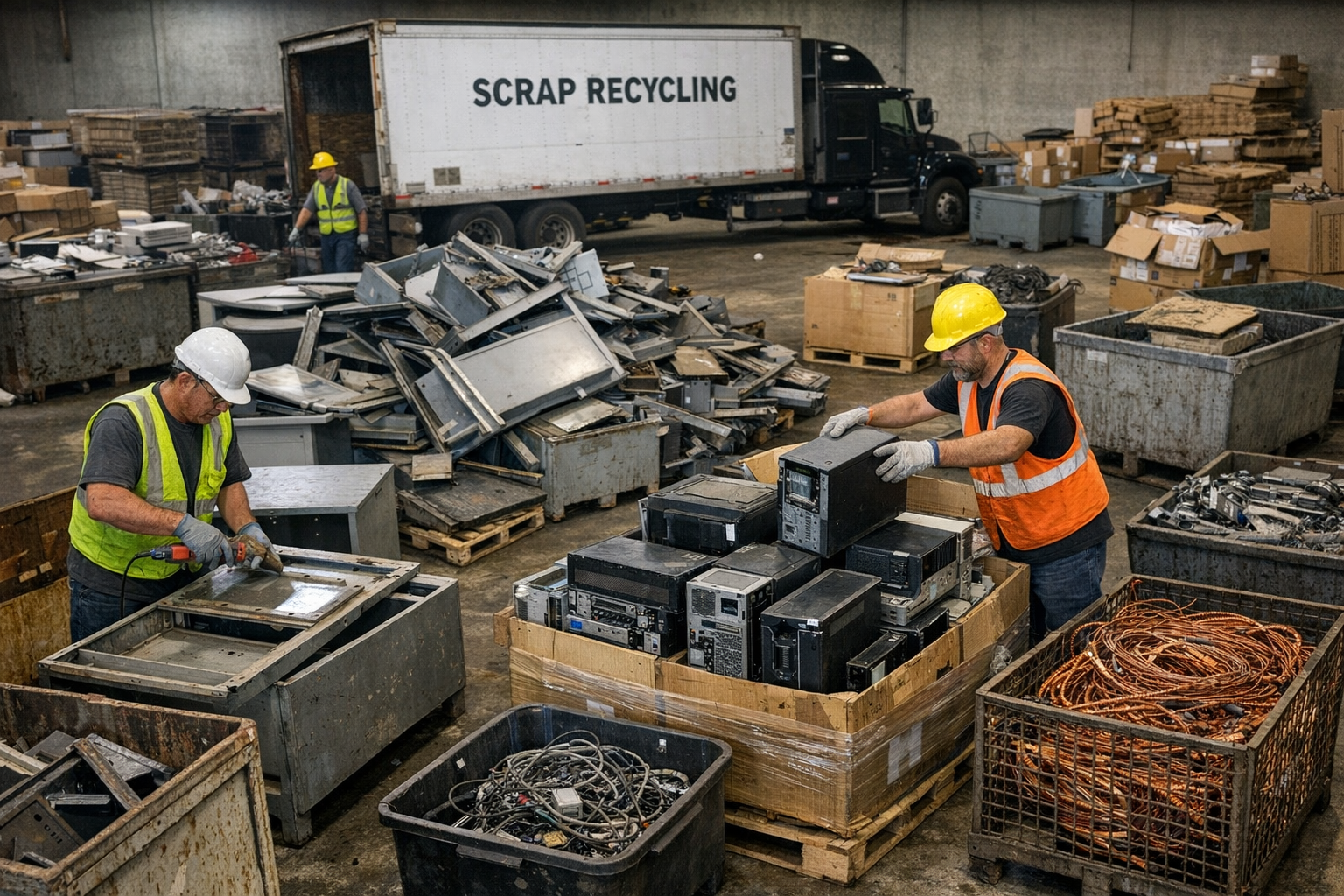
The materials all go to the same place: typically a transfer station or landfill. The steel, aluminum, copper wiring, and electronics get buried alongside the actual garbage [1].
The Hidden Cost of Treating Everything as Trash
Junk hauling services in the Sacramento region typically charge between $400 and $800 per truck load, depending on weight and volume [2]. A mid-sized office cleanout might require three to five loads.
Running the numbers on a hypothetical project:
| Expense Category | Junk Hauling Approach |
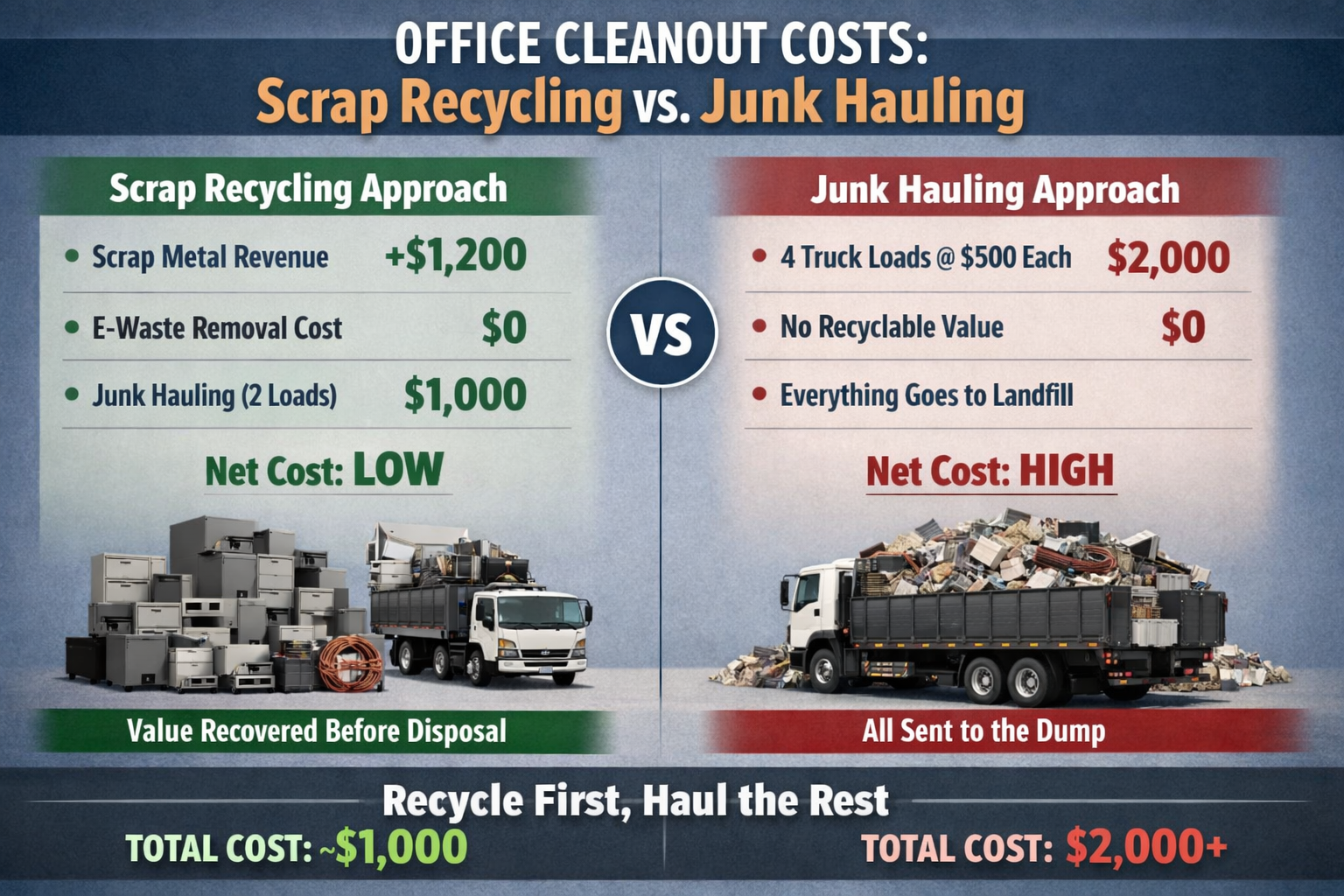
| Removal (4 loads @ $500) | $2,000 |
| Recycling revenue | $0 |
| Net cost | $2,000 |
Now consider what's actually in those loads. Those 25 steel filing cabinets weigh approximately 100 pounds each—2,500 pounds of steel total. The metal desks add another 2,000 pounds. Computer towers, server equipment, and cable trays contribute copper, aluminum, and other non-ferrous metals.
At typical market rates, that steel alone represents value. Add the copper wiring pulled from old phone systems and the aluminum from equipment frames, and the picture changes significantly [3].
The problem isn't that businesses choose to spend money on removal. The problem is they pay to dispose of materials that have actual commodity value.
A Smarter Sequence: Peel Off Value Before Calling the Hauler
The solution doesn't require choosing between junk hauling and scrap recycling. It requires doing them in the right order.
Step 1: Separate metals from general debris
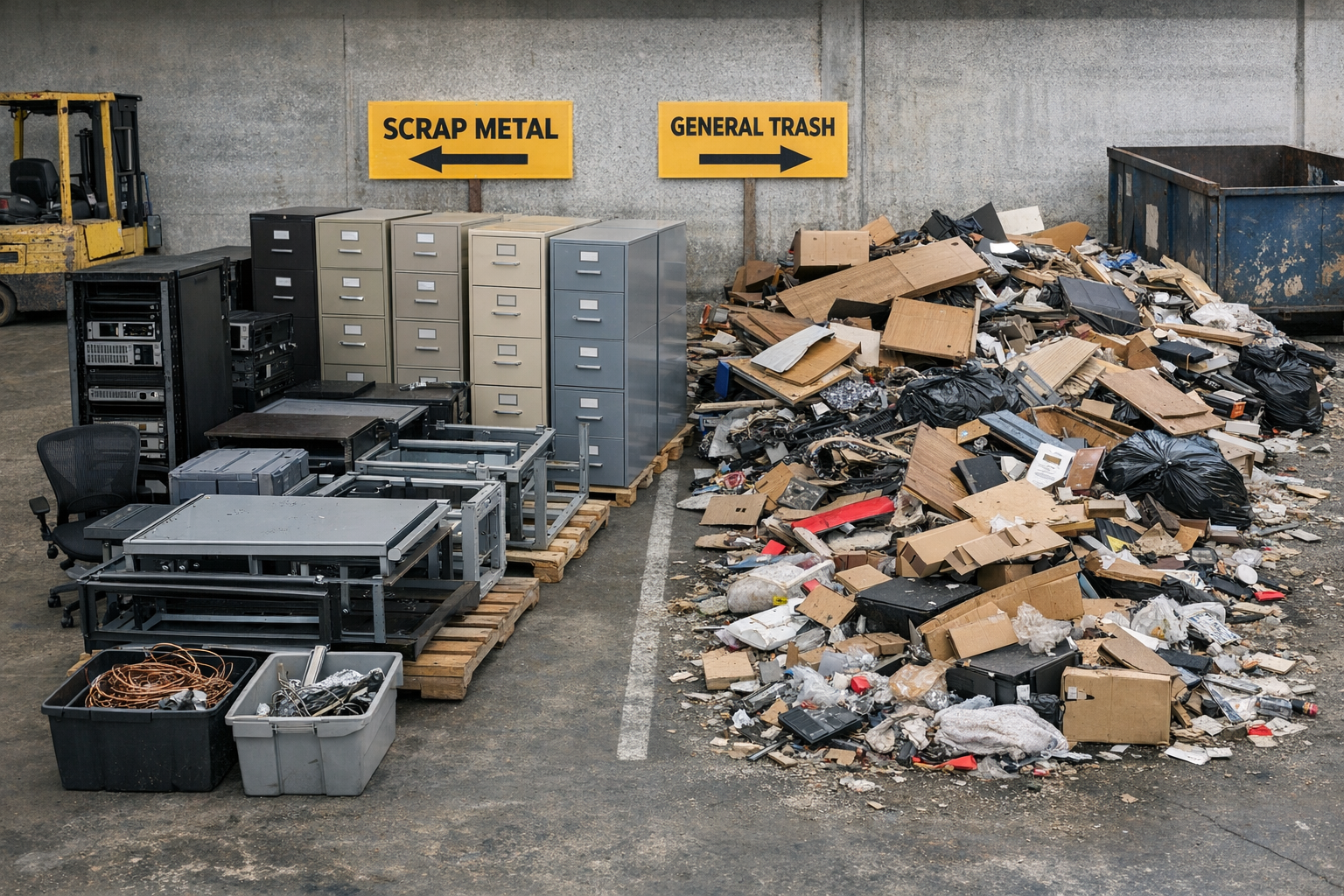
Before anything leaves the building, identify items with scrap value. Steel furniture, aluminum frames, copper cabling, brass fixtures, and stainless steel equipment all belong in a separate pile.
Step 2: Pull electronics for proper e-waste handling
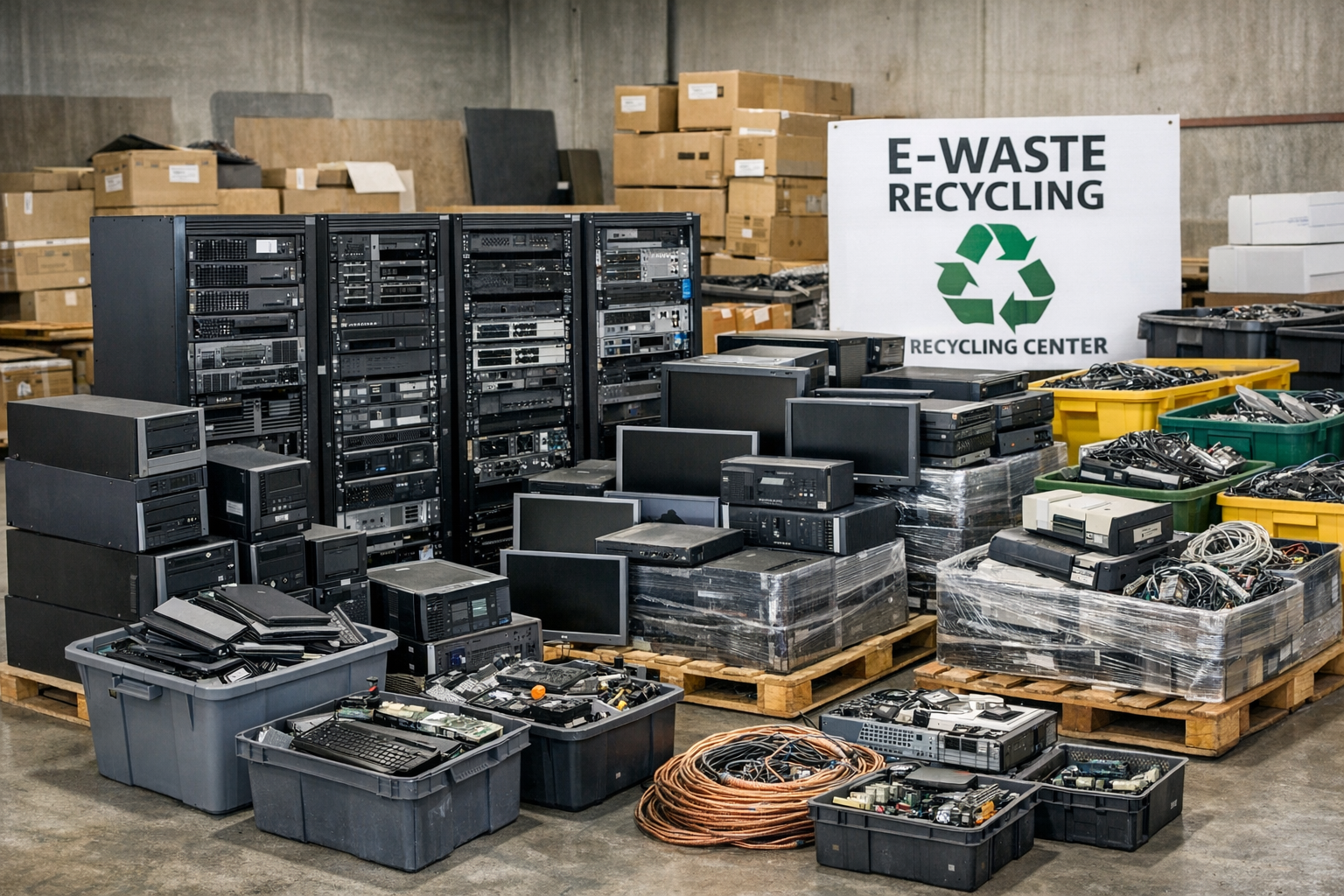
Computers, monitors, servers, phone systems, and printers contain recoverable metals and components. They also require proper disposal under California regulations. Separating e-waste ensures compliance and captures additional value [4].
Step 3: Set aside cardboard and other recyclables
Baled cardboard from packing materials and office supplies has value when accumulated in sufficient quantity. Even loose cardboard can be picked up at no charge by many recyclers if the volume justifies a trip.
Step 4: Call the junk hauler for what remains
After metals, electronics, and cardboard are removed, the actual waste pile shrinks dramatically. That four-truck job might become a two-truck job. The particle board, fabric, broken plastic items, and genuine garbage go to the hauler—at half the original cost.
Real-World Example: How the Numbers Change
Consider that same 10,000-square-foot office cleanout using the sequential approach:
Scrap metal recovery:
Steel (filing cabinets, desks, shelving): approximately 4,500 lbs
Copper (cabling, fixtures): approximately 50 lbs
Aluminum (equipment frames, light fixtures): approximately 100 lbs
E-waste separated: 18 items (computers, servers, monitors)
Cardboard collected: 200+ lbs from packing materials
| Expense/Revenue Category | Sequential Approach |
| Scrap pickup | $0 (free for qualifying loads) |
| Fair evaluation payout | Credit toward costs |
| E-waste removal | $0 (included with scrap pickup) |
| Junk hauling (2 loads @ $500) | $1,000 |
| Net cost | Significantly reduced |
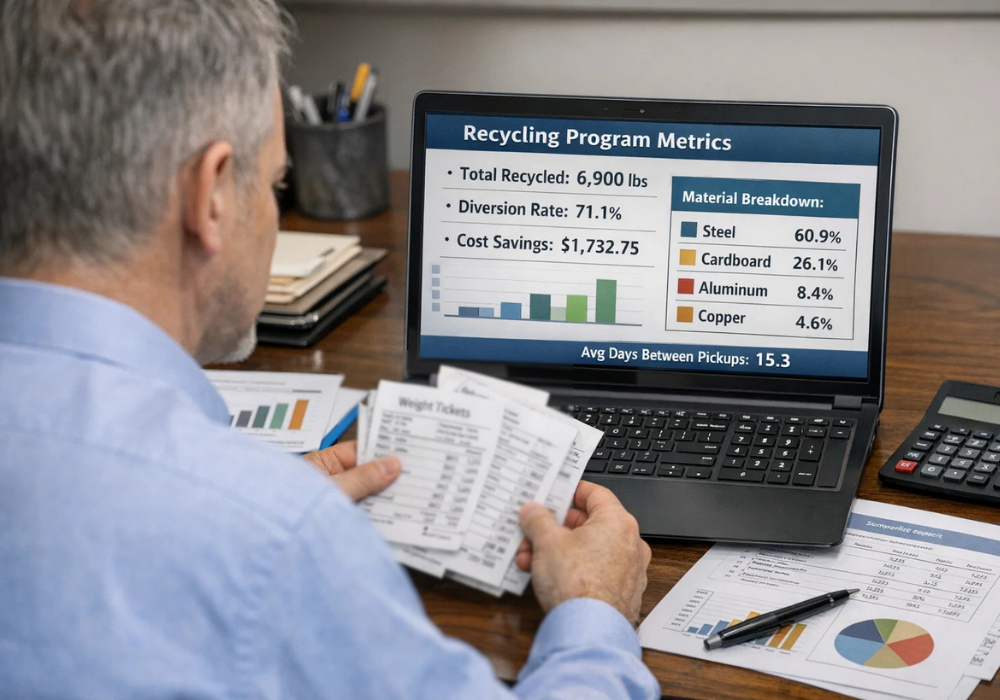
The exact numbers depend on current market conditions, material grades, and total weight. Scrap metal prices fluctuate based on global commodity markets [5]. But the principle holds: separating valuable materials before calling the junk hauler consistently reduces total project cost.
In many cases, the scrap value offsets a substantial portion of remaining hauling expenses. Some projects end up cost-neutral.
Why Most Office Managers Skip This Step
If the math works this clearly, why do so many cleanouts still go straight to junk haulers?
Time pressure. When the lease ends in two weeks, calling one company to handle everything feels faster than coordinating multiple vendors.
Lack of knowledge. Facility managers specialize in operations, not recycling markets. Recognizing which items have scrap value versus which are genuine waste requires experience most people don't have.
Perceived hassle. The assumption is that separating materials requires significant labor from the internal team.
No one mentions the alternative. Junk haulers don't typically suggest that clients could recover value from their load. They provide a service, and that service is removal—not optimization.
The Pre-Cleanout Walkthrough: Solving All Four Problems
A walkthrough before the cleanout begins eliminates these barriers.
During a walkthrough, a scrap recycling professional tours the space, identifies materials with recovery value, and provides a realistic assessment of what the process would look like. The facility manager learns:
Which items should be separated
Approximate value of recoverable materials
Whether the load qualifies for free pickup
How the timing and logistics would work alongside any junk removal
No labor falls on the internal team beyond basic separation—keeping metals in one area, electronics in another. The recycling crew handles the heavy lifting, sorting, and transport [6].
The walkthrough takes 30 minutes. The information it provides can save thousands of dollars on a large cleanout project.
Materials Commonly Overlooked in Office Cleanouts
Beyond obvious items like filing cabinets and computers, offices contain scrap value that frequently gets missed:
Electrical infrastructure: Copper wiring in walls and cable trays represents significant value, especially when renovation or demolition is involved.
HVAC components: Old rooftop units, ductwork, and copper refrigerant lines contain recoverable metals [7].
Kitchen and break room equipment: Commercial refrigerators, stainless steel sinks, and metal shelving add weight to a scrap load.
Telecommunications equipment: Phone systems, network switches, and server room infrastructure contain copper, aluminum, and circuit boards.
Building fixtures: Metal door frames, light fixtures, and bathroom hardware accumulate across a large office space.
A thorough walkthrough identifies these items before they disappear into a junk hauler's truck.
Compliance Benefits Beyond Cost Savings
California maintains strict regulations around electronic waste disposal. Computers, monitors, and certain other devices cannot legally go to landfills [8]. When everything goes into a junk hauler's truck, the business generating that waste bears responsibility for proper disposal—even if the hauler handles it incorrectly.
Working with a recycling service that properly processes e-waste provides documentation of compliant disposal. For businesses with environmental, social, and governance commitments, this documentation supports sustainability reporting and reduces liability exposure.
The same applies to scrap metal transactions. California law requires ID-verified intake and documentation of materials [9]. Proper recycling channels create a paper trail that demonstrates responsible material handling.
When Junk Hauling Still Makes Sense
Not every cleanout involves significant recoverable materials. A small office with mostly particle board furniture, fabric-upholstered chairs, and minimal electronics might not justify coordinating scrap recycling.
The threshold depends on material type and quantity. A few hundred pounds of mixed metal typically warrants a conversation about pickup. Less than that, the junk hauler route might genuinely be more practical [10].
The walkthrough provides this clarity. Sometimes the recommendation is simply to proceed with junk removal. But most mid-sized or larger office cleanouts contain enough recoverable material to make the sequential approach worthwhile.
Request a Pre-Cleanout Walkthrough
Before your next office cleanout, relocation, or renovation project, schedule a walkthrough with Willis Recycling. A team member visits your site, surveys the materials, and provides a straightforward assessment of what's worth recovering versus what should go to a hauler.
There's no obligation. The goal is information—so you can make a decision that reduces cost and keeps valuable materials out of landfills.
Call (916) 271-2691 or send details to [email protected] to schedule your walkthrough.
Frequently Asked Questions
How do I know if my office cleanout has enough metal to be worth recycling?
Most commercial offices accumulate more scrap metal than managers realize. Steel filing cabinets, metal desks, shelving units, and equipment frames add up quickly. A walkthrough provides a clear answer without requiring you to weigh or inventory everything yourself. Generally, loads of 500 pounds or more justify scheduling a pickup in the Sacramento area.
Will I have to sort everything before your team arrives?
Basic separation helps maximize value—keeping metals in one area and electronics in another—but extensive sorting isn't required. Willis Recycling handles the heavy lifting, detailed sorting, and transport. Your team's involvement is minimal beyond initial organization.
Do you charge for removing electronics and e-waste?
E-waste pickup is typically included when combined with a scrap metal load of sufficient size. The electronics add value to the overall pickup, so there's usually no separate charge. Individual circumstances vary based on equipment types and quantities.
How long does the cleanout process take compared to calling a junk hauler?
Timing depends on project size, but scrap pickup often happens faster than coordinating multiple junk hauler loads. Many pickups are completed same-week, and the reduced junk volume means fewer hauler trips overall. A walkthrough clarifies the specific timeline for your project.
What documentation do I receive after the pickup?
You receive an itemized evaluation showing materials collected, weights, and how settlement was calculated. This documentation supports compliance requirements, sustainability reporting, and internal record-keeping for your organization.
About Willis Recycling
Willis Recycling is a family-owned mobile recycling service based in Sacramento, serving Northern California businesses since 2017. With nearly two decades of combined industry experience, the team provides on-site scrap metal and e-waste pickup for construction firms, healthcare facilities, retail warehouses, and commercial offices. All transactions follow California regulations including ID-verified intake and transparent documentation. Willis Recycling has maintained a 5-star rating across review platforms and has completed large-scale projects including recycling 125 hospital beds for Kaiser Permanente within 72 hours.
Cited Works
[1] U.S. Environmental Protection Agency — "Facts and Figures about Materials, Waste and Recycling."
https://www.epa.gov/facts-and-figures-about-materials-waste-and-recycling
[2] HomeAdvisor — "How Much Does Junk Removal Cost?" https://www.homeadvisor.com/cost/cleaning-services/junk-removal/
[3] Institute of Scrap Recycling Industries — "The Scrap Recycling Industry." https://www.isri.org/recycling-industry
[4] California Department of Resources Recycling and Recovery (CalRecycle) — "Electronic Waste Recycling."
https://calrecycle.ca.gov/electronics/
[5] Willis Recycling — "Commercial Scrap Metal Pickup Sacramento." https://www.willisrecycling.com/commercial-scrap-metal-pickup-sacramento/
[6] Willis Recycling — "How It Works."
https://www.willisrecycling.com/
[7] Willis Recycling — "Materials We Handle."
https://www.willisrecycling.com/
[8] CalRecycle — "Covered Electronic Waste Payment System." https://calrecycle.ca.gov/electronics/covered/
[9] California Department of Justice — "Scrap Metal Dealers."
https://oag.ca.gov/metal-theft
[10] Willis Recycling — "Commercial Scrap Metal Pickup Sacramento: Minimum Requirements."
https://www.willisrecycling.com/commercial-scrap-metal-pickup-sacramento/