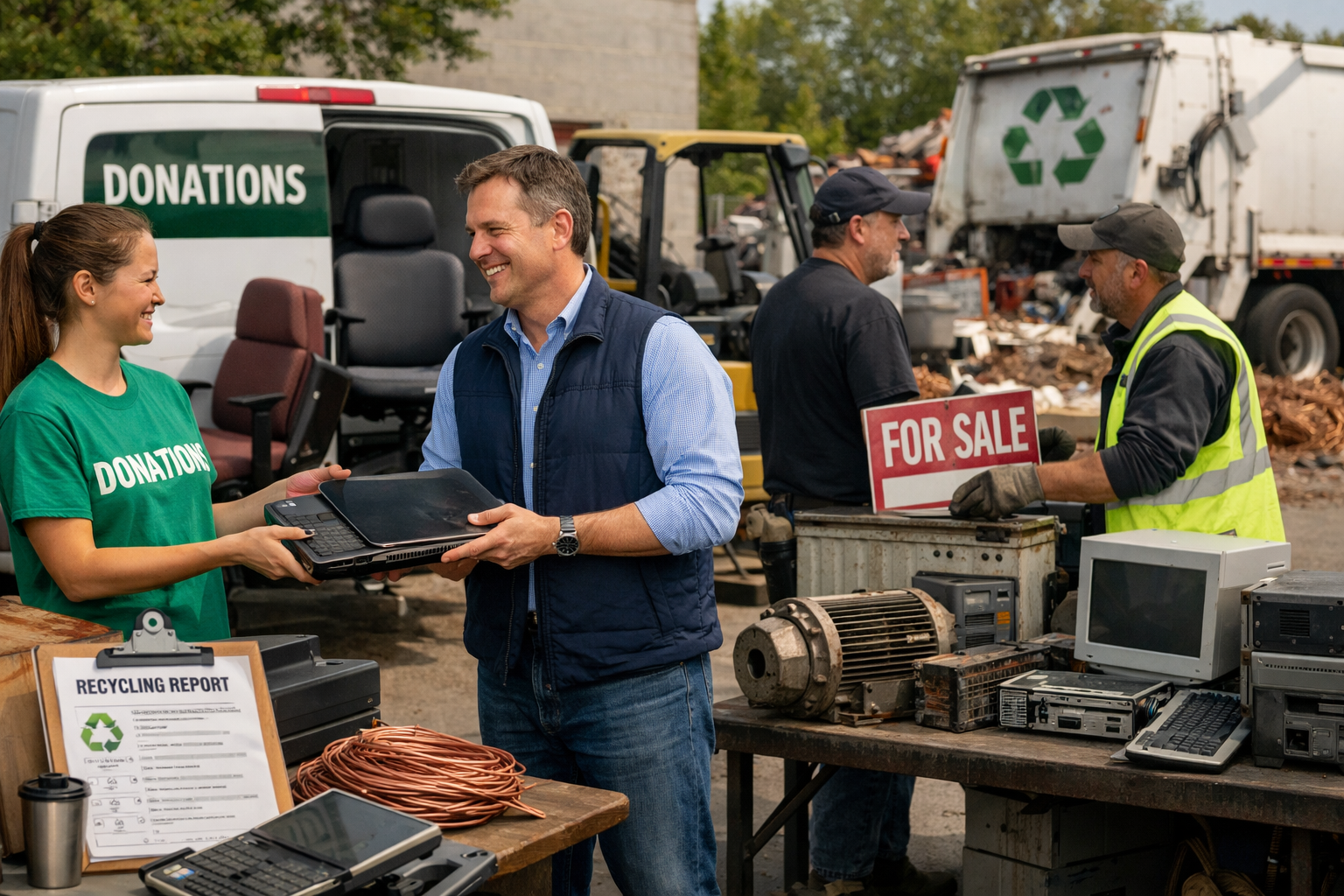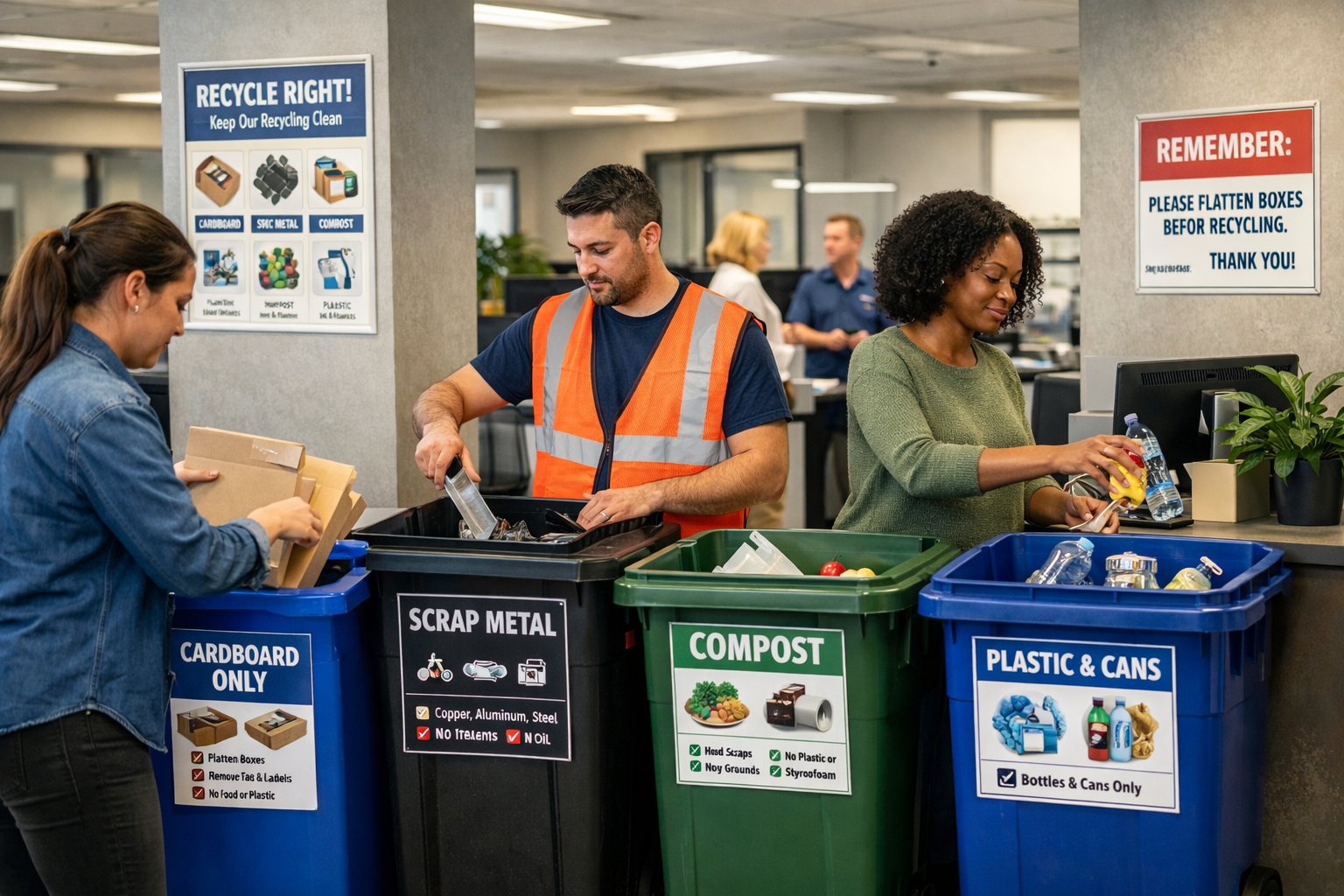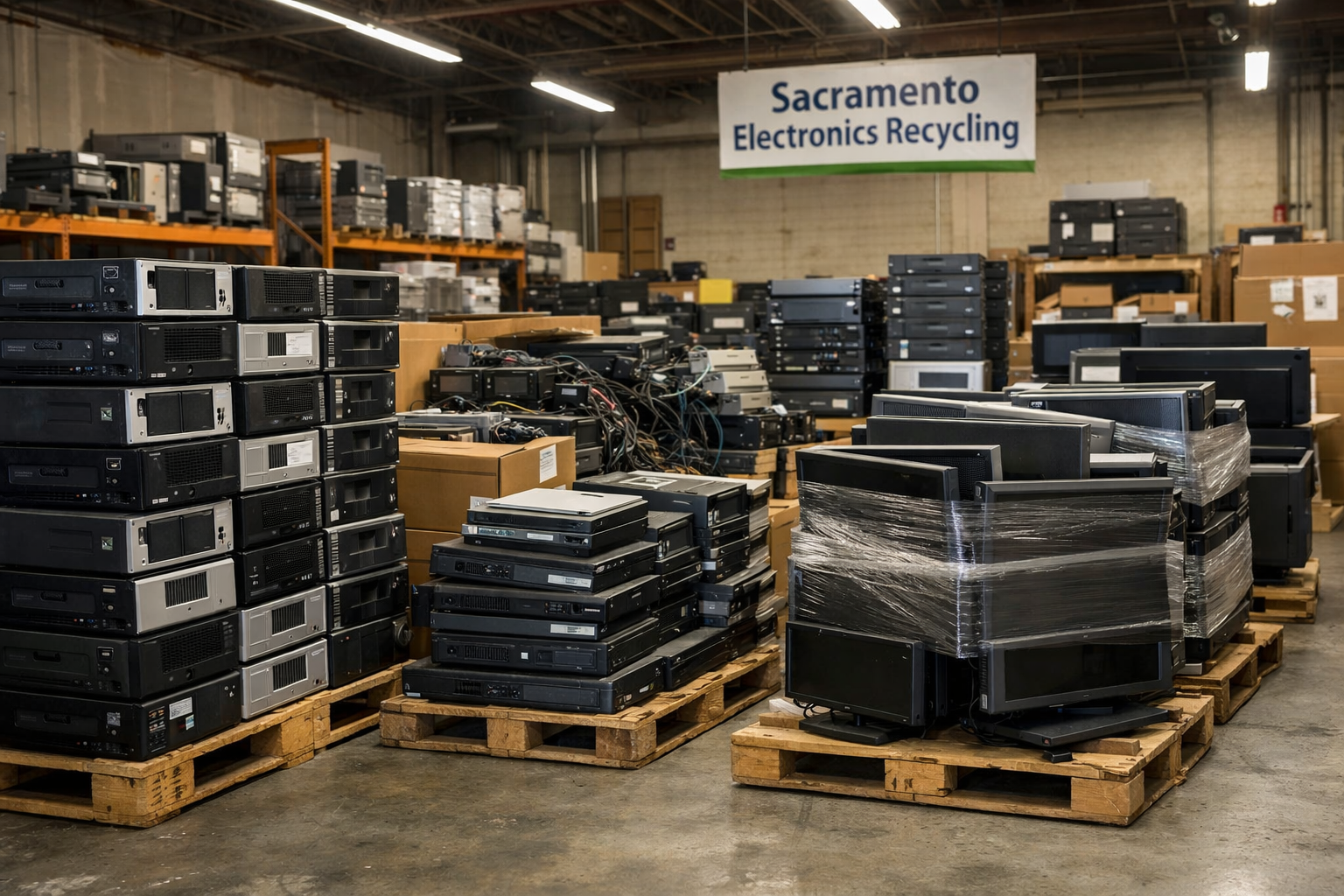
Every year, the world generates roughly 62 million metric tons of electronic waste [1]. That number climbed 82% between 2010 and 2022, and projections suggest global e-waste volumes could hit 82 million metric tons annually by 2030 [2].
For businesses in Sacramento, Roseville, Elk Grove, and across Northern California, those numbers translate into something you can probably see right now: storage rooms stuffed with outdated computers, networking equipment stacked in corners, and a growing pile of devices nobody knows how to dispose of properly.
Electronics recycling isn't just an environmental talking point anymore. It's an operational problem that gets worse every month you ignore it. The businesses that plan ahead avoid the storage headaches, compliance risks, and last-minute scrambles that catch unprepared organizations off guard.
What Happens When You Let E-Waste Pile Up
Most businesses don't set out to stockpile old computers and monitors. It happens gradually.
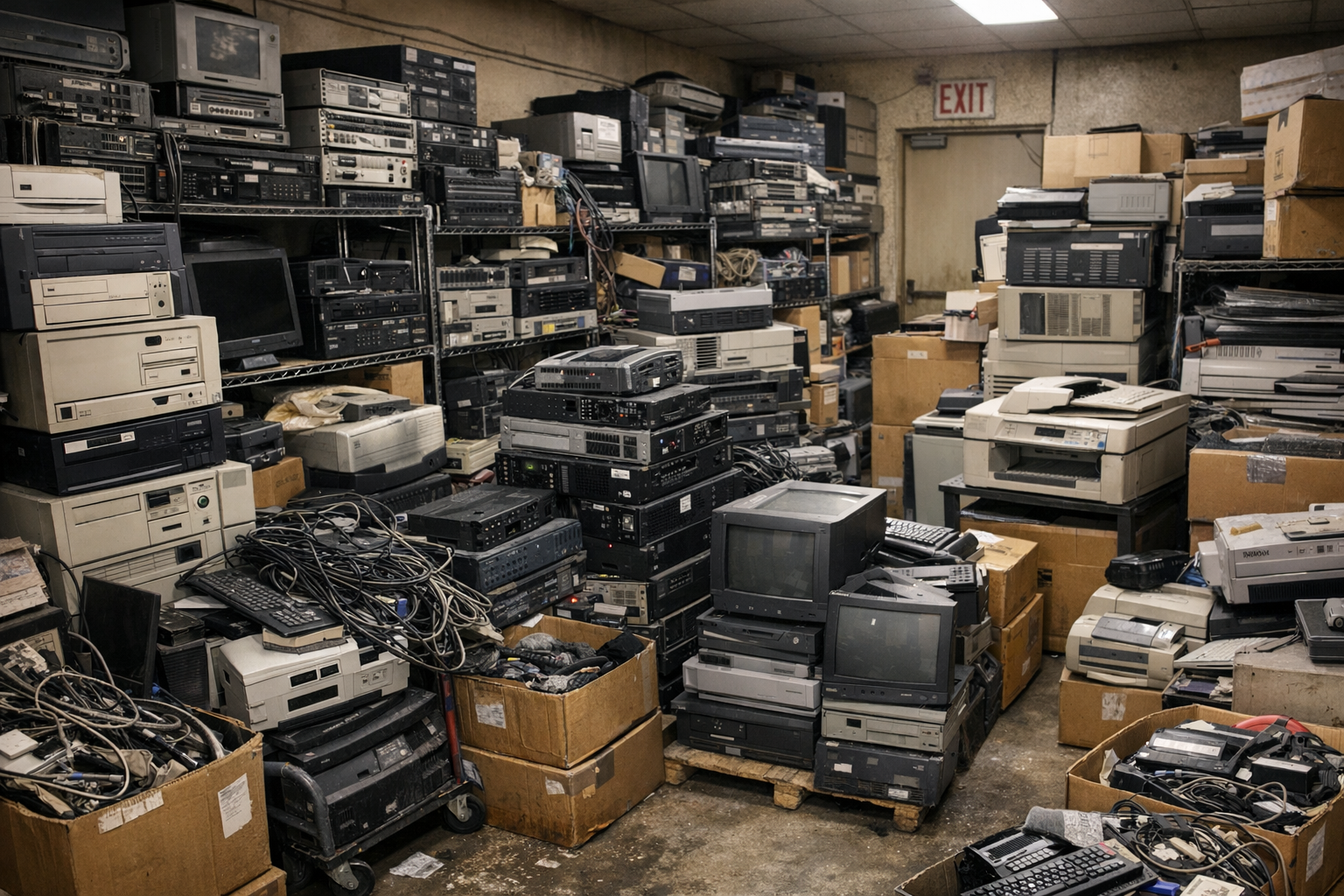
A tech refresh leaves twenty outdated laptops sitting in a closet. A server upgrade means the old units get stacked in a back room. Someone's old desk phone goes into a drawer, then another, then another. Before long, valuable floor space disappears under equipment nobody wants to deal with.
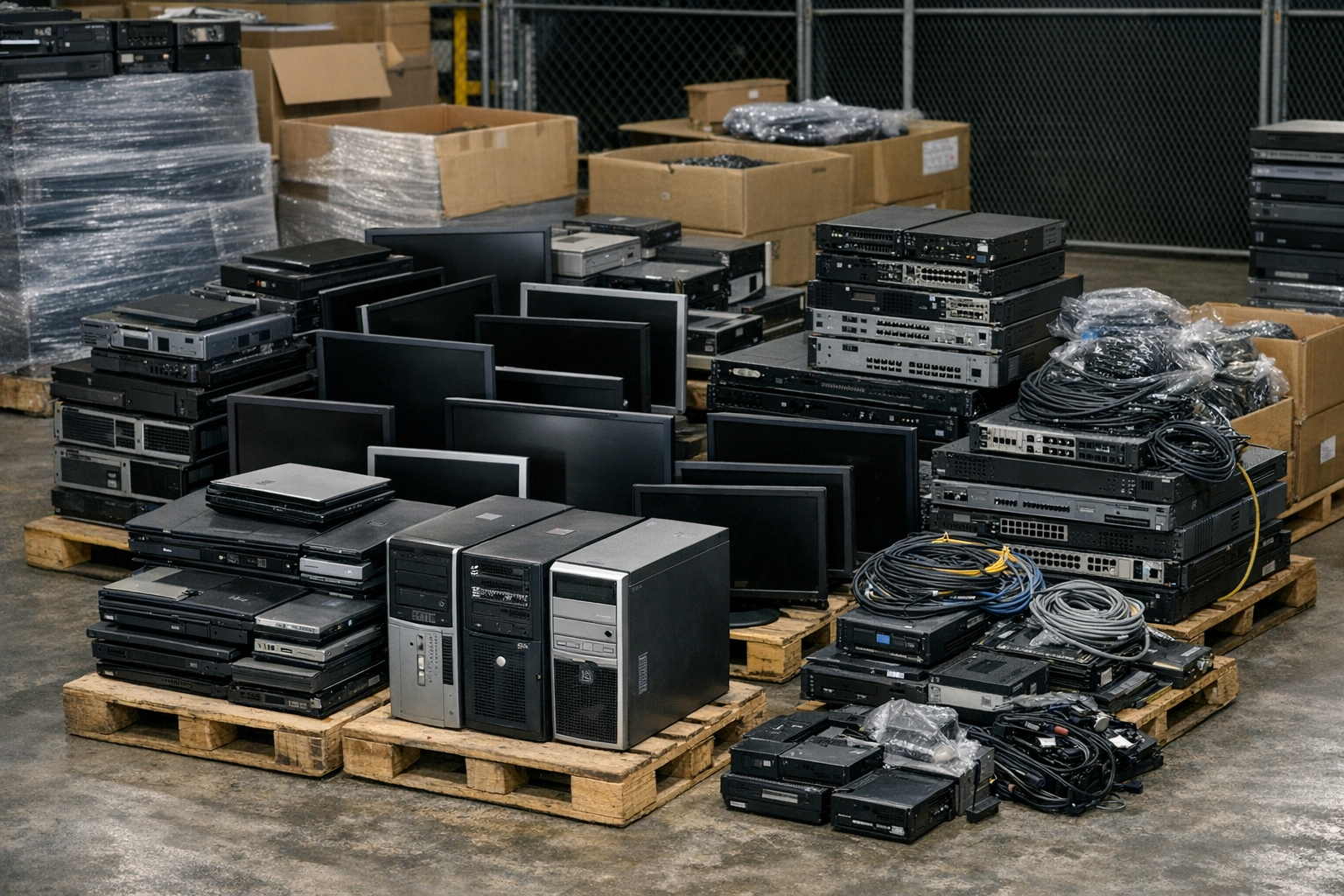
We've seen it firsthand. A facilities manager calls and says, "We need to clear out a storage room that's completely full." When we arrive, there's five years of accumulated equipment in there—monitors, CPUs, cables tangled together, old printers nobody remembered existed. What could have been five simple annual pickups became one massive project that disrupted their operations for days.
The storage problem compounds quickly:
Space disappears. Electronics take up room that could serve productive purposes—inventory staging, equipment storage, or just giving your team room to work.
Safety hazards multiply. Cables create tripping risks. Stacked monitors can fall. Lithium batteries in old laptops can become fire hazards if damaged.
Disposal gets harder. The longer devices sit, the more difficult tracking and documentation becomes. Which devices have data? Which need special handling? Nobody remembers.
California's E-Waste Rules Don't Leave Much Wiggle Room
California maintains some of the strictest e-waste regulations in the country. The state prohibits landfill disposal of devices containing hazardous materials like lead, mercury, and cadmium [3]. Businesses that dispose of electronics improperly can face penalties, and ignorance of the rules offers no protection.
Beyond state requirements, many industries face additional oversight:
Healthcare facilities must ensure patient data gets destroyed before equipment leaves their premises.
Financial services companies have similar obligations around customer information.
Any business with employee records, client data, or proprietary information on old devices needs to consider what happens to that data.
The compliance burden grows heavier the longer e-waste accumulates. Tracking which devices contain what data, documenting proper disposal, and proving regulatory compliance all become more difficult when you're dealing with years of backlogged equipment rather than regular, manageable batches.
The Security Problem Nobody Talks About Until It's Too Late
Old electronics aren't just clutter. They're potential data breach vectors sitting in your building.
A hard drive in that storage closet still contains whatever information was on it when the device was retired. Laptops, smartphones, servers, and even some printers can hold sensitive data that creates liability until properly destroyed.
Data breaches carry significant costs. According to IBM's research, the average data breach costs organizations millions of dollars when accounting for detection, response, notification, and lost business [4]. An improperly disposed device that falls into the wrong hands can trigger exactly that kind of exposure.
The risk isn't theoretical. Devices get stolen from storage areas. Equipment gets sent to the wrong disposal channel. Hard drives that were supposed to be wiped end up readable. Every month that old equipment sits around is another month it could become a problem.
A Smarter Approach: Treat E-Waste Like Any Other Operational Task
Rather than letting electronics accumulate until the problem becomes unmanageable, forward-thinking businesses schedule regular recycling events. This approach treats e-waste disposal like fleet maintenance or inventory management—something planned, budgeted, and executed on a predictable schedule.
Quarterly or Biannual Cleanouts Work for Most Operations
For most businesses, quarterly or biannual e-waste pickups strike the right balance. This frequency prevents significant accumulation while remaining practical to schedule and manage.
Here's what that looks like in practice:
Designate a collection area. One spot where retired electronics go—not scattered across departments.
Set a pickup schedule. Same time each quarter, same process, no surprises.
Communicate the timeline. Staff knows where to bring retired devices and when they'll be picked up.
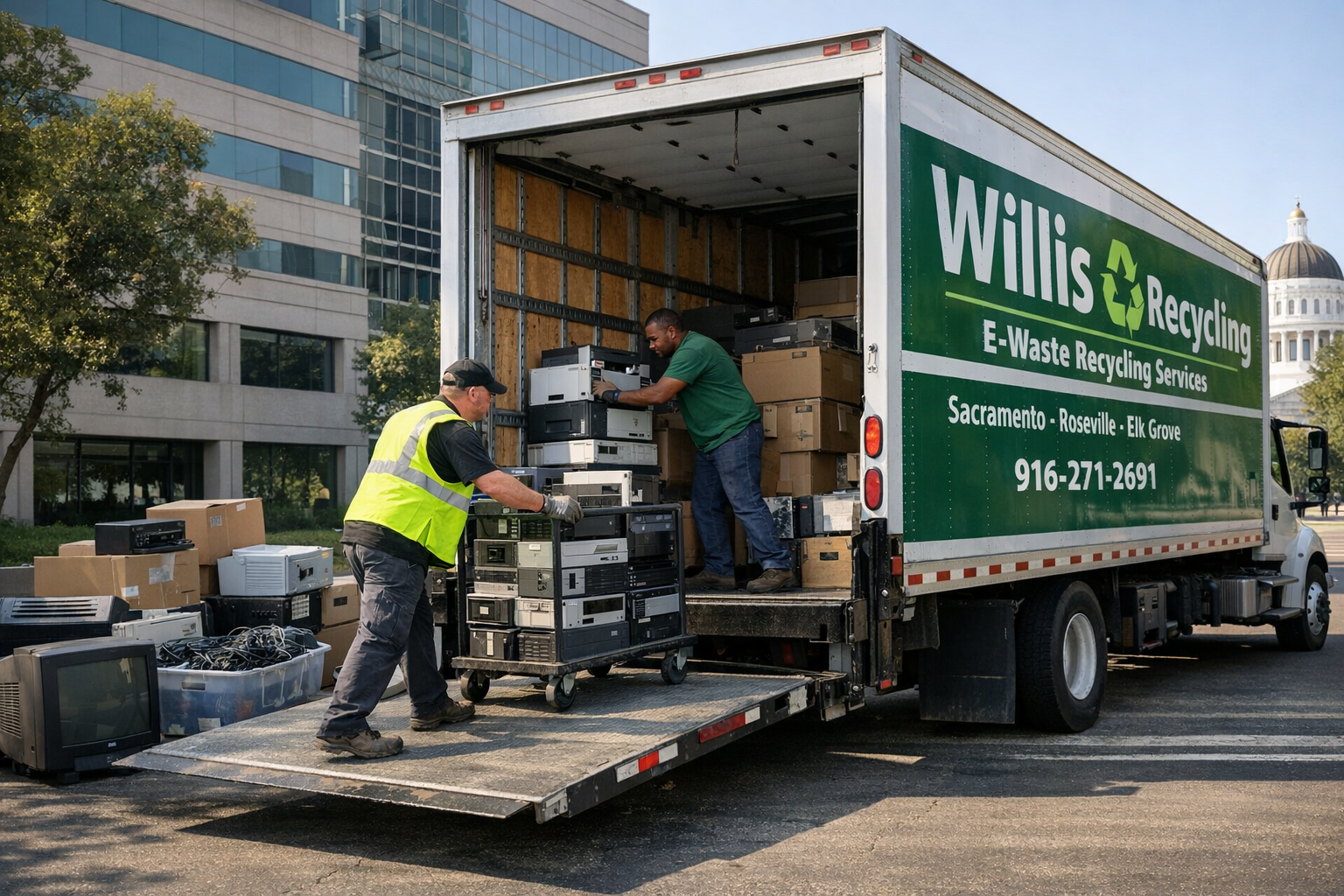
Coordinate with your recycling partner. We arrive, handle the heavy lifting, and provide documentation.
The recurring model also makes budgeting straightforward. Rather than facing surprise costs when storage reaches crisis levels, businesses can plan for predictable disposal expenses as part of regular operations.
Connect E-Waste Planning to Your Tech Refresh Cycles
Smart e-waste planning connects directly to technology procurement. When your organization schedules a major equipment upgrade, the disposal of outgoing devices should be part of that same project plan—not an afterthought three months later.
Consider mapping your technology refresh cycles across the next twelve to twenty-four months:
When are workstation upgrades scheduled?
Server replacements?
Network equipment updates?
Phone system changes?
Point-of-sale system refreshes?
Each of these creates a predictable e-waste event that can be planned in advance rather than managed reactively.
Why this matters:
Staging space gets cleared quickly. New equipment doesn't compete with old equipment for floor space.
Data migration and destruction happen in sequence. IT teams can wipe devices as part of the transition workflow, not as a separate scramble.
Documentation stays current. Asset tracking and disposal records remain accurate when you handle devices as they're retired.
Budget planning improves. Disposal costs factor into technology project budgets from the start.
What Actually Happens During Professional E-Waste Processing
Handling electronics recycling properly requires more than hauling equipment to a dumpster. Legitimate e-waste processing involves secure chain-of-custody procedures, proper dismantling, and responsible material recovery.
We Come to You—That's the Point
Professional e-waste handling begins with controlled collection. Equipment should be inventoried before leaving your facility, with serial numbers or asset tags recorded for compliance documentation.
Willis Recycling provides on-site pickup for businesses throughout the Sacramento region and Northern California [5]. Our team arrives with the equipment and expertise to handle bulk electronics efficiently—whether you're clearing out a dozen laptops or an entire server room.
What we bring:
Trucks and equipment sized for the job
The manpower to handle heavy lifting (your staff stays focused on their actual work)
Inventory and documentation capability on-site
For businesses in Roseville, Rancho Cordova, Elk Grove, Folsom, and surrounding areas, this eliminates the need for your staff to load trucks, make trips, or figure out where electronics recycling facilities even are.
Data Destruction That Actually Protects You
For devices containing data, proper destruction matters more than the physical recycling.
We recommend businesses wipe devices before pickup whenever possible—that's your first layer of protection. But we also follow secure handling procedures throughout the collection and processing chain to ensure devices don't end up where they shouldn't.
What you should expect from any e-waste processor:
Clear chain of custody from your facility through processing
Documentation confirming what was collected
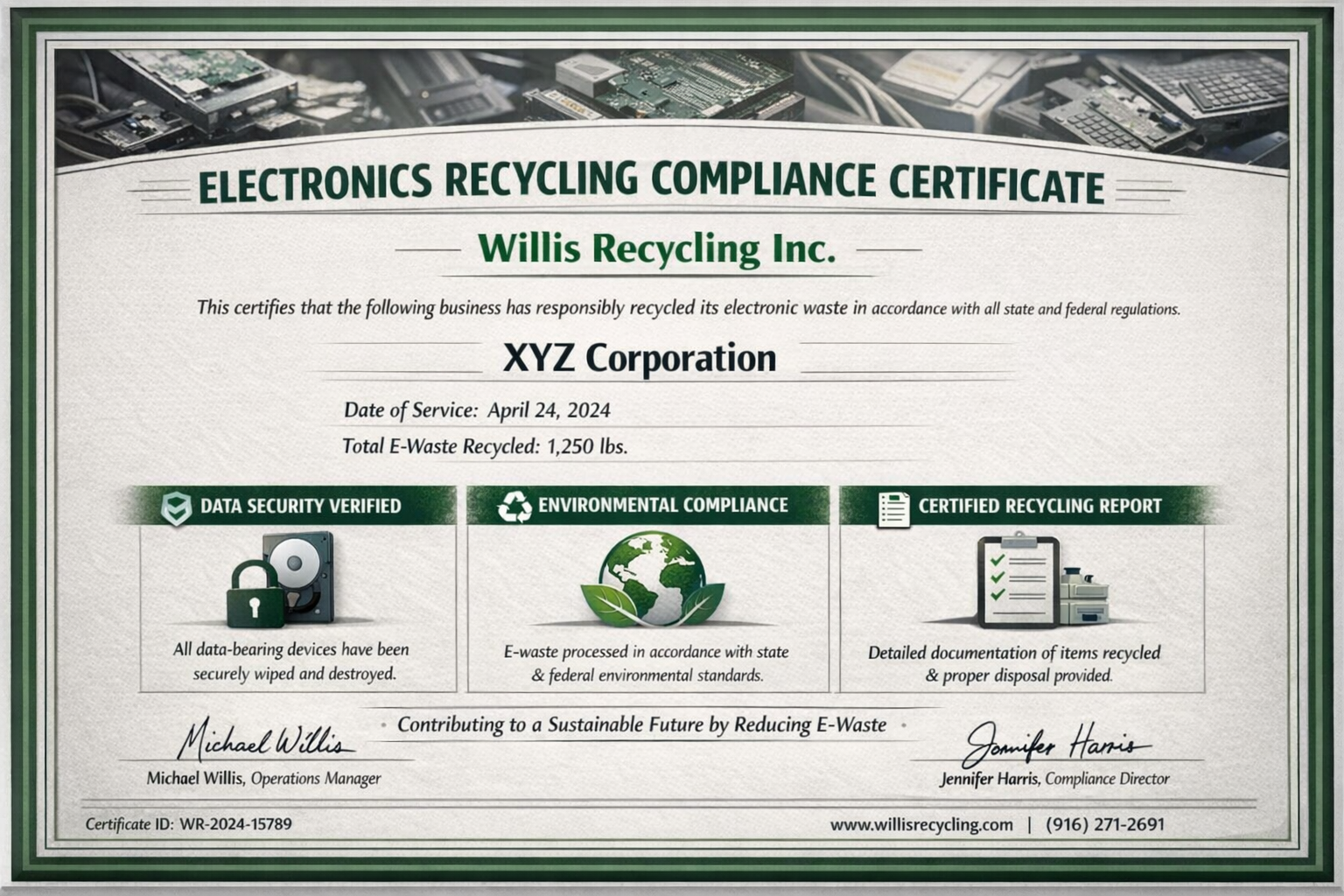
Certificates of Recycling that provide a compliance trail
This paperwork gives you what auditors and regulators expect: proof that devices were handled properly, with device identifiers and quantities documented.
Where the Materials Actually Go
Electronics contain valuable materials—copper, aluminum, gold, and rare earth elements among them [6]. Proper recycling recovers these resources rather than sending them to landfills. At the same time, hazardous components get handled through appropriate channels that prevent environmental contamination.
Willis Recycling ensures materials get processed through compliant channels, with ID-verified intake and transparent documentation for your records. You receive itemized information about what was collected and how it was handled—the kind of documentation that matters for compliance records and sustainability reporting.
Industries Where E-Waste Planning Matters Most
While every business generates some electronic waste, certain industries face amplified challenges that make proactive planning especially important.
Healthcare Facilities
Hospitals, clinics, and medical offices cycle through significant electronics: diagnostic equipment, patient monitoring systems, administrative computers, and more. These devices often contain protected health information subject to HIPAA requirements.
We understand the operational constraints healthcare organizations face. When Kaiser Permanente needed 125 hospital beds removed on a tight timeline, Willis Recycling completed the project within 72 hours [7]. That same rapid-response capability and compliance focus applies to e-waste pickup for healthcare facilities throughout the region.
Construction and Demolition
Construction projects often uncover old equipment requiring disposal. Site trailers accumulate computers and networking gear. Office buildouts leave behind previous tenants' electronics. Demolition exposes legacy equipment that needs proper handling.
Contractors already managing construction waste recycling to meet CALGreen requirements can benefit from e-waste pickup as part of the same service relationship [8]. One call handles multiple waste streams.
Retail and Warehouse Operations
Point-of-sale systems, inventory scanners, network equipment, and back-office computers all have finite lifespans. Retail and warehouse operations often refresh these systems across multiple locations simultaneously, creating concentrated e-waste volumes that benefit from coordinated pickup.
A scheduled quarterly pickup keeps stockroom space clear and ensures equipment moves out before it becomes a storage problem.
Corporate Offices
Standard office operations generate steady e-waste: workstations, monitors, phones, printers, networking equipment. Companies with regular technology refresh cycles can schedule corresponding e-waste pickups to maintain clean, organized facilities.
Build Your E-Waste Plan in Five Steps
Effective e-waste management doesn't require complex systems. It requires intentional planning and consistent execution.
Step One: Audit What You've Got Right Now
Start by inventorying what electronics you currently have awaiting disposal. Walk your storage areas, server rooms, and department closets. Document what's there and roughly when it was retired.
This baseline tells you how much backlog exists and helps justify getting it cleared. Most facilities managers are surprised by what they find.
Step Two: Map Your Upcoming Tech Refreshes
Work with your IT department or service provider to identify scheduled equipment replacements over the next one to two years. Add these to a planning calendar with approximate quantities and timing.
This gives you predictable e-waste events you can plan for rather than react to.
Step Three: Set a Recurring Pickup Schedule
Based on your technology cycle and storage capacity, determine appropriate pickup frequency:
Monthly: Larger organizations with constant equipment turnover
Quarterly: Most mid-sized operations
Biannually: Smaller businesses with less frequent refreshes
Step Four: Designate a Collection Point
Create clear protocols for where retired electronics go. A designated staging area prevents equipment from scattering across multiple locations. Staff should know to bring retired devices to this area rather than storing them locally.
Step Five: Partner with Someone Who Shows Up
Choose a recycling partner who can meet your schedule, handle your volume, and provide the documentation you need. Look for transparent processes, appropriate certifications, and a track record with businesses like yours.
Why Sacramento-Area Businesses Choose Mobile Pickup
Traditional electronics recycling often requires businesses to transport equipment to a processing facility. For organizations with significant volumes or limited staff availability, this creates real obstacles.
Mobile pickup eliminates those barriers. Willis Recycling brings the service to your location, handling the loading and transport so your team can focus on core operations. We work with your schedule, including flexible timing for businesses that need pickups outside standard hours.
For Sacramento-area businesses already managing other recyclable materials—scrap metal, cardboard bales, used equipment—adding e-waste to an existing service relationship simplifies vendor management and scheduling. One call handles it.
The Environmental Reality
Beyond operational and compliance benefits, responsible electronics recycling serves genuine environmental purposes.
Manufacturing electronics requires significant energy and raw material extraction. Recycling recovers those materials for reuse, reducing demand for new mining and processing. The energy savings can be substantial—recycling aluminum, for example, uses roughly 95% less energy than producing new aluminum from ore [9].
Conversely, improper e-waste disposal creates real environmental harm. Hazardous materials can leach into soil and groundwater. Valuable resources get buried in landfills rather than returned to productive use.
Businesses increasingly report sustainability metrics to stakeholders, customers, and regulatory bodies. Documented e-waste recycling provides concrete evidence of environmental responsibility—something that matters for corporate reputation and, in some cases, contractual requirements.
The Choice Is Simple: Plan Now or Scramble Later
E-waste volumes will continue growing. Technology refresh cycles aren't slowing down. The question isn't whether your business will need to address electronics recycling, but whether you'll handle it proactively or reactively.
Proactive planning means:
Controlled, predictable costs
Clear compliance documentation
Reclaimed storage space
Eliminated security risks
Reactive scrambling means:
Premium pricing for urgent service
Incomplete documentation
Cluttered facilities
Potential data exposure
The businesses that build e-waste management into their operational planning avoid the tidal wave. They schedule pickups before storage overflows. They coordinate disposal with technology refreshes. They maintain the documentation auditors expect.
Ready to get your e-waste under control? Call Willis Recycling at (916) 271-2691 to schedule your pickup or discuss a recurring service arrangement. We'll provide a fair evaluation of your materials and handle everything from loading to documentation—so you can focus on running your business.
Frequently Asked Questions
What electronics does Willis Recycling accept for pickup?
We handle a wide range of business electronics including computers, servers, monitors, networking equipment, and other e-waste. We also accept HVAC units and various equipment containing recyclable metals. If you have specific items you're unsure about, give us a call and we'll advise on the best disposal approach for your situation.
Do we need to wipe data from devices before pickup?
We recommend wiping devices before pickup whenever possible—it's your first layer of protection and good practice for any data-containing equipment. Willis Recycling follows secure handling procedures throughout collection and processing, and we can discuss specific data destruction requirements for your situation to ensure you receive appropriate documentation.
What's the minimum amount of e-waste for a pickup?
We typically schedule pickups for loads of approximately 500 pounds or more. However, for businesses that generate regular e-waste volumes, we can arrange smaller recurring pickups as part of an ongoing service relationship. Contact us to discuss your specific situation and volume expectations.
How quickly can Willis Recycling schedule an e-waste pickup?
We offer fast turnaround, often same-week service depending on location and load size. For businesses with urgent needs, same-day pickup may be available. We work flexible schedules to accommodate your operational requirements—including early mornings, evenings, or weekends when needed.
Do we receive documentation for compliance purposes?
Yes. Willis Recycling provides itemized documentation detailing materials collected, quantities, and processing information. This paperwork supports your compliance records for internal audits, regulatory requirements, and corporate sustainability reporting. You'll have the paper trail auditors expect.
About Willis Recycling
Willis Recycling is a family-owned mobile recycling service with nearly two decades of industry experience, serving Sacramento and Northern California businesses since 2017. We specialize in on-site pickup of scrap metal, electronics, cardboard bales, and commercial equipment. Our team handles loading, transport, and processing—providing transparent documentation and fair evaluations. We've partnered with Fortune 500 companies, healthcare facilities, construction firms, and local businesses throughout the region, recycling over 70 tons of material for our partners in 2024 alone. All transactions follow California regulations with ID-verified intake and compliant processing.
Cited Works
[1] United Nations — "Global E-waste Monitor 2024." https://ewastemonitor.info/
[2] World Economic Forum — "A New Circular Vision for Electronics." https://www.weforum.org/reports/a-new-circular-vision-for-electronics-time-for-a-global-reboot
[3] CalRecycle — "Electronic Waste Recycling." https://calrecycle.ca.gov/electronics/
[4] IBM Security — "Cost of a Data Breach Report." https://www.ibm.com/security/data-breach
[5] Willis Recycling — "Commercial Scrap Metal Pickup Sacramento." https://www.willisrecycling.com/commercial-scrap-metal-pickup-sacramento/
[6] EPA — "Electronics Donation and Recycling." https://www.epa.gov/recycle/electronics-donation-and-recycling
[7] California Building Standards Commission — "CALGreen Code." https://www.dgs.ca.gov/BSC/CALGreen
[8] ScrapMonster — "Willis Recycling Company Profile." https://www.scrapmonster.com/company/willis-recycling/146162
[9] Aluminum Association — "Recycling." https://www.aluminum.org/recycling