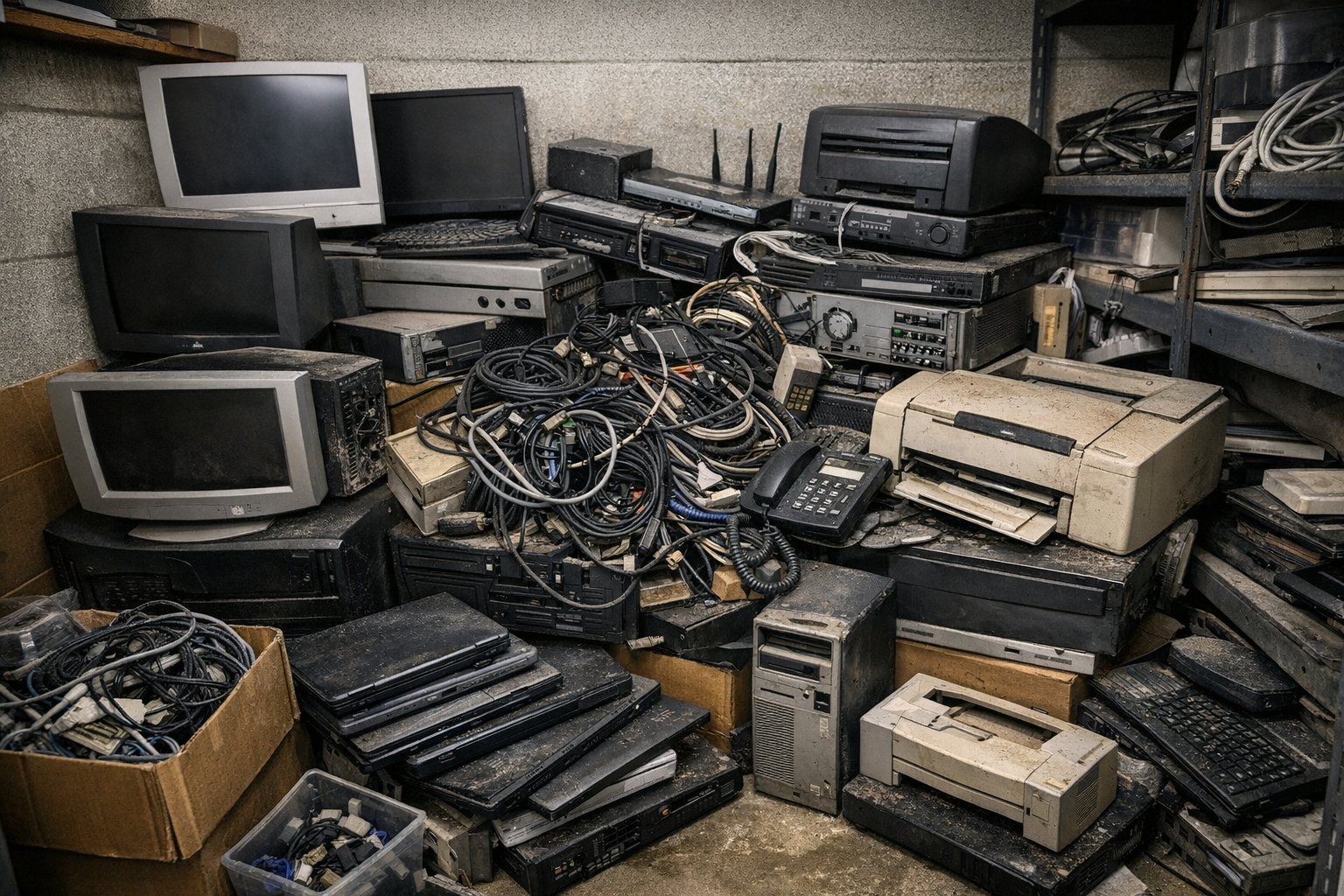
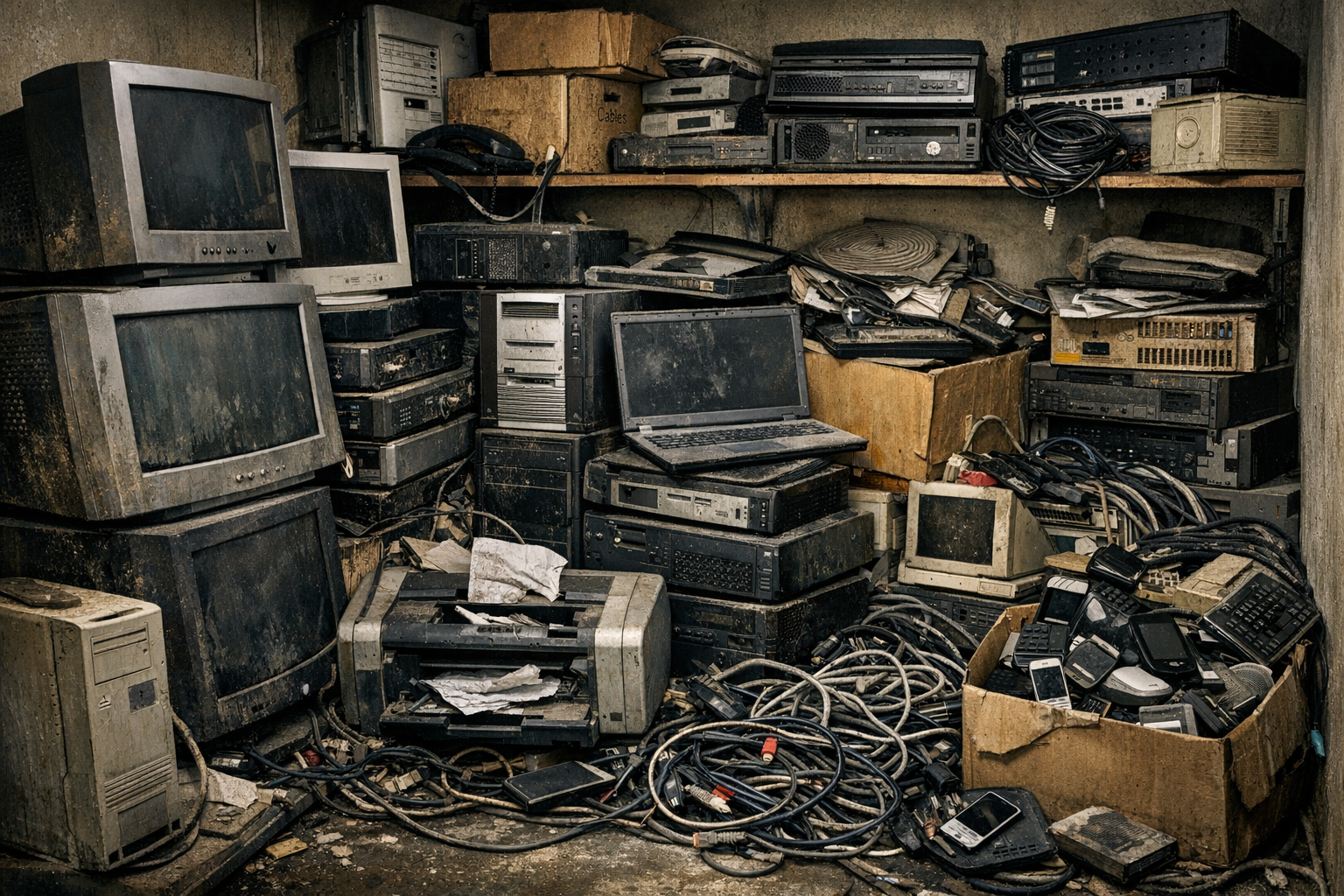
That storage closet in your office has become a graveyard. Old monitors stacked three deep. A tangle of power cords nobody can identify. Laptops from employees who left years ago. A printer that jammed its last page sometime during the Obama administration.
Sound familiar?
Most businesses have one of these spaces. Maybe it's a closet. Maybe it's a corner of the warehouse. Maybe it's an entire room that everyone avoids because opening the door feels like an archaeological expedition.
The problem isn't just the mess. Letting old tech pile up creates real risks for your business—risks that have nothing to do with running out of storage space.
What's Actually Sitting in That Closet
Walk into any Sacramento business's tech graveyard and you'll find a predictable collection.
The usual suspects include:
Desktop computers and monitors replaced during the last upgrade cycle
Laptops assigned to former employees
Servers that were "too important to throw away" five years ago
Printers, scanners, and copiers that stopped working
Networking equipment nobody remembers installing
Cables, keyboards, mice, and accessories in tangled heaps
Old phones and tablets from various company initiatives
Each piece seemed too valuable to toss at the time. Maybe it still worked. Maybe someone thought they'd find a use for it. Maybe nobody wanted to deal with the hassle of proper disposal.
So it stayed. And more accumulated behind it.
The Security Problem Nobody Talks About
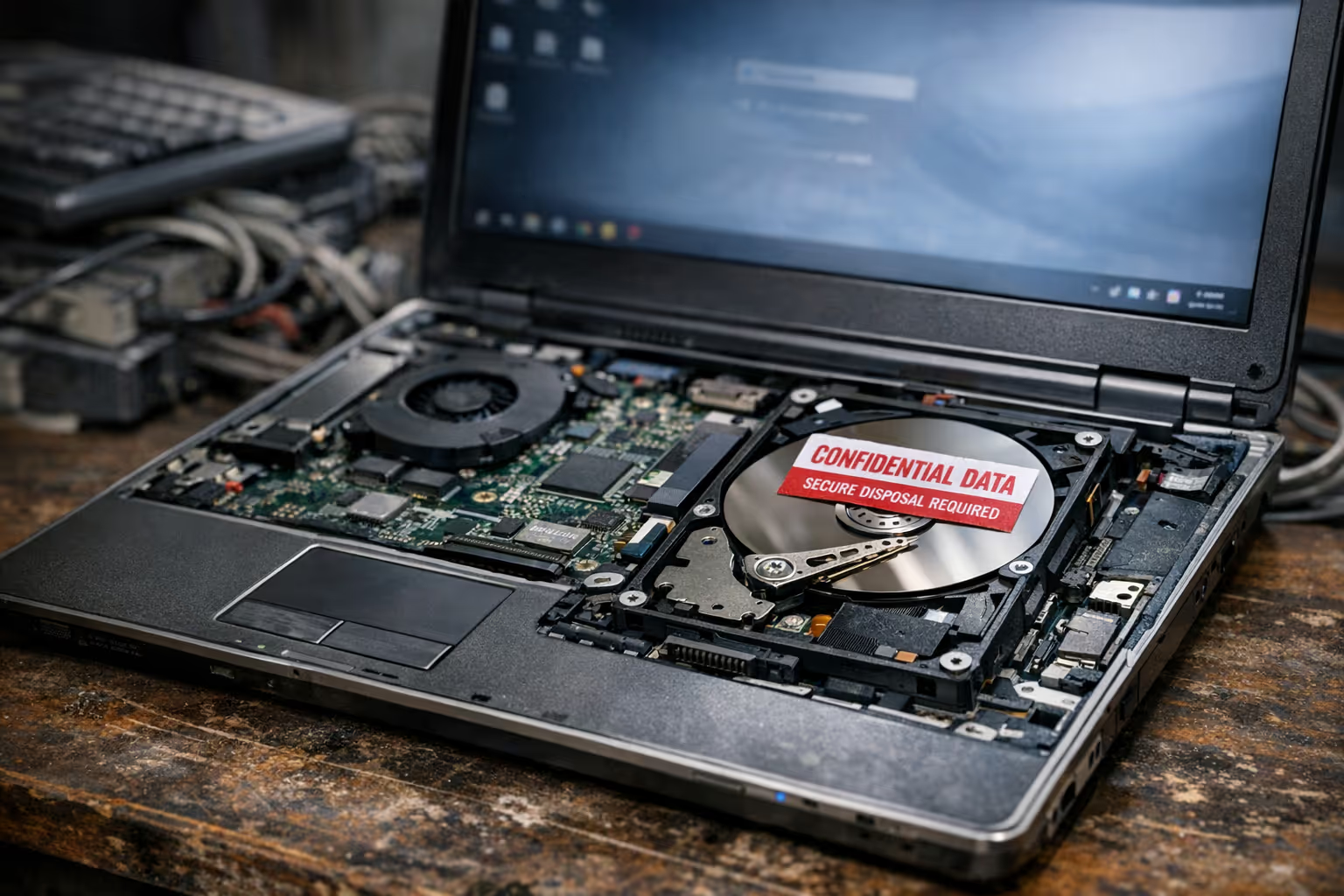
Here's what keeps IT managers up at night: every one of those old devices contains data.
That five-year-old laptop? It has cached passwords, browser histories, and downloaded files. The old server? Customer databases, financial records, internal communications. Even that ancient printer has a hard drive storing images of everything it ever printed [1].
When equipment sits in a closet, that data sits there too. Unsecured. Unencrypted. Waiting.
The risks multiply over time:
Devices get moved around by cleaning crews or during office reorganizations
Former employees sometimes still have physical access to buildings
Equipment occasionally "walks away" during building maintenance or renovations
Data breach regulations don't care that equipment was retired—you're still responsible for what's on it
California's data privacy laws are among the strictest in the country. A single laptop containing customer information can trigger notification requirements affecting thousands of people if it's lost or stolen [2].
The storage closet feels like a solution. It's actually a liability sitting in plain sight.
Fire Hazards Hiding in Plain Sight
Old electronics create fire risks that most business owners never consider.
Lithium batteries degrade over time. Those old laptops and tablets contain batteries that weren't designed to sit dormant for years. As they age, internal structures break down. Cells can swell, short-circuit, and ignite—sometimes without any external trigger [3].
Fire departments across the country have responded to warehouse fires started by old electronics that nobody touched. The devices just sat there until chemistry caught up with them.
Dust compounds the problem. Electronics in storage collect dust that settles into vents and onto circuit boards. Dust is flammable. Combined with aging components that can spark or overheat, you've got a slow-motion fire hazard.
Cluttered spaces make fires worse. When a fire starts in a packed storage area, it spreads faster. Firefighters have trouble accessing the source. Smoke damage extends further because dense materials smolder longer.
Your insurance company would not be pleased to learn that the fire started in a closet full of equipment you forgot about.
The Clutter Tax on Your Operations
Beyond security and safety, e-waste hoarding costs your business in ways that are harder to measure but very real.
Physical space has value. That closet or corner could store inventory, supplies, or equipment you actually use. In Sacramento's commercial real estate market, you're paying for every square foot whether you use it productively or not.
Clutter slows everything down. Need to find a specific cable? Prepare to dig through boxes. Looking for equipment that might still work? Good luck identifying what's functional versus what died years ago. Every search through the pile wastes time.
It signals organizational problems. When employees see chaos tolerated in one area, standards slip elsewhere. The storage closet becomes a metaphor for how the company handles difficult decisions—by avoiding them.
Auditors and inspectors notice. Whether it's a fire marshal, an insurance adjitor, or a compliance officer, professionals who walk through your facility notice when spaces are packed with abandoned equipment. It raises questions about your overall operational discipline.
Recycling as Risk Reduction
Here's the reframe that changes how smart businesses approach this problem: proper e-waste recycling isn't primarily about environmentalism. It's about eliminating business risk.
Yes, recycling electronics keeps hazardous materials out of landfills. Yes, it recovers valuable metals that can be reused. Those are genuine benefits.
But the immediate business case is simpler:
Recycling removes data liability. When equipment leaves your facility through a certified recycler, you receive documentation confirming proper handling. That paper trail protects you if questions arise later about where sensitive data ended up.
Recycling eliminates fire hazards. Old batteries and degrading components go somewhere equipped to handle them safely. Your storage areas go back to being storage areas, not fire risks.
Recycling creates accountability. The act of clearing out accumulated equipment forces decisions about what stays and what goes. It breaks the cycle of postponement that let the pile grow in the first place.
Recycling demonstrates compliance. When regulators, auditors, or customers ask about your data handling and environmental practices, you have documentation to show them. That's worth more than the equipment ever was.
A Simple Three-Step Plan to Clear the Backlog
Getting rid of accumulated e-waste doesn't require a massive project. Break it into three manageable steps.
Step One: Inventory What You Have
Set aside a few hours to document everything in your tech graveyard. You don't need elaborate systems—a simple spreadsheet works fine.
For each item, note:
Device type (laptop, monitor, server, etc.)
Approximate age or model year if visible
Whether it contains a hard drive or data storage
General condition (intact, damaged, unknown)
Any visible asset tags or serial numbers
This inventory serves multiple purposes. It helps you understand the scope of what you're dealing with. It identifies items that need special data handling. And it creates a record for your files showing when equipment was retired.
Don't try to test whether things still work. That's not the point. You're documenting what exists, not evaluating what's salvageable.
Step Two: Prepare for Pickup
Once you know what you have, organize it for removal.
Group similar items together. Computers in one area, monitors in another, cables and accessories in boxes. This speeds up the pickup process and ensures nothing gets overlooked.
Separate anything with data storage. Hard drives, laptops, phones, tablets, servers, and even printers with internal storage should be clearly identified. These need documented destruction or wiping.
Remove obvious personal items. Check desk drawers of old computers. Clear out any personal photos, sticky notes with passwords, or other items that shouldn't leave with the equipment.
Clear a path. Make sure whoever picks up the equipment can actually access it. Move boxes, open doors, ensure there's a clear route from storage to loading area.
Step Three: Schedule the Pickup
Contact a recycling service that handles commercial e-waste and provides documentation.
When you call, be prepared to describe:
Approximate volume (number of items or estimated weight)
Types of equipment involved
Whether data-bearing devices need certified destruction
Your timeline and any access restrictions at your facility
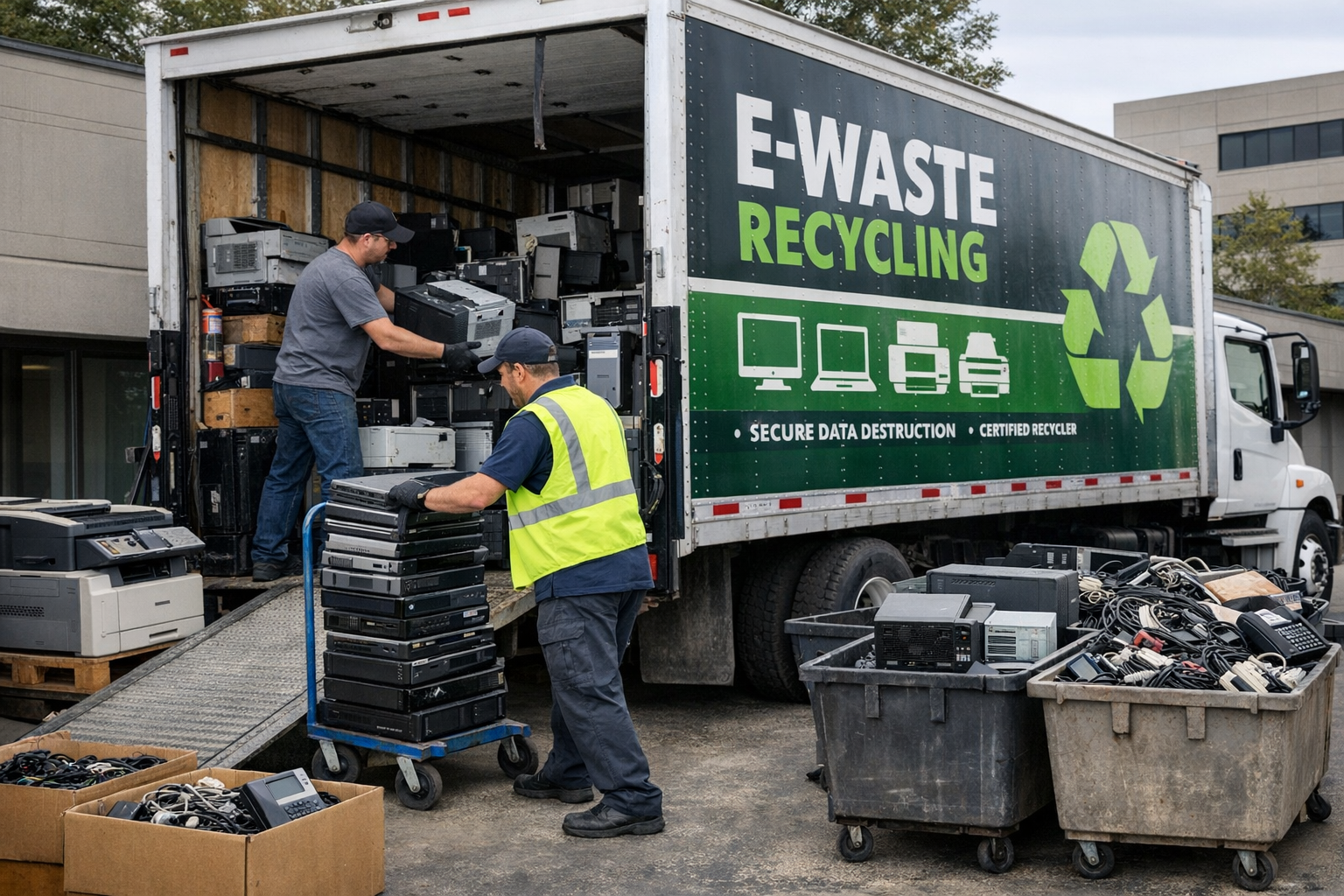
For businesses in the Sacramento area, mobile pickup services eliminate the hassle of transporting equipment yourself. The recycler comes to your location, loads everything, and handles transport to processing facilities.
Request documentation before the pickup happens. You want to know in advance what paperwork you'll receive confirming proper handling of your equipment.
What Happens to Your Equipment After Pickup
Understanding the destination helps stakeholders feel comfortable proceeding with recycling.
Data destruction comes first. Hard drives and storage media get wiped using methods that meet industry standards, or they're physically destroyed. Either way, your data doesn't leave the destruction process intact.
Materials get sorted. Different components contain different recyclable materials. Metals get separated from plastics. Circuit boards go to specialized processors who can recover precious metals. Batteries go to facilities equipped for safe handling.
Hazardous components stay controlled. Old monitors contain lead. Some electronics contain mercury or cadmium. Certified recyclers ensure these materials enter proper disposal streams rather than ending up in general landfills.
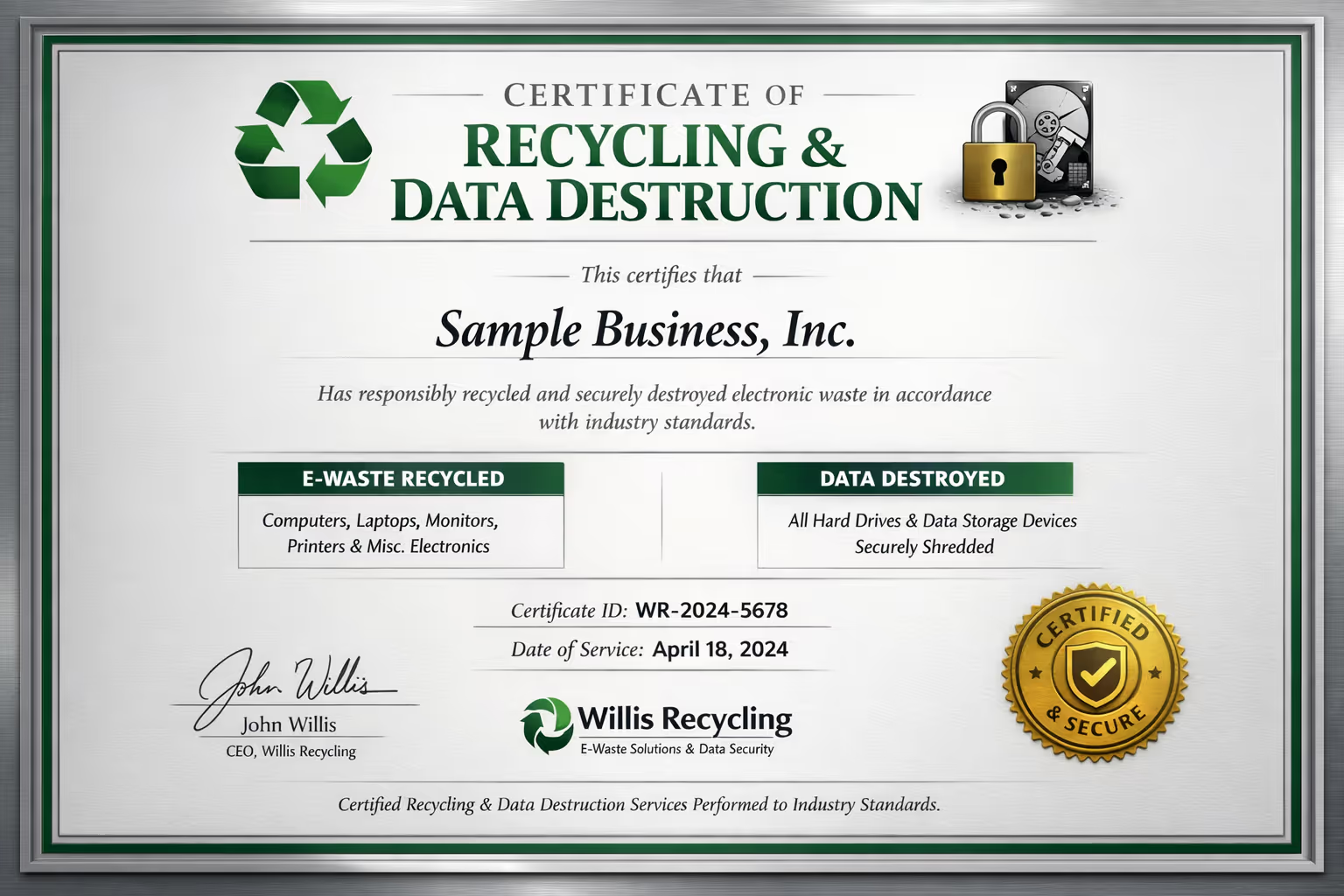
Documentation closes the loop. You receive certificates confirming that equipment was received and processed appropriately. Keep these with your records. They're your proof of proper handling if anyone asks.
Getting Documentation That Protects Your Business
The paperwork matters as much as the physical removal.
Certificates of recycling confirm that your equipment was processed through proper channels. They typically include pickup date, description of materials, and the recycler's certification information.
Certificates of data destruction specifically address items containing data storage. They confirm that hard drives were wiped or destroyed using approved methods.
These documents serve multiple purposes:
Compliance documentation for audits
Evidence of proper handling for insurance purposes
Records for corporate sustainability reporting
Protection against future claims about data handling
Ask about documentation before you commit to a recycler. Any legitimate operation provides it automatically. If someone can't or won't give you certificates, find a different service.
Willis Recycling provides proper documentation for all commercial pickups. When equipment leaves your facility, you receive the paperwork proving it went where it should.
Frequently Asked Questions
How do I know if my old equipment contains data that needs protection?
If it has any kind of storage—hard drives, solid-state drives, internal memory, or flash storage—treat it as containing data. This includes computers, laptops, servers, phones, tablets, and surprisingly, many printers and copiers. When in doubt, assume it holds information and handle it accordingly.
What's the minimum amount of e-waste worth scheduling a pickup for?
Most commercial recyclers work with businesses that have accumulated at least a few hundred pounds of equipment. If you have a closet or room full of old tech, you almost certainly meet typical minimums. Contact a recycler with your inventory and they'll confirm whether pickup makes sense.
Can I just remove the hard drives myself and throw the rest away?
Physically removing hard drives addresses the data concern, but throwing electronics in regular trash creates other problems. Many components contain hazardous materials that shouldn't enter landfills. Plus, you lose the documentation that proves proper handling.
How long should I keep recycling certificates?
Keep certificates for at least as long as you'd keep other business records—typically seven years for tax and compliance purposes. Data breach notification requirements sometimes look back further, so longer retention provides additional protection.
What if some equipment might still work—should I try to sell it instead?
For most businesses, the time spent testing, wiping, listing, and selling old equipment costs more than the equipment is worth. Recycling everything at once eliminates the hassle while still recovering value from the materials inside.
Why Willis Recycling Works for Sacramento Businesses
Willis Recycling has served Sacramento-area businesses for years, bringing the recycling process directly to your location.
We handle the heavy lifting—literally. Our team comes to your facility, loads your equipment, and transports it for processing. You don't need to rent trucks, assign employees to the project, or figure out where electronics recycling even happens.
For data-bearing equipment, we provide documentation confirming proper handling. Your stakeholders get the assurance they need to approve the project. Your compliance files get the records they require.
With nearly two decades of industry experience, we understand what businesses need: reliable service, proper documentation, and one less thing to worry about.
Ready to clear that storage closet and eliminate the risks hiding inside? Call Willis Recycling at (916) 271-2691 to schedule your pickup. We'll handle the equipment, provide your certificates, and get that space back to being useful.
About Willis Recycling
Willis Recycling is a family-owned mobile recycling service based in Sacramento, serving businesses throughout Northern California. Founded on principles of service and sustainability, we've built relationships with construction firms, healthcare facilities, retailers, and corporations who need reliable, documented recycling for their commercial waste. Our team brings nearly two decades of recycling industry experience to every pickup, ensuring materials are handled properly and businesses receive the documentation they need for compliance and peace of mind.
Cited Works
[1] National Institute of Standards and Technology — "Guidelines for Media Sanitization." https://csrc.nist.gov/publications/detail/sp/800-88/rev-1/final
[2] California Attorney General — "California Consumer Privacy Act (CCPA)." https://oag.ca.gov/privacy/ccpa
[3] U.S. Consumer Product Safety Commission — "Lithium-Ion Battery Safety." https://www.cpsc.gov/Safety-Education/Safety-Education-Centers/Battery-Safety