Every business eventually faces the same question: what do we do with all this old stuff?
Whether it's outdated computers stacked in a storage closet, cubicle walls nobody needs anymore, or a seized conveyor motor that stopped running years ago, old business equipment doesn't just disappear. It takes up space, creates liability, and—if handled poorly—can damage your reputation and the environment.
For businesses in Sacramento and throughout Northern California, the question isn't just what to do with old equipment—it's how to do it responsibly while staying compliant with California's strict recycling and disposal regulations.
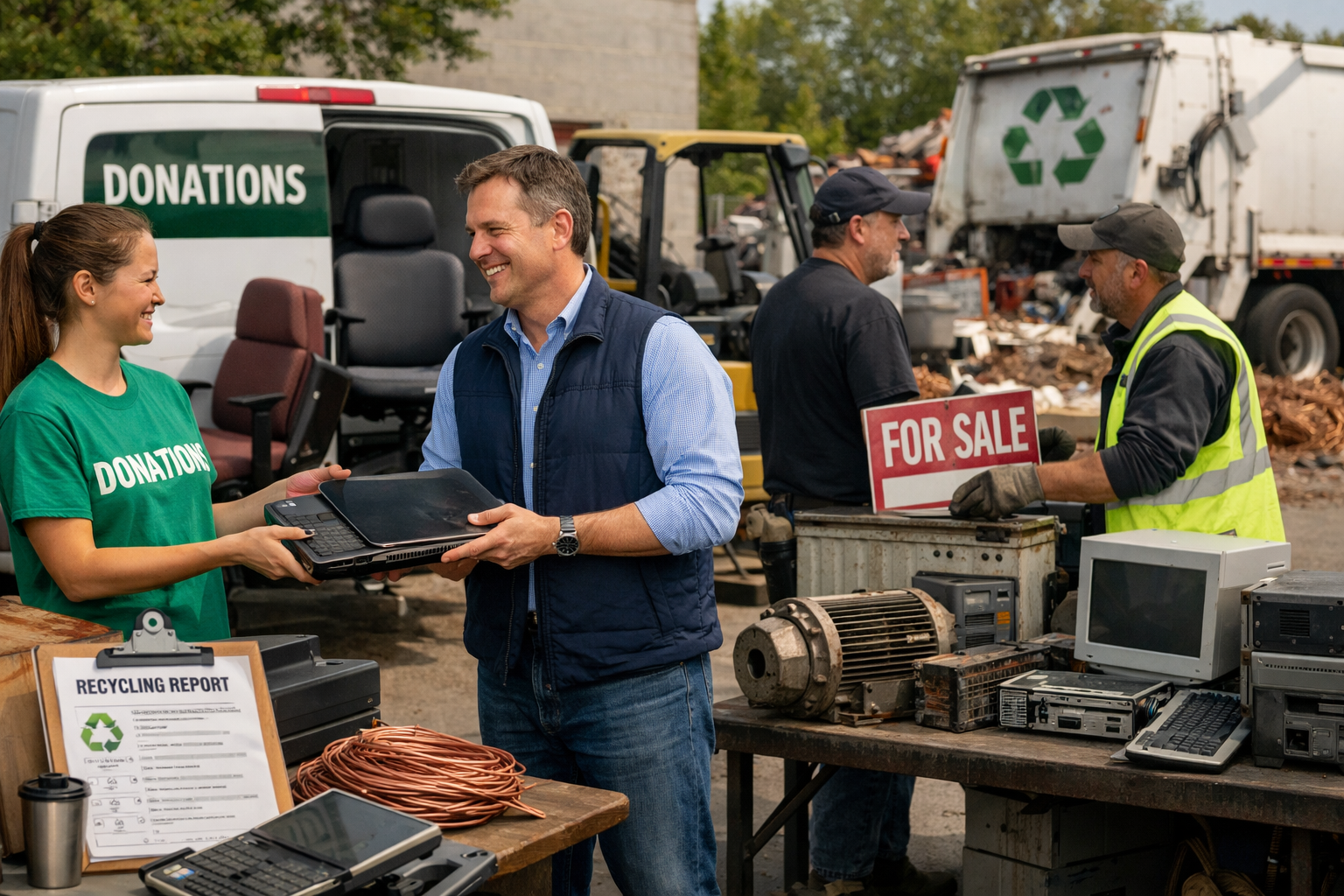
The good news? You have options. Donating, selling, and recycling each serve different purposes, and choosing the right path comes down to a few practical considerations. This guide walks through all three approaches, helping you make smart decisions about disposing of old business equipment responsibly.
The Three Paths for Old Business Assets
When equipment reaches the end of its useful life at your company, it generally follows one of three routes: donation, resale, or recycling. Each path has distinct advantages, requirements, and limitations.
Understanding these options helps you maximize value—whether that's financial return, tax benefits, community goodwill, or simply clearing space efficiently.
Path One: Donation
Donating functional equipment to nonprofits, schools, or community organizations keeps usable items in circulation while potentially providing tax benefits for your business.
Best candidates for donation:
Office furniture in good condition—cubicle walls, rolling chairs, conference tables
Computers and electronics less than five years old
Working appliances and fixtures
Tools and machinery with remaining useful life
Key considerations:
Donated items must have genuine value to the recipient. That old printer that jams constantly isn't a donation—it's passing along a problem. Nonprofits need equipment they can actually use, not items you're trying to avoid disposing of properly.
Organizations like Goodwill, local schools, churches, and community centers often accept business equipment. Some areas have dedicated nonprofits that refurbish computers specifically for underserved populations [1].
The tax benefit depends on fair market value, not original purchase price. A five-year-old computer worth $200 today generates a $200 deduction, regardless of what you paid for it. For donations exceeding $500 in total value, you'll need to complete IRS Form 8283 with your tax return. Donations valued over $5,000 typically require a qualified independent appraisal [3].
Path Two: Resale
Selling old equipment puts money back in your budget and keeps functional items productive. This works best when assets retain meaningful market value.
Best candidates for resale:
CNC machines, forklifts, and specialized industrial equipment
High-end office furniture—Herman Miller chairs, standing desks, solid wood conference tables
Recent-model electronics and computers
Vehicles and heavy equipment
Industry-specific equipment with active secondary markets
Key considerations:
Resale requires effort. You'll need to assess condition accurately, photograph items, list them on appropriate platforms, respond to inquiries, and coordinate pickup or shipping. For high-value items, this effort pays off. For lower-value goods, the time investment may exceed the return.
Where to sell different types of equipment:
Specialized machinery: Industry-specific auction sites, equipment dealers, direct sales to other businesses in your field
Office furniture and general equipment: Online marketplaces like Craigslist, Facebook Marketplace, or eBay
Bulk disposals: Liquidation companies (though they typically pay pennies on the dollar)
Vehicles and heavy equipment: Dealers, auctions, or direct sale to other contractors
Timing matters. Technology depreciates rapidly, so selling sooner usually means better prices. A three-year-old laptop loses value every month it sits in storage. Specialized equipment may hold value longer if demand remains steady in your industry.
Path Three: Recycling
When equipment no longer functions, lacks resale value, or can't be donated responsibly, recycling becomes the appropriate path. This ensures materials get recovered and processed correctly rather than ending up in landfills.
Best candidates for recycling:
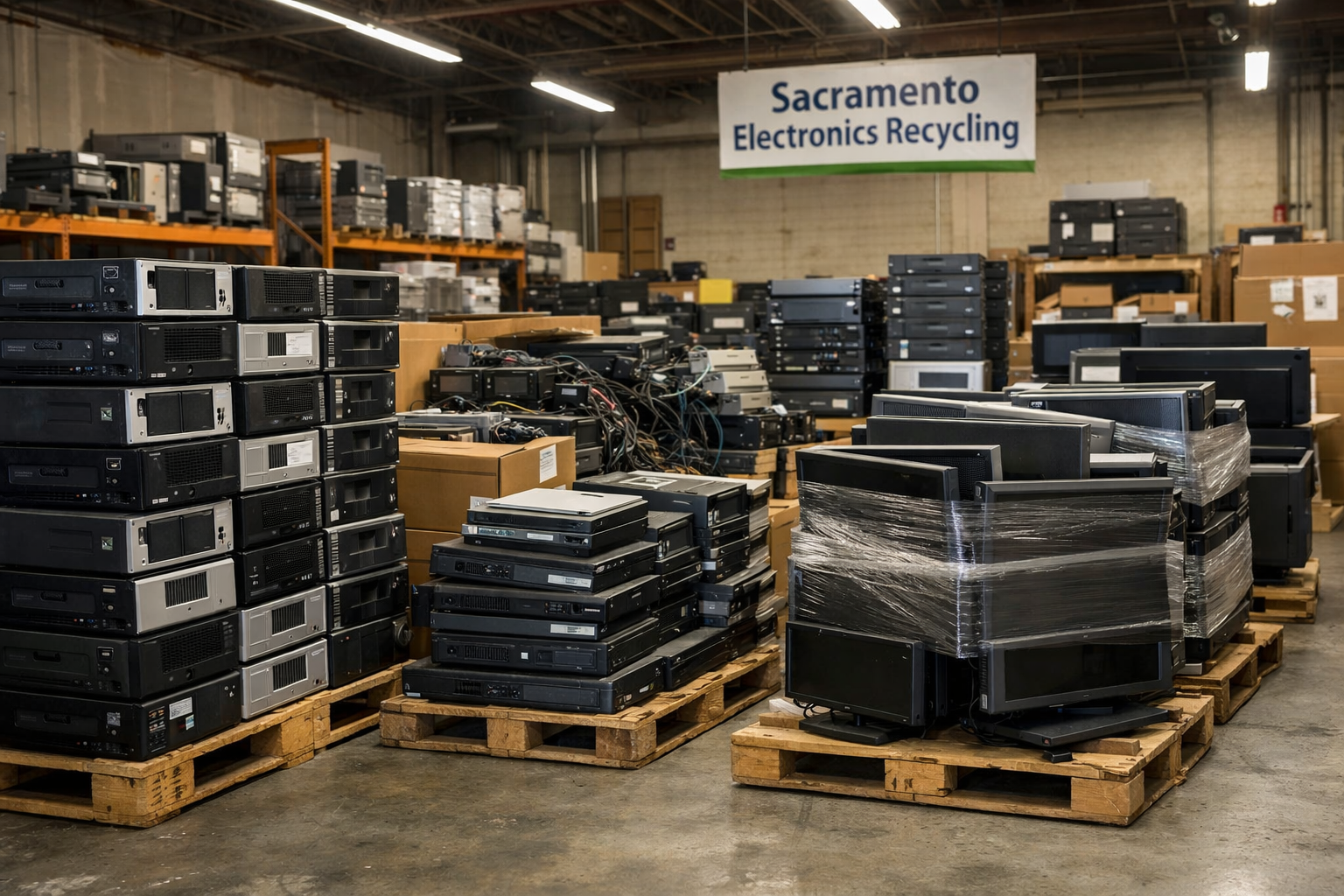
Non-functional electronics and computers
Damaged or obsolete machinery
Copper wiring and piping from renovations
Aluminum fixtures and frames
Stainless steel prep tables and equipment
HVAC compressors and units
Items with no resale or donation value
Key considerations:
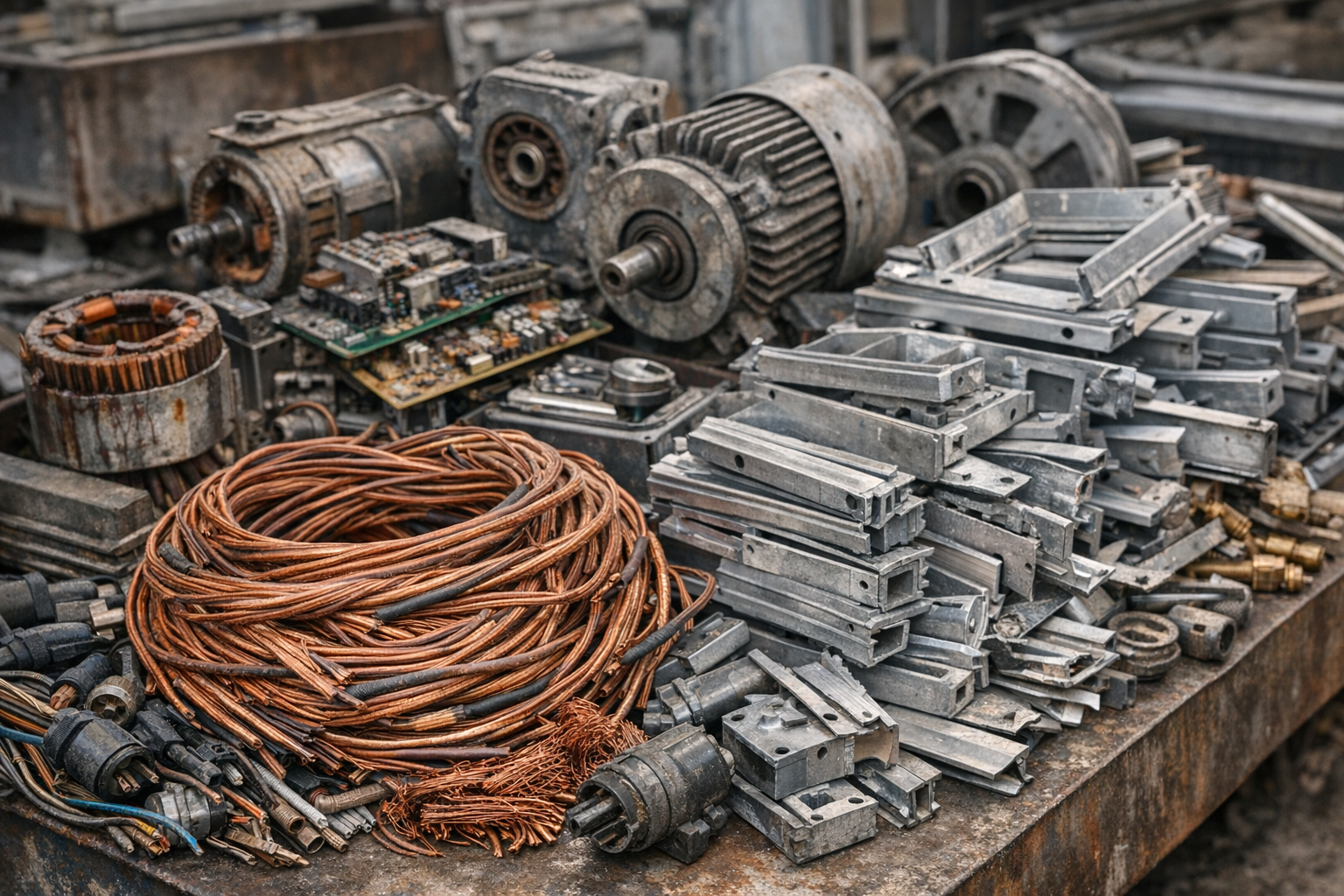
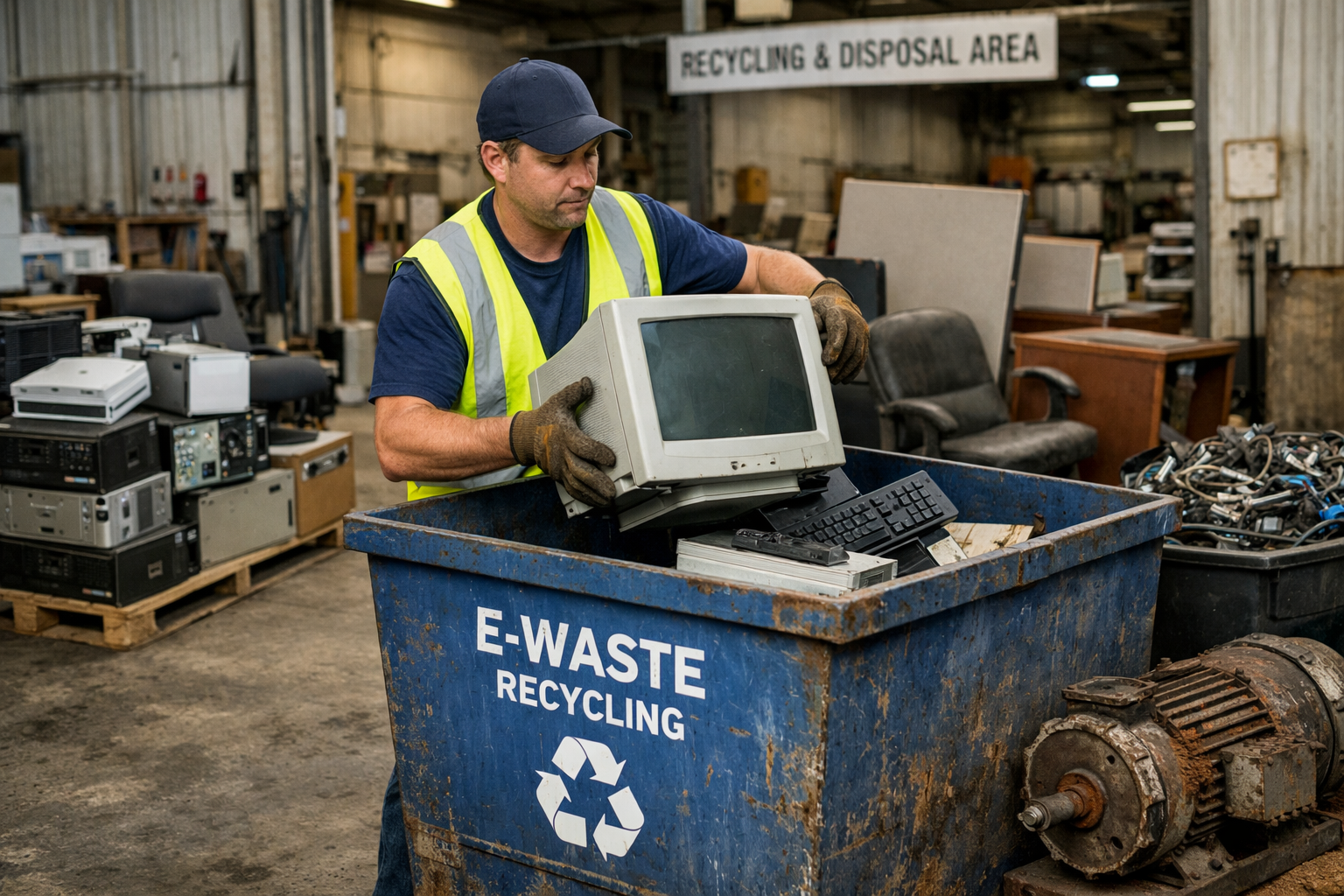
Recycling isn't just throwing things away more responsibly—it's recovering valuable materials. Metals like copper, aluminum, brass, and steel retain significant value even when the equipment itself is worthless [2]. A pile of old wire, broken machinery, or outdated HVAC units contains raw materials worth recovering.
Some recycling generates revenue. Scrap metal, in particular, can return money to your business depending on material type, quantity, and current market conditions. Copper and brass typically command the highest per-pound rates, while steel and iron have value in larger quantities.
California compliance matters. Environmental regulations in California mandate recycling for certain materials, particularly electronics. Under California's Covered Electronic Waste (CEW) laws—originally established through SB 20 and SB 50—items like monitors, laptops, and televisions cannot go to landfills. Businesses face potential fines for improper disposal, making compliant recycling partners essential.
For Sacramento-area businesses that generate regular streams of scrap metal, outdated equipment, or bulk recyclables, establishing a relationship with a reliable recycling service simplifies ongoing disposal and keeps you compliant.
Simple Rules for Choosing the Right Path
Deciding between donation, resale, and recycling doesn't require complex analysis. A few straightforward questions point toward the best option.
Does It Work?
Start here. Non-functional equipment eliminates donation and usually eliminates resale, leaving recycling as the appropriate path.
A computer that won't boot, a forklift with a seized engine, or an HVAC unit that's been sitting dead for two years—these go to recycling. Don't waste time on the other options.
Functional equipment opens all three options, so move to the next question.
Does It Have Meaningful Resale Value?
"Meaningful" means the expected sale price justifies the effort involved. A $3,000 piece of specialized machinery? Worth selling. A $50 office chair? Probably not unless you're selling many at once.
Research comparable items on eBay, Craigslist, or industry marketplaces. If similar items sell regularly at prices that make sense for your time investment, pursue resale.
Rule of thumb: If you can't realistically get at least $200 for a single item, the time spent listing, photographing, communicating with buyers, and coordinating pickup often exceeds the return—unless you're bundling multiple items together.
Would a Nonprofit Actually Use It?
Be honest here. Donation should benefit the recipient, not just clear your conscience. Equipment that's outdated, unreliable, or requires expensive supplies often creates burdens for nonprofits rather than helping them.
Good donation candidates function well, require minimal maintenance, and serve genuine needs. If you'd hesitate to give it to a friend's small business, it's probably not donation-worthy.
Questions to ask:
Does it work reliably without constant repairs?
Are replacement parts and supplies still available and affordable?
Would someone actually want this, or are you just avoiding disposal hassle?
Default to Recycling When Uncertain
When equipment doesn't clearly fit donation or resale criteria, recycling represents the responsible default. It ensures proper handling, recovers valuable materials, and keeps items out of landfills.
For businesses generating regular streams of scrap metal, outdated equipment, or bulk recyclables, establishing a relationship with a reliable recycling service simplifies ongoing disposal. Instead of materials piling up for months because nobody has bandwidth to deal with them, regular pickups keep facilities clean and operations running smoothly.
Data Security: The Non-Negotiable Step
Any device that ever stored data requires special attention before leaving your possession. This includes obvious items like computers, servers, and phones—and less obvious ones like digital copiers, multifunction printers, fax machines, point-of-sale systems, and even some modern machinery with onboard computers.
Digital copiers and printers are commonly overlooked. Most machines manufactured after 2002 contain hard drives that store images of every document scanned, copied, or faxed. A single copier leaving your facility could contain thousands of sensitive documents—contracts, employee records, financial statements, customer information.
Data breaches from improperly disposed equipment create serious liability. Customer information, financial records, employee data, and proprietary business information can all end up exposed if devices aren't properly sanitized.
Before Donation or Resale
Data must be completely destroyed before equipment leaves your control. Simple deletion isn't enough—data recovery from "erased" drives is straightforward for anyone with basic tools.
Proper approaches include:
Professional data wiping software that overwrites all sectors multiple times
Physical destruction of storage media (hard drives, SSDs, memory cards)
Degaussing for magnetic media
Verification that destruction was successful
For regulated industries (healthcare, finance, legal), maintain documentation proving data destruction occurred. This protects against future liability claims and satisfies audit requirements.
Before Recycling
The same requirements apply. Reputable recyclers handle data-bearing devices with appropriate security protocols, but verify their processes before handing over equipment. Ask about chain of custody, destruction methods, and available documentation.
Some businesses remove and destroy storage components in-house before sending equipment for recycling. This adds work but provides complete certainty about data handling.
When in Doubt, Destroy the Drive
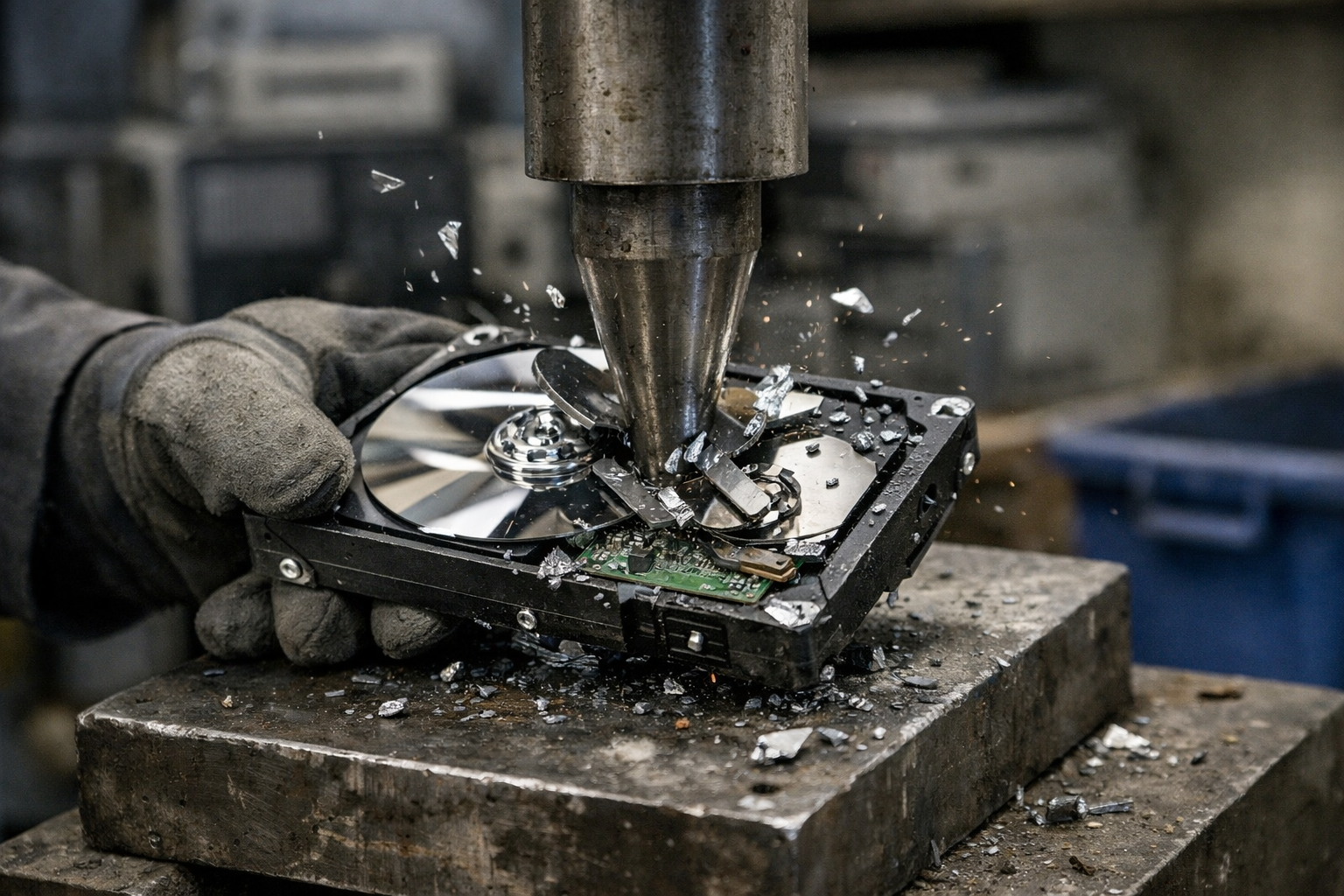
If you're uncertain whether a device contains data, assume it does. Removing and physically destroying hard drives before disposal eliminates risk entirely. A drill through the platters or a hammer to the circuit board renders data unrecoverable.
This takes five minutes and costs nothing. The potential liability from a data breach costs far more.
Documentation for Tax and Audit Purposes
Proper documentation protects your business during audits and ensures you capture available tax benefits. Keep records regardless of which disposal path you choose.
For Donations
Obtain written acknowledgment from the receiving organization including:
Organization name and tax ID number
Date of contribution
Description of items donated
Statement that no goods or services were provided in exchange
For donations totaling over $500, complete IRS Form 8283 (Noncash Charitable Contributions) with your tax return. For individual items or groups of similar items exceeding $5,000, you typically need a qualified independent appraisal. The IRS scrutinizes large non-cash charitable contributions, so documentation quality matters [3].
Keep your own records of original purchase price, purchase date, and condition at time of donation. Photographs provide useful backup if questions arise later.
For Sales
Maintain records showing:
Buyer information
Sale date and price
Description of items sold
Original purchase information for calculating gain or loss
Sales of depreciated assets may generate taxable gains or deductible losses depending on sale price versus adjusted basis. Your accountant needs this information at tax time.
For Recycling
Document what was recycled, when, and through which service provider. This serves multiple purposes:
Asset tracking and inventory management
Environmental compliance verification
Support for any disposal-related deductions
Audit trail for data security compliance
Professional recycling services typically provide receipts, weight tickets, or certificates of recycling. Keep these records with your asset disposition files.
When Equipment Reaches True End-of-Life
When equipment is broken, obsolete, or simply not worth anyone's time to repair or repurpose, professional recycling ensures responsible handling.
This applies to:
Non-functional electronics and computers
Scrap metal from equipment, fixtures, and machinery—copper wiring, aluminum frames, steel components, brass fittings
Bulk cardboard and packaging materials from operations
HVAC units, batteries, and other specialized items
Any equipment that failed the donation and resale tests
The Value Recovery Opportunity
Recycling isn't necessarily a cost center. Scrap metal, in particular, holds real value. Copper, brass, aluminum, and steel command prices based on commodity markets, meaning businesses often receive payment rather than paying disposal fees [4].
What affects scrap value:
Material type (copper and brass typically highest, steel and iron lower per pound but valuable in quantity)
Cleanliness and preparation (clean, sorted materials command better rates)
Current market conditions (prices fluctuate with commodity markets)
Quantity (larger loads often qualify for better rates or free pickup)
The catch? Capturing that value requires getting materials to a processor. For businesses without trucks, equipment, or time to haul scrap, this creates a bottleneck. Materials pile up, taking space and creating hazards, because nobody has bandwidth to deal with them.
Mobile Recycling Services
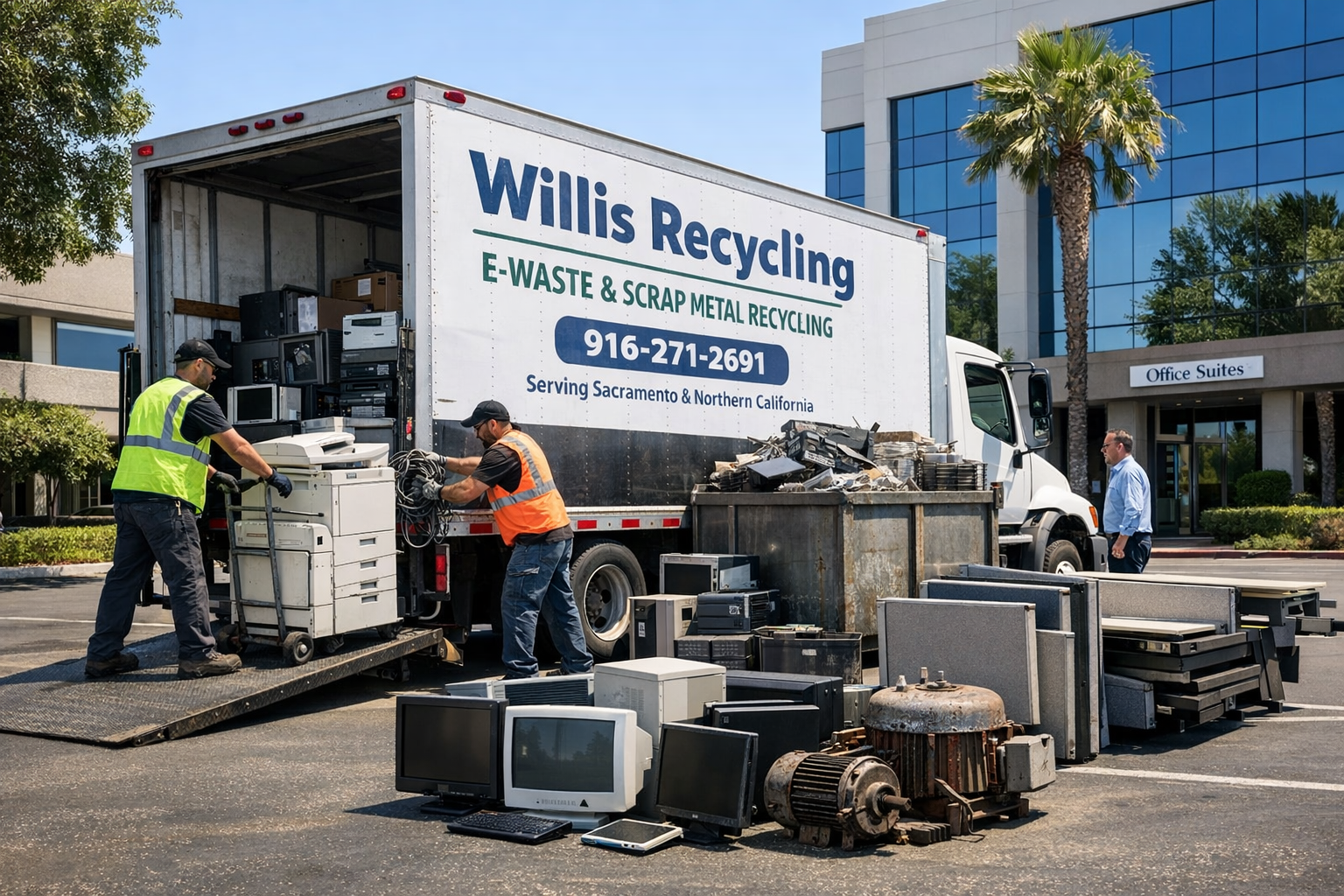
This is where services like Willis Recycling come in. Rather than requiring businesses to load up trucks and drive across town, mobile recycling brings the solution directly to your location.
The process works simply:
Contact the service with information about your materials
Schedule a pickup time that works for your operations
A crew arrives, evaluates materials on-site, and handles all loading
You receive documentation for your records
For valuable materials like copper and other non-ferrous metals, businesses receive fair compensation based on weight and current market rates. For lower-value items, the service handles removal efficiently so you can reclaim space and stay compliant.
This approach eliminates the logistics headache that causes many businesses to delay dealing with scrap. Instead of materials accumulating for months, regular pickups keep facilities clean and operations running smoothly.
Putting It All Together
Responsible disposal of old business equipment requires thought, but not complexity. The framework is straightforward:
Functional, valuable equipment → Sell it and recover investment
Functional equipment with limited value → Donate to organizations that can use it
Non-functional or no-value equipment → Recycle through appropriate channels
Anything with data storage → Destroy data completely before any disposal path
Everything → Document properly for tax and compliance purposes
Most businesses benefit from establishing ongoing relationships with donation recipients and recycling services rather than scrambling each time disposal needs arise. Regular partners understand your operations, respond quickly, and make the process predictable.
Take the Next Step
Old equipment sitting in storage isn't just wasted space—it's deferred decision-making that compounds over time. The longer items accumulate, the bigger the eventual project becomes.
Start by inventorying what you have. Sort items into the three paths based on the questions above. Handle data security first on anything with storage.
For items heading to recycling—especially scrap metal, cardboard bales, or bulk equipment—contact Willis Recycling at (916) 271-2691 for a fair on-site evaluation. The team handles pickup, loading, and documentation, turning disposal from a problem into a solved item on your checklist.
Ready to clear space and capture value from materials that have been sitting too long? Call today or email [email protected] to schedule your pickup.
Frequently Asked Questions
How do I determine if old equipment is worth selling versus recycling?
Research comparable items on resale platforms to gauge current market value. If similar equipment sells regularly at prices that justify your time investment in listing, photographing, and coordinating sales, pursue resale. When potential returns are minimal—generally under $200 for single items—or items aren't moving in the secondary market, recycling becomes more practical, especially for metal-containing equipment that retains scrap value even when broken.
What documentation do I need for donated business equipment?
Obtain written acknowledgment from the receiving nonprofit including their tax ID number, donation date, item description, and a statement confirming no goods or services were exchanged. For donations totaling over $500, complete IRS Form 8283 with your return. Donations valued over $5,000 typically require a qualified independent appraisal. Maintain your own records of original purchase price, purchase date, and condition at donation time.
Can I recycle old computers without worrying about data security?
Never assume data security handles itself. Before any disposal path—donation, sale, or recycling—completely destroy data on storage devices. Use professional wiping software, physically destroy hard drives, or remove and shred storage components. Don't overlook digital copiers and printers, which store images of scanned documents on internal hard drives. Reputable recyclers have data security protocols, but verifying their processes and maintaining destruction documentation protects your business from liability.
What types of scrap metal can be recycled from business equipment?
Most metals found in business equipment are recyclable, including copper wiring and piping, aluminum fixtures and frames, steel from machinery and furniture, brass fittings and valves, and stainless steel. Even mixed or contaminated metals typically have recycling value. Copper and brass generally command the highest per-pound rates, while steel and iron have value in larger quantities. Contact a recycler to discuss specific materials—they can advise on what they accept and current market conditions.
How often should businesses schedule recycling pickups?
Frequency depends on how quickly materials accumulate. Construction sites and manufacturing facilities generating significant scrap may need weekly service, while offices might schedule monthly or quarterly. The key is preventing materials from piling up to the point where they create safety hazards, take up needed space, or create compliance issues. Establishing a regular schedule with your recycling service ensures predictable, manageable disposal rather than crisis-mode cleanouts.
About Willis Recycling
Willis Recycling is a family-owned mobile recycling service based in Sacramento, serving Northern California businesses since 2017. With nearly two decades of combined industry experience, the team provides on-site scrap metal and cardboard pickup that eliminates the hassle of hauling materials to a recycling center. Willis Recycling handles everything from copper and aluminum to bulk cardboard bales and equipment, providing fair evaluations, transparent documentation, and professional service that keeps businesses compliant and clutter-free.
Cited Works
[1] U.S. Environmental Protection Agency — "Electronics Donation and Recycling." https://www.epa.gov/recycle/electronics-donation-and-recycling
[2] Institute of Scrap Recycling Industries — "The Scrap Recycling Industry." https://www.isri.org/recycling-industry
[3] Internal Revenue Service — "Publication 561: Determining the Value of Donated Property." https://www.irs.gov/publications/p561
[4] U.S. Geological Survey — "Metal Recycling Statistics and Information." https://www.usgs.gov/centers/national-minerals-information-center