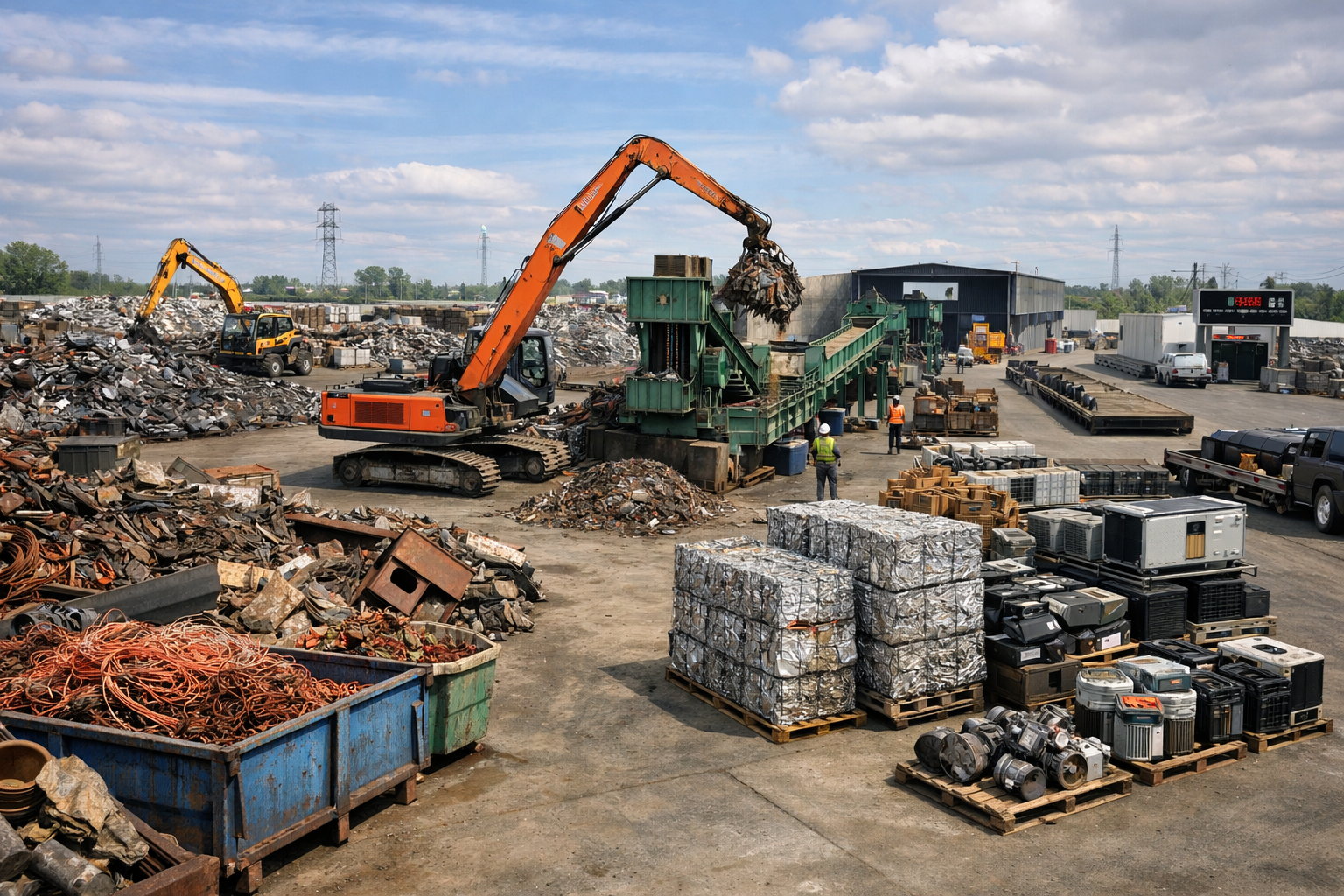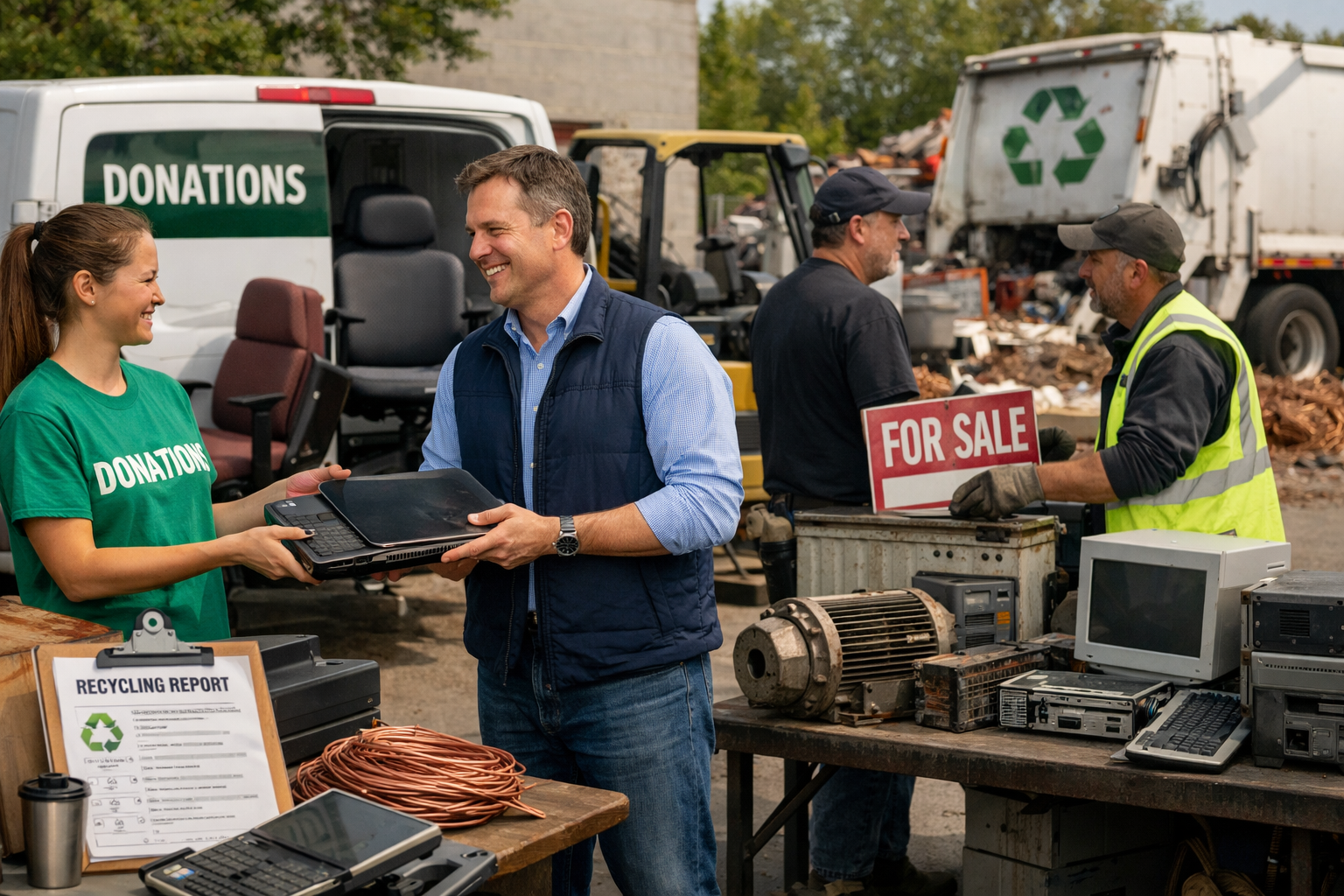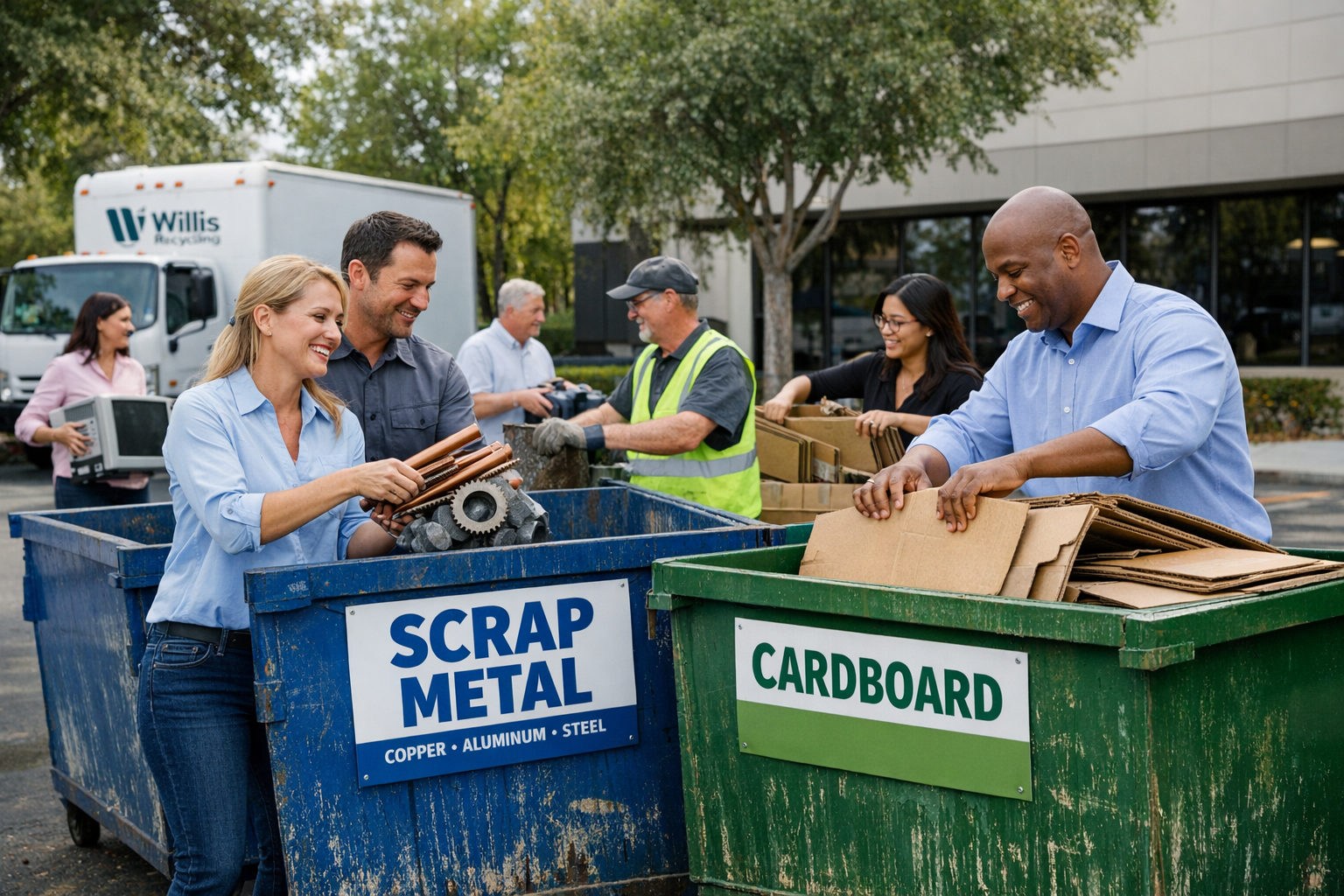
A recycling event at your business does more than clear out old materials. It brings people together, supports local environmental goals, and creates a story worth telling. Whether you run a warehouse, construction company, auto shop, or office building, organizing a recycling event is simpler than most people think—and the benefits extend far beyond the scrap you collect.
This guide walks you through practical event formats, a straightforward planning timeline, and how to involve employees, families, and community organizations. We'll also explain how Willis Recycling can support your event with containers, staffing, and removal so you can focus on what matters most: making an impact.
Why Recycling Events Work for Sacramento Businesses
Recycling events give businesses a tangible way to demonstrate environmental responsibility. They also solve a practical problem: clearing out accumulated scrap metal, electronics, cardboard, and other recyclables that take up space and create clutter.
For employees, these events offer a chance to participate in something meaningful during the workday. For the surrounding community, they signal that your business cares about more than the bottom line.
California businesses face ongoing pressure to meet waste diversion requirements. Events like these help you document recycling efforts, which can support compliance with regulations like CALGreen for construction and demolition projects [1]. Beyond compliance, they position your company as a leader in practical sustainability.
Simple Event Formats That Actually Work
You don't need a complicated setup to run a successful recycling event. Here are three formats that are easy to execute and produce real results.
The One-Day Collection Drive
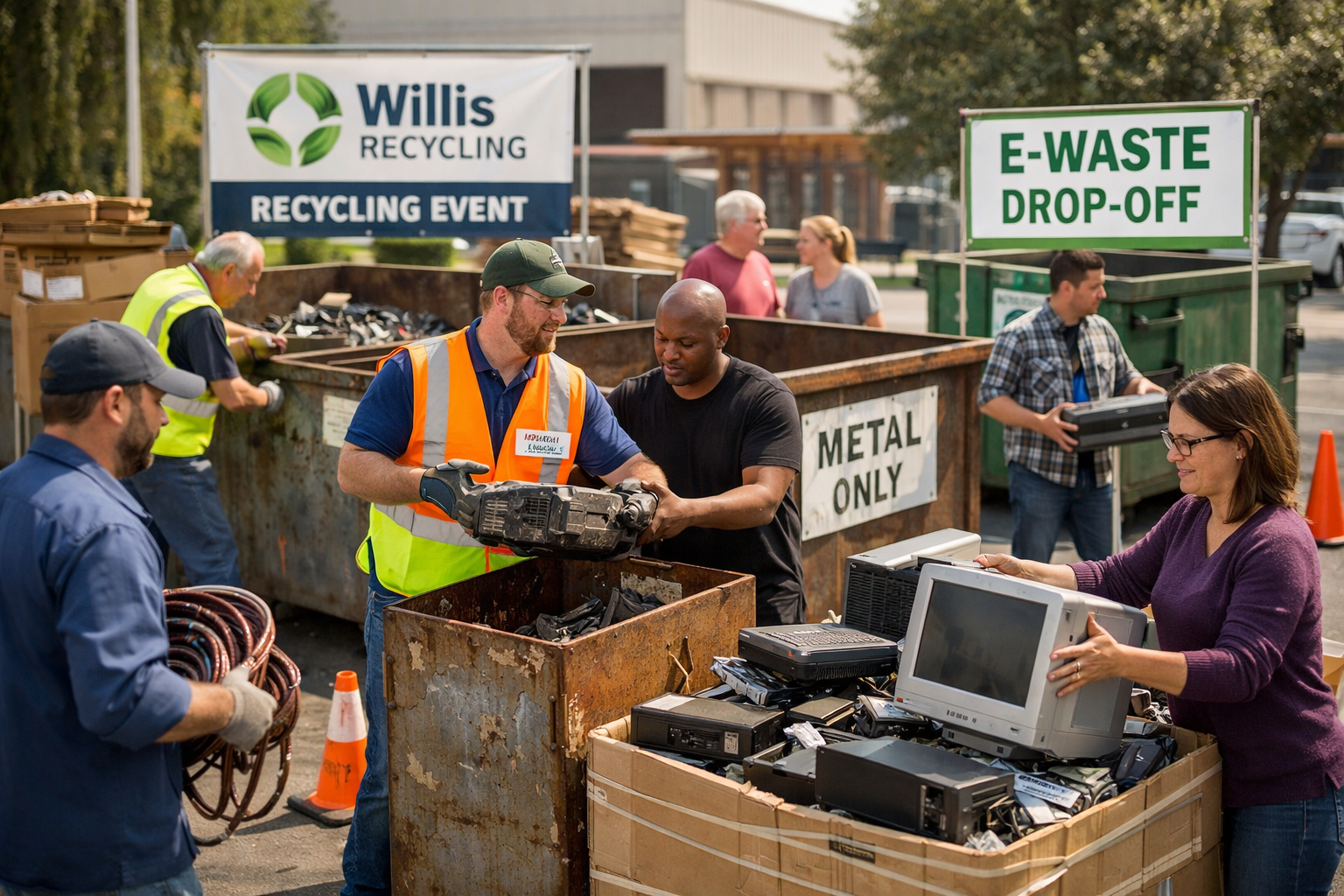
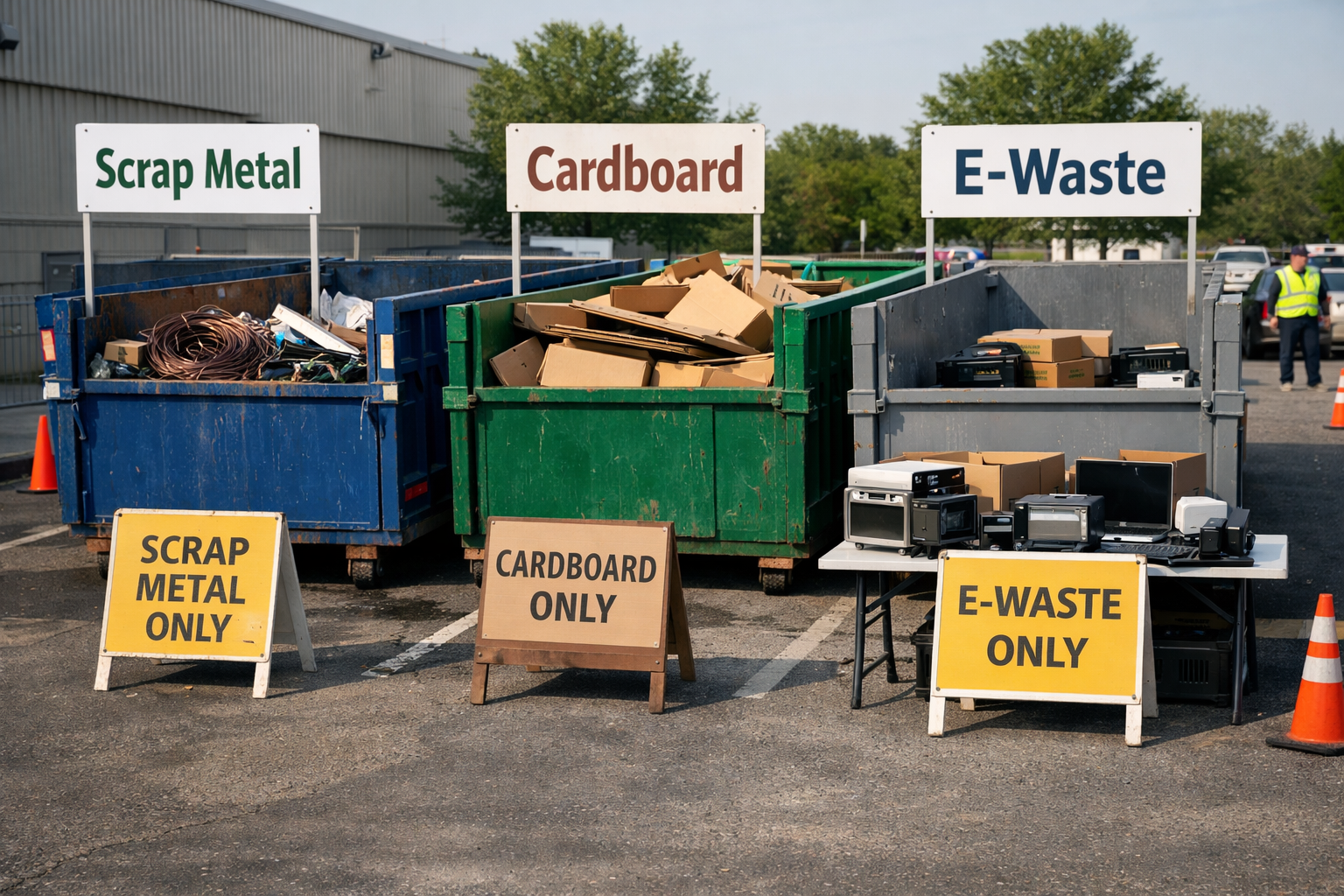
This is the most straightforward approach. Pick a single day, set up collection points on your property, and invite employees to bring recyclable materials from home. You can also use this day to clear out company scrap that has been accumulating.
What to collect:
Scrap metal (copper wire, aluminum, steel, brass)
Old electronics and e-waste
Cardboard bales
Used batteries
Old equipment and machinery
A one-day drive works well for businesses with 20 to 200 employees. It creates a defined moment of participation without requiring ongoing coordination.
The Quarterly Clean-Out
Some businesses generate recyclables continuously. A quarterly event builds a rhythm around waste removal and keeps materials from piling up between pickups.
Schedule four events per year—one each quarter—and communicate the dates well in advance. Employees learn to set aside materials at home and at work, knowing a pickup is coming.
This format works particularly well for:
Construction companies with ongoing job site waste
Auto and tire shops with regular parts turnover
Warehouses and distribution centers with cardboard and pallet accumulation
Healthcare facilities with equipment upgrades
The Community Partnership Event
Partner with a local nonprofit, school, or neighborhood association to host an open recycling day. Your business provides the location and logistical support while the partner organization helps spread the word and may receive a portion of any proceeds from valuable materials.
This format extends your reach beyond employees and creates goodwill in the community. It also generates local press opportunities and social media content.
A Practical Planning Timeline
Running a recycling event doesn't require months of preparation. Here's a realistic timeline from idea to event day.
Four Weeks Before the Event
Week 1: Define the basics
Choose your event format and date
Identify what materials you'll accept
Contact Willis Recycling to discuss container needs and scheduling
Confirm any permits required for your location
Week 2: Build your team
Assign a point person to coordinate logistics
Recruit 3-5 volunteers to help on event day
Create a simple communication plan for employees
Two Weeks Before the Event
Week 3: Spread the word
Send an email announcement to all employees
Post flyers in break rooms and common areas
If hosting a community event, share on social media and local community boards
Confirm container delivery date with Willis Recycling
Week 4: Final preparations
Walk through the collection area and mark drop-off zones
Prepare signage showing what materials go where
Brief volunteers on their roles
Confirm pickup timing for event day
Event Day
Set up collection stations at least one hour before start time
Have volunteers stationed at each drop-off point to answer questions
Keep materials separated by type for efficient processing
Document participation with photos (with permission) for future communications
Willis Recycling handles loading, removal, and transport
After the Event
Send a thank-you message to participants
Share results: pounds collected, materials recycled, environmental impact
Gather feedback for next time
Schedule your next event if planning a recurring series
How Willis Recycling Supports Your Event
Organizing a recycling event requires coordination. That's where having the right partner makes a difference.
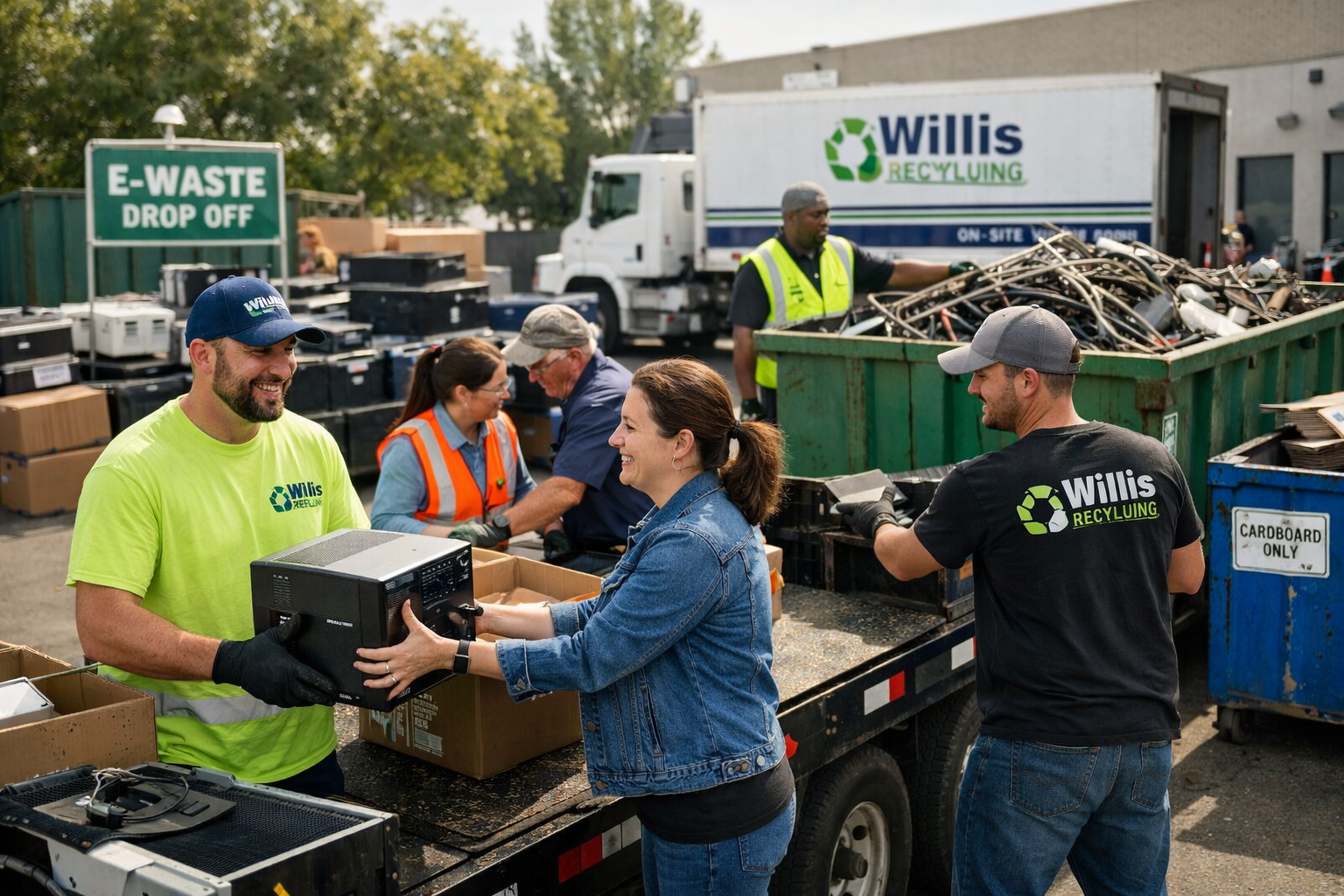
Willis Recycling provides on-site support for business recycling events throughout the Sacramento region. Here's what that looks like in practice.
Container Placement and Sizing
We'll help you determine what containers you need based on expected volume and material types. For a mid-sized event, this might mean separate containers for:
Ferrous metals (steel, iron)
Non-ferrous metals (copper, aluminum, brass)
Cardboard
Electronics and e-waste
Containers are delivered before your event and positioned where they're most accessible for drop-offs.
Staffing Support
Our team can be on-site during your event to help with sorting and answer questions about what materials are accepted. This takes pressure off your volunteers and ensures materials are handled properly from the start.
Same-Day or Next-Day Removal
When your event ends, we handle the heavy lifting. Our crew loads materials using our equipment so your employees don't have to. For most events, we can complete removal the same day or schedule pickup for the following morning [2].
Documentation for Your Records
After pickup, you receive an itemized summary of materials collected and their weights. This documentation supports compliance reporting and helps you communicate results to stakeholders [3].
For valuable materials like copper, brass, and aluminum, Willis Recycling provides a fair evaluation based on current market rates. Not all materials are eligible for compensation, but we're transparent about what qualifies and what doesn't [4].
Involving Employees, Families, and Local Organizations
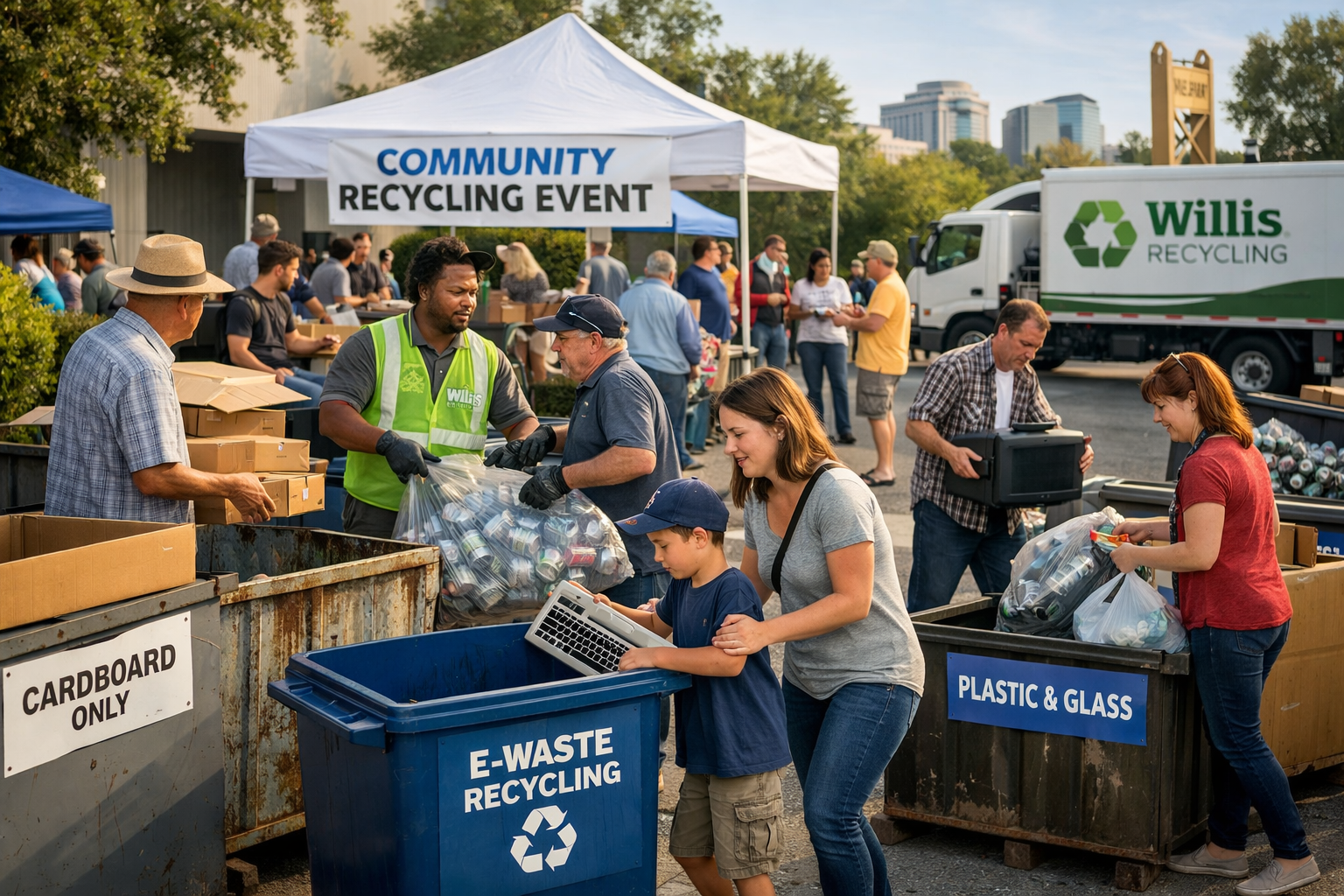
The most successful recycling events feel like community activities, not corporate mandates. Here's how to build participation.
Make It Easy for Employees
Remove barriers to participation. Allow employees to bring materials from home—old electronics, scrap wire from home projects, broken appliances. Most people have recyclables sitting in garages or basements that they don't know how to dispose of properly.
Consider offering:
Flexible drop-off times (before work, lunch hour, after work)
Covered parking or shaded areas for summer events
Light refreshments to encourage people to linger and connect
Include Families
Family participation multiplies your impact and creates stronger employee engagement. Invite family members to bring household recyclables. Some businesses turn this into a weekend event where kids can learn about recycling while parents drop off materials.
For families with children, consider adding:
A brief tour of the collection process
Simple explanations of where materials go after pickup
A photo opportunity with the containers or truck
Partner with Local Nonprofits
Partnering with a community organization extends your event's reach and builds goodwill. Potential partners include:
Youth sports leagues
School parent-teacher organizations
Environmental groups
Faith-based organizations
Neighborhood associations
Structure the partnership so the nonprofit helps promote the event to their network. In return, consider donating a portion of any material value to their cause, or simply provide the organization with visibility and volunteer opportunities.
Recognize Participation
People respond to recognition. Consider simple acknowledgments like:
Department-level participation tracking with friendly competition
A mention in company communications for top contributors
A small celebration or gathering after the event
Turning Your Event Into a Story Worth Sharing
A recycling event creates content opportunities that extend its impact. The story you tell afterward can reinforce your company's values and attract positive attention.
Document the Day
Assign someone to take photos and short videos throughout the event. Capture:
Employees participating
Materials being collected
Containers filling up
The Willis Recycling team in action
Community partners involved
Always get permission before photographing people, especially children.
Share Your Results
After the event, communicate what you accomplished. Quantify the impact:
Total pounds of material recycled
Number of participants
Types of materials collected
Estimated environmental benefits (energy saved, landfill space avoided)
For context, recycling one ton of cardboard saves approximately 17 trees [4]. Recycling aluminum saves 95% of the energy required to produce new aluminum from raw materials [5]. These statistics help participants understand the real-world impact of their contributions.
Tell the Story Internally and Externally
Share your results through:
Company newsletters and all-hands meetings
LinkedIn company page updates
Local business association communications
Press releases to local media for larger events
For Sacramento businesses, a well-executed recycling event positions you as a community leader and demonstrates practical commitment to sustainability. That reputation matters to employees, customers, and partners.
Planning Your First (or Next) Event
Hosting a recycling event doesn't require complicated logistics or massive budgets. It requires a clear plan, willing participants, and the right partner to handle material removal.
Start with a manageable scope—a single-day collection drive for employees—and build from there. Once you've run one successful event, expanding to quarterly clean-outs or community partnerships becomes much simpler.
The benefits compound over time. Employees develop recycling habits. Community connections strengthen. Your facility stays cleaner. And you create a record of environmental responsibility that supports compliance and brand reputation.
Ready to plan your recycling event? Call Willis Recycling at (916) 271-2691 or email [email protected] to discuss containers, scheduling, and on-site support. We'll help you determine what you need based on your expected materials and participation level.
Frequently Asked Questions
What materials can employees bring from home to a business recycling event?
Employees can bring scrap metals like copper wire, aluminum cans, brass fixtures, and steel items. Old electronics, broken appliances, and used car batteries are also commonly accepted. Check with your recycling partner beforehand to confirm which materials they handle and whether any items require special processing.
How much space do we need to host a recycling event?
A parking lot section or loading dock area typically provides enough room. You'll need space for one or more collection containers plus room for vehicles to access drop-off points. For a standard employee event, plan for an area roughly the size of four to six parking spaces.
Can we host a recycling event on a weekend?
Yes, weekend events work well for including families and community members. Willis Recycling offers flexible scheduling to accommodate weekend events. Confirm timing during your initial planning call to ensure container delivery and pickup align with your preferred schedule.
How do we handle electronics and e-waste at a recycling event?
Electronics should be collected separately from scrap metal. Willis Recycling accepts e-waste and equipment as part of on-site pickups. Keep electronics in a designated area during the event, and our team will handle proper removal and processing.
What if we don't know how much material to expect?
Start with estimates based on your employee count and how long since your last clean-out. Willis Recycling can help you determine appropriate container sizes during your planning conversation. For first-time events, it's better to have slightly more capacity than you need rather than running out of space.
About Willis Recycling
Willis Recycling is a family-owned mobile recycling service based in Sacramento, serving businesses throughout Northern California. With nearly two decades of industry experience, we specialize in on-site scrap metal and cardboard pickup for construction companies, auto shops, warehouses, healthcare facilities, and other commercial operations. Our team handles the heavy lifting so yours doesn't have to—providing fast, compliant, and convenient recycling solutions with transparent documentation and fair evaluations. We've partnered with Fortune 500 companies and local businesses alike, including completing a 125-bed hospital equipment removal for Kaiser Permanente in under 72 hours.
Cited Works
[1] California Building Standards Commission — "CALGreen Nonresidential Mandatory Measures."
https://www.dgs.ca.gov/BSC/Resources/Page-Content/Building-Standards-Commission-Resources-List-Folder/CALGreen
[2] Willis Recycling — "Commercial Scrap Metal Pickup Sacramento." https://www.willisrecycling.com/commercial-scrap-metal-pickup-sacramento/
[3] Willis Recycling — "How It Works."
https://www.willisrecycling.com/
[4] EPA — "Recycling Basics and Benefits."
https://www.epa.gov/recycle/recycling-basics-and-benefits
[5] Aluminum Association — "Recycling."
https://www.aluminum.org/recycling