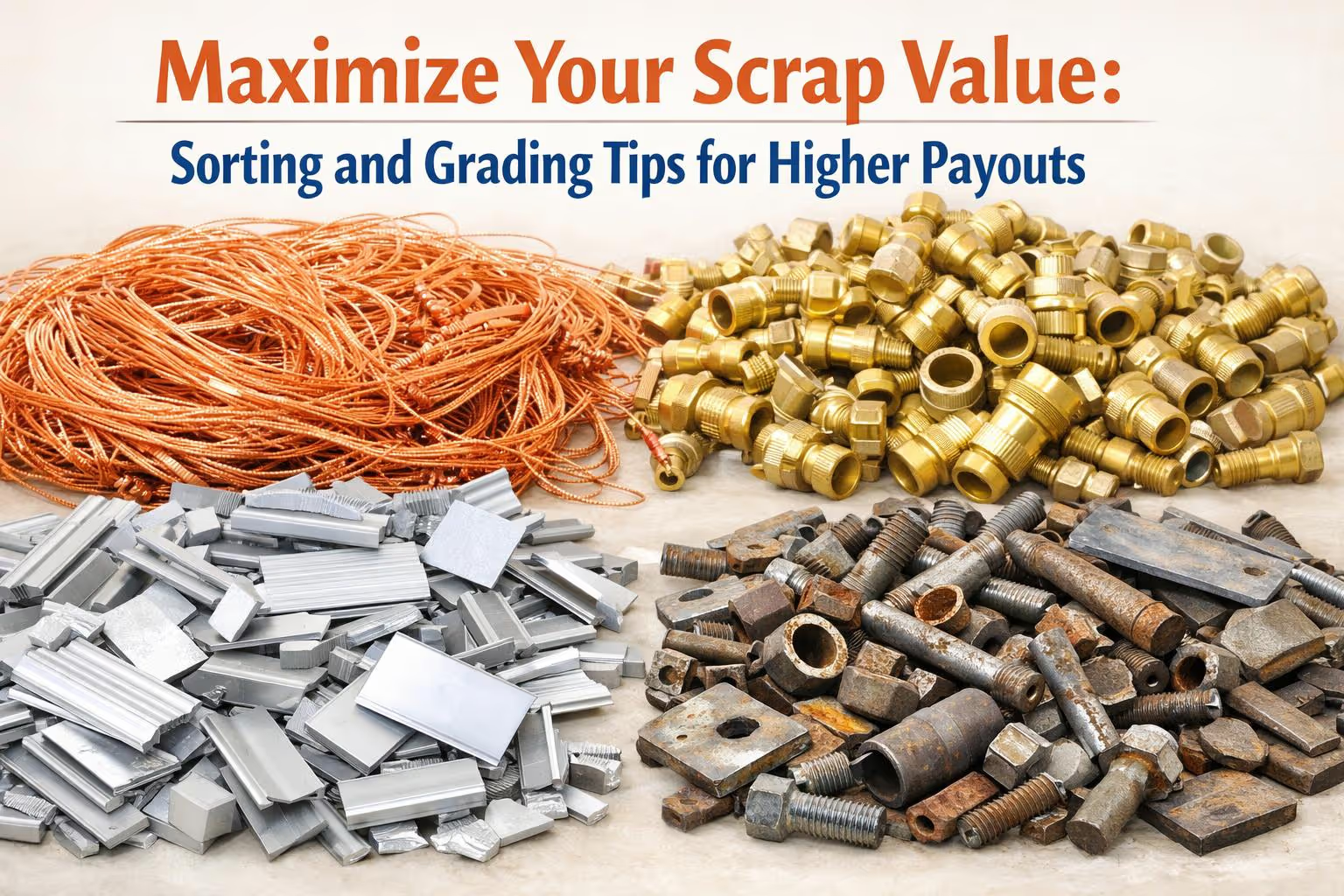
The difference between a mixed scrap pile and sorted materials can mean hundreds—sometimes thousands—of dollars over the course of a year. Most businesses generating scrap don't realize how much they're leaving on the table simply because everything gets tossed into one bin.
Here's the reality: you don't need perfect sorting to see real gains. A few practical habits and some basic knowledge about how scrap gets graded can move your materials from lower pricing tiers to higher ones. After nearly two decades in the recycling industry, we've seen firsthand how small changes in preparation translate directly into better payouts for Sacramento-area businesses.
This guide covers what you actually need to know—no fluff, just practical steps your crew can follow starting today.
How Scrap Metal Pricing Tiers Work
Scrap metal prices aren't one-size-fits-all. Recyclers use a tiered pricing system based on material type, cleanliness, and how much processing the scrap requires before it can be resold [1].
Clean scrap refers to materials that are separated by type, free of contaminants, and ready for processing with minimal additional work. This grade commands the highest prices because it reduces labor and equipment costs on the recycler's end.
Mixed scrap includes materials that are unsorted, contain multiple metal types, or have attachments like plastic, rubber, or paint. Because this material requires extra handling to separate and process, it falls into lower pricing tiers.
The price gap between these categories varies depending on the metal. For high-value materials like copper, the difference between clean and contaminated grades can be substantial—sometimes 20 to 40 percent or more depending on market conditions [2].
Here's how it breaks down in practice:
| Material Type | Clean Grade Example | Mixed/Contaminated Example | How to Identify |
| Copper Wire | Bare bright copper (stripped, uncoated) | Insulated wire with plastic coating | Reddish color, non-magnetic |
| Aluminum | Clean aluminum sheet or extrusion | Painted aluminum or mixed with steel attachments | Lightweight, silver color, non-magnetic |
| Brass | Solid yellow brass, no attachments | Brass valves with steel or plastic components | Yellow/gold color, heavier than aluminum, non-magnetic |
| Steel | Sorted by type (stainless vs. carbon) | Mixed ferrous metals in one pile | Magnetic (use magnet test) |
| Stainless Steel | Separated from carbon steel | Mixed in with regular steel pile | Usually non-magnetic, heavier feel |
Understanding this system helps you make informed decisions about where to focus your sorting efforts.
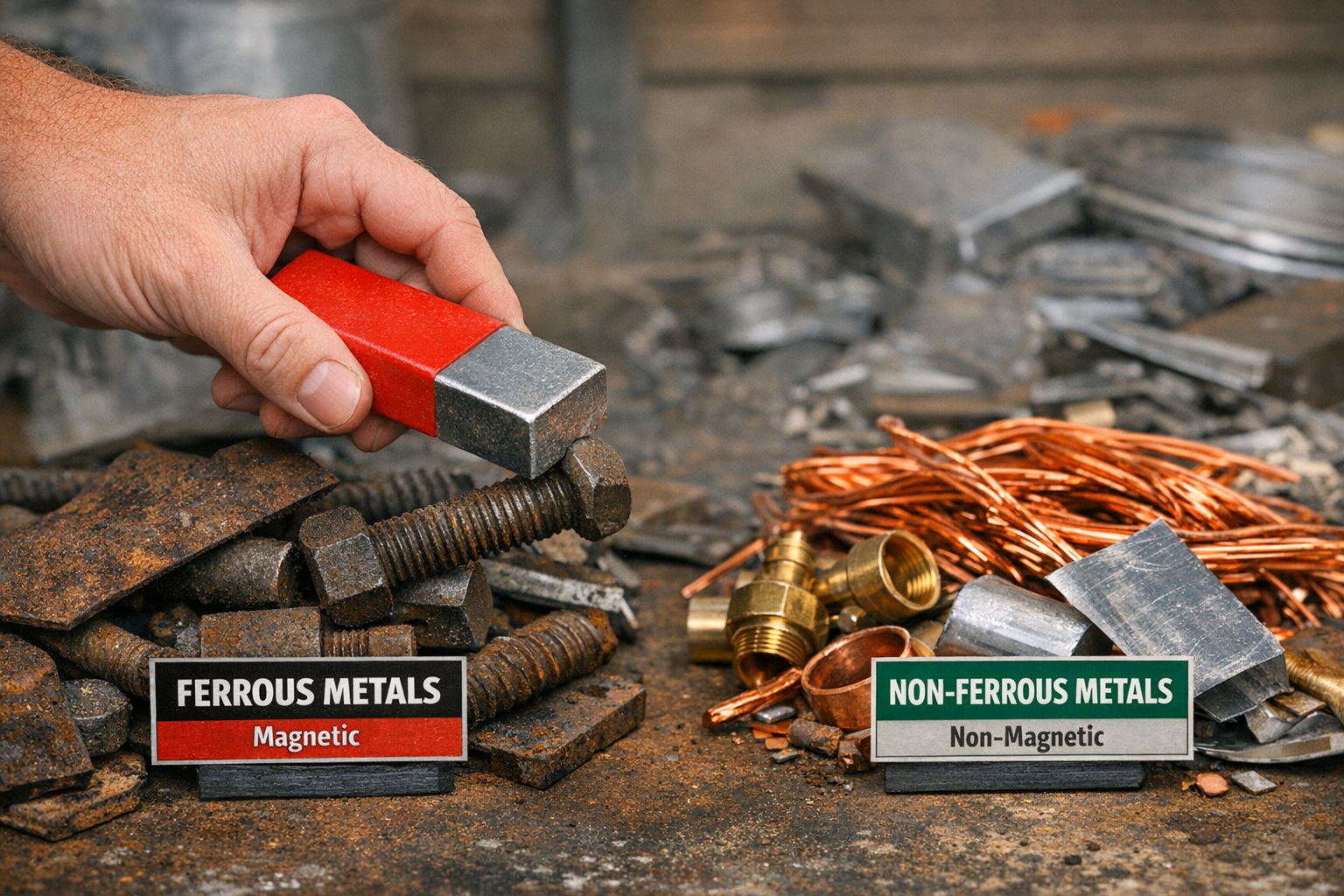
The Magnet Test: Your First Sorting Tool
Before anything else, you need to understand the most fundamental rule in scrap sorting: ferrous versus non-ferrous metals.
This is where every sorting conversation starts, and it requires exactly one tool—a magnet.
Ferrous metals (iron and steel) are magnetic. When you hold a magnet to them, it sticks. These are your lower-value metals by weight, though they're still worth recycling in volume.
Non-ferrous metals (copper, brass, aluminum, stainless steel) are generally non-magnetic. The magnet won't stick. These are your higher-value materials and deserve more attention during sorting.
The test is simple: Grab a magnet—even a refrigerator magnet works for basic identification—and touch it to the metal in question.
Magnet sticks → Ferrous (steel/iron) → Goes in your steel pile
Magnet doesn't stick → Non-ferrous → Worth separating further
This single test immediately tells you whether you're dealing with something that should go in a general steel bin or something worth keeping separate for a better payout.
Pro tip: Keep a strong magnet (like a neodymium magnet from a hardware store) mounted on a string near your scrap area. Your crew can do a quick check on any questionable piece in seconds.
When the Magnet Test Gets Tricky
A few situations where you'll need to pay closer attention:
Some stainless steels are slightly magnetic. Certain grades (like 400-series stainless) will attract a magnet weakly. If the magnet sticks but not strongly, and the metal looks silvery and clean, it might still be stainless worth separating.
Plated metals can fool you. Chrome-plated steel is still steel underneath. Nickel-plated items might feel different but respond the same to the magnet.
Aluminum and stainless can look similar. Both are silvery and non-magnetic. The difference? Weight. Pick up similar-sized pieces—aluminum feels noticeably lighter. Stainless has more heft.
Don't stress about getting every identification perfect. The magnet test alone, applied consistently, will significantly improve your sorting accuracy.
High-Value Metals That Deserve Extra Attention
Not all scrap is created equal. Some materials are worth significantly more per pound, which means even small amounts deserve careful handling.
Copper
Copper consistently ranks among the most valuable scrap metals. Prices fluctuate with commodity markets, but copper generally brings several dollars per pound for clean grades [3].
The key distinction is between bare bright copper—stripped wire with no coating, oxidation, or attachments—and lower grades like insulated copper wire. Stripping insulation from copper wire can double your return compared to selling it with the plastic intact.
How to identify copper:
Distinctive reddish/orange color (can turn greenish when oxidized)
Non-magnetic
Heavy for its size
Common in electrical wiring, plumbing pipes, HVAC tubing
If your operation generates significant copper waste, separating it from other metals and keeping it clean pays off quickly. Even a small bucket of clean copper wire accumulated over a few weeks can add meaningful dollars to your pickup.
Brass
Brass fixtures, fittings, and valves are common in plumbing and HVAC work. Yellow brass (the most common type) holds good value, but mixed brass or pieces with steel screws and plastic components fall into lower tiers.
How to identify brass:
Yellow or gold color (sometimes darker, almost bronze)
Non-magnetic
Heavier than aluminum, lighter than steel
Common in plumbing fittings, door hardware, valve bodies, decorative items
When possible, remove steel attachments from brass fittings before collection. A few minutes of prep—unscrewing steel bolts, pulling out plastic washers—can bump the material into a higher grade.
Aluminum
Aluminum is lighter than copper and brass, so you need more volume to see meaningful returns. However, clean aluminum—especially extrusions and sheet metal—commands better prices than painted or contaminated material.
How to identify aluminum:
Silver/gray color
Non-magnetic
Noticeably lightweight
Common in window frames, siding, gutters, some auto parts, beverage cans
Separating aluminum cans from aluminum sheet stock also matters—they're different grades with different values. Extrusions (like window frame pieces) typically bring more than thin sheet aluminum or crushed cans.
Stainless Steel
Stainless steel brings more than standard carbon steel, but only if it's separated. Mixed in with regular steel, it loses its premium value because the recycler has to identify and sort it.
How to identify stainless:
Silver color, often with a brushed or polished look
Usually non-magnetic (though some grades attract weakly)
Heavier than aluminum
Common in kitchen equipment, medical devices, food processing, some fasteners
If you handle stainless regularly, keeping it in its own container makes a noticeable difference. The premium over regular steel can be significant—worth the extra step.
Practical Sorting Rules Your Crew Can Follow
You don't need an elaborate system to improve your scrap grades. A few straightforward rules, consistently applied, will move your materials into higher pricing tiers.
Rule 1: Start with the Magnet Test
Make it standard procedure. Before anything goes in a bin, someone touches a magnet to it.
Magnetic → Steel/iron pile
Non-magnetic → Needs further sorting (copper, brass, aluminum, stainless)
This single habit alone will improve your overall returns.
Rule 2: Keep Different Metals Separate
The single most effective practice is maintaining separate containers for different metal types. Copper in one bin, aluminum in another, brass in a third, and steel in its own pile.
This doesn't require perfect identification of every alloy. Even basic separation—copper here, steel there—improves your average price per pound.
Minimum setup for most operations:
Steel/iron (ferrous)
Copper and brass (high-value non-ferrous)
Aluminum
"Not sure" bin (for anything questionable—we can help sort these during pickup)
Rule 3: Remove Obvious Attachments
When practical, remove non-metal attachments before tossing materials in the scrap pile:
Pull plastic handles off tools
Take steel screws out of brass valves (use a cordless drill—takes seconds)
Separate rubber or plastic from aluminum frames
Remove wire insulation from copper when volume justifies the time
Tools that help:
Cordless drill for screws
Wire strippers for copper (manual or electric depending on volume)
Side cutters for snipping attachments
Angle grinder for cutting off contaminated sections
Perfect removal isn't necessary. Getting most of the attachments off moves the material up a grade.
Rule 4: Keep High-Value Metals Clean
Copper and brass lose value when contaminated with oil, grease, paint, or excessive dirt. Store these materials in covered containers or areas where they won't get coated in debris.
This is especially important for bare bright copper, which must be clean and unoxidized to qualify for top pricing. A covered five-gallon bucket works fine for accumulating copper—just keep it out of the weather and away from greasy work areas.
Rule 5: Sort at the Source When Possible
The easiest time to sort is when scrap is generated. Train crews to drop materials into the correct container as work happens, rather than creating one mixed pile that requires sorting later.
A simple color-coded bin system works for most operations:
Red → Copper/brass (high value)
Blue → Aluminum
Gray → Steel
Yellow → "Ask before tossing"
Label containers clearly and position them where work takes place. If your crew has to walk across the shop to sort something, they won't do it consistently.
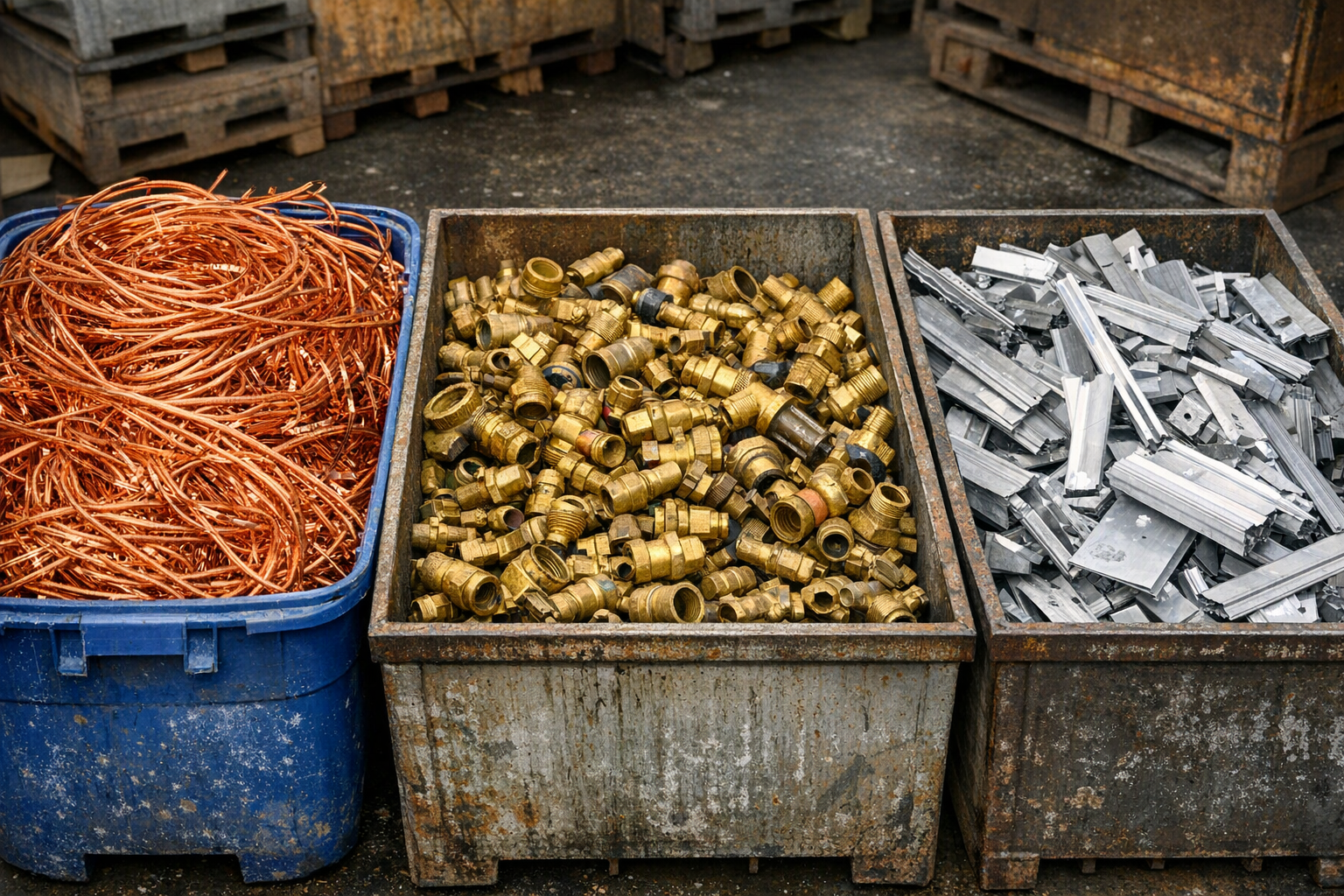
Perfect Sorting Isn't Required
Here's the reality: most businesses won't achieve perfect sorting, and that's fine. Even partial improvements create meaningful returns.
Moving from completely unsorted mixed metal to basic separation—keeping copper and brass out of the steel pile—can increase your overall payout significantly. You don't need lab-grade precision to see gains.
Focus your effort where it matters most:
High impact (do this first):
Separating copper from everything else
Keeping brass distinct from steel
Removing obvious plastic and rubber from valuable metals
Using the magnet test consistently
Lower priority (nice to have, not essential):
Distinguishing between slightly different aluminum alloys
Perfectly stripping every inch of wire insulation
Separating every grade of steel
Identifying exotic metals or alloys
The goal is practical improvement, not perfection. A sorting system your crew will actually follow beats an ideal system nobody uses.
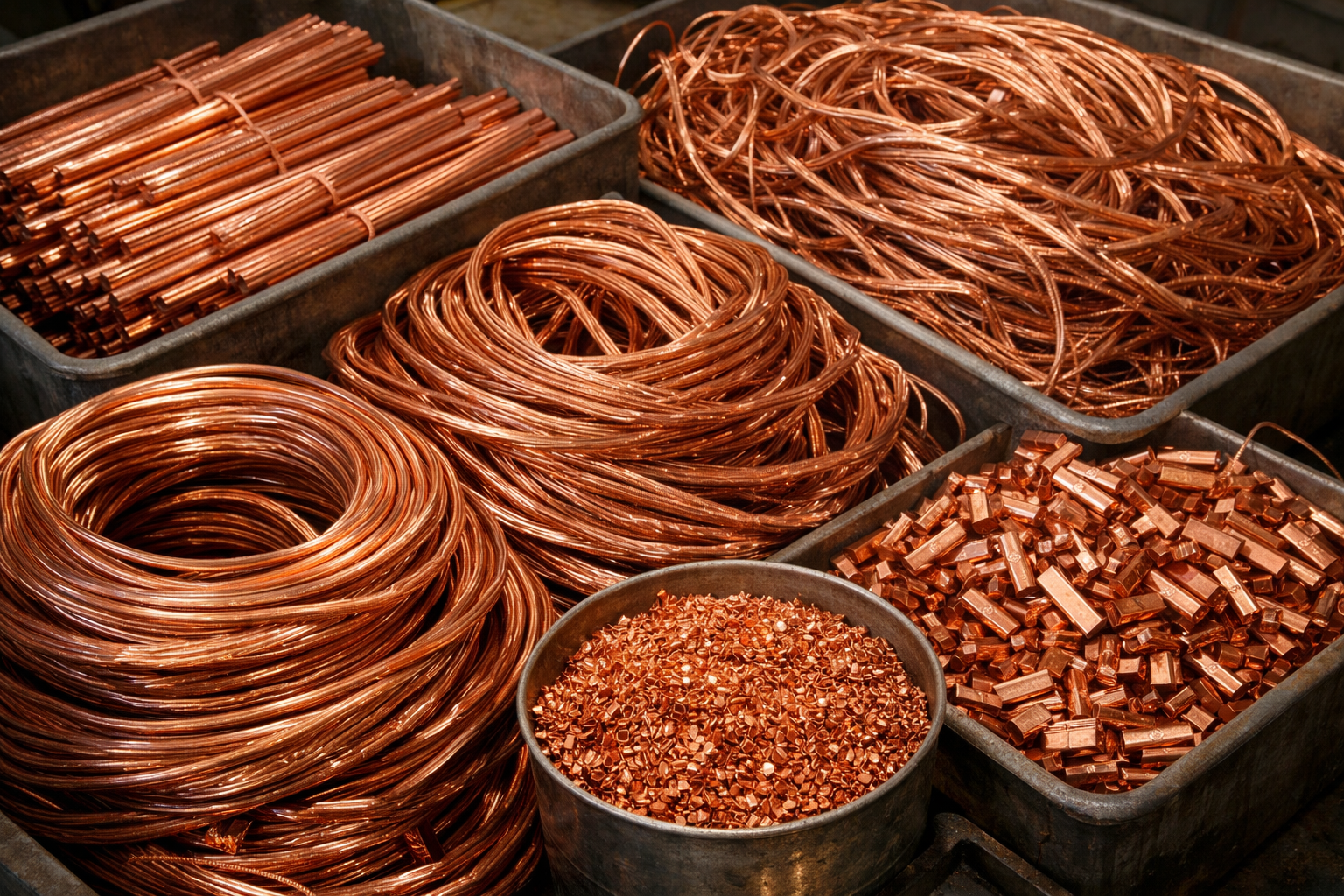
What Happens If You Don't Sort
Unsorted scrap isn't worthless—it just gets priced at the lowest common denominator. When copper, brass, aluminum, and steel end up in one pile, the recycler has to sort everything before processing. That labor cost gets reflected in what you receive.
For occasional small loads, this might not matter much. But for businesses generating regular scrap volume—construction sites, auto shops, warehouses, manufacturing facilities—the difference adds up month after month.
Consider a simple example: 500 pounds of mixed metal containing copper, brass, and steel might bring one price as an unsorted load. Those same materials, separated into their respective categories, could bring 15 to 25 percent more total value depending on the composition [4].
Over a year of regular pickups, that percentage translates to real money sitting on the table.
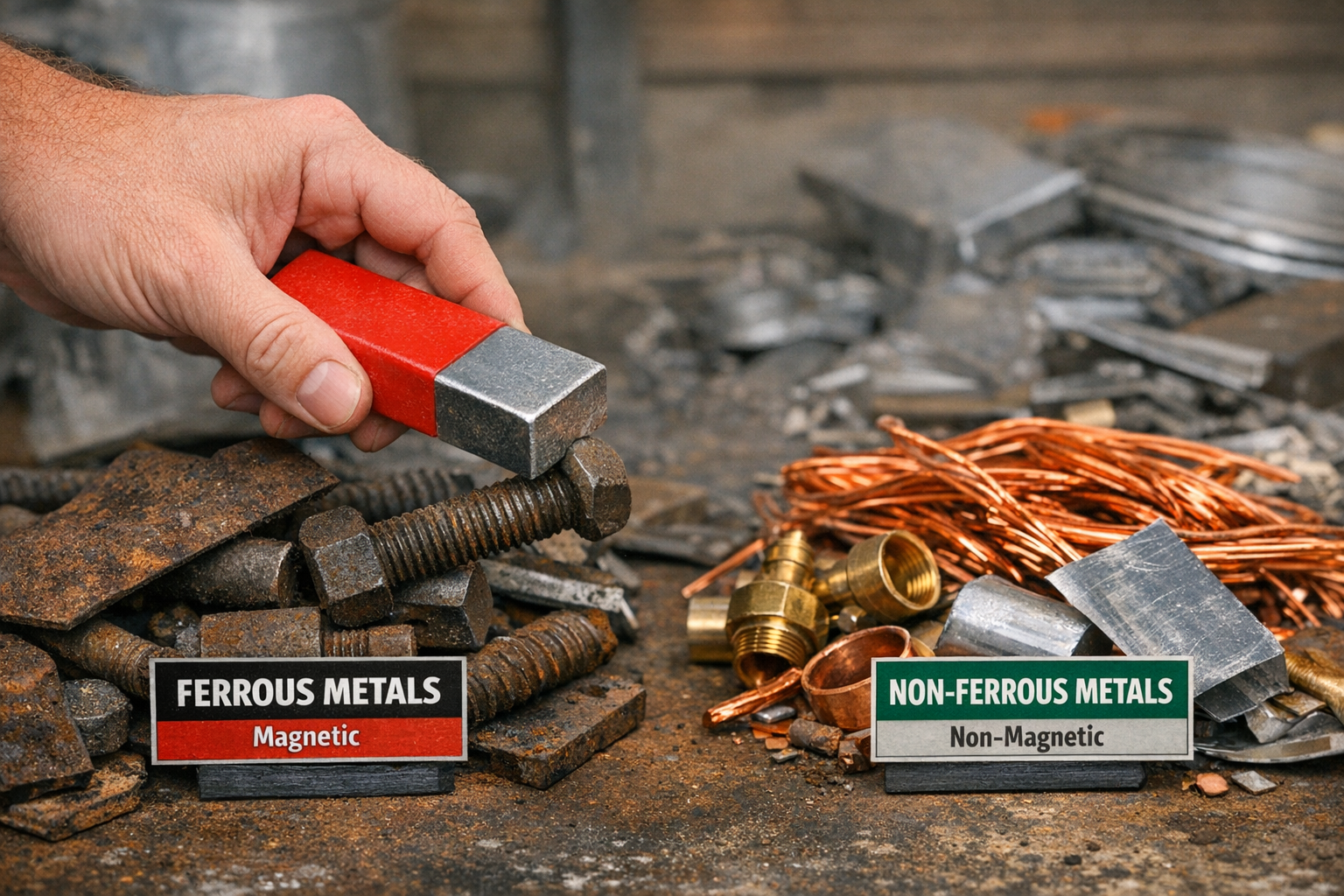
Getting Started With Better Sorting Practices
Implementing a basic sorting system doesn't require major investment or operational changes. Start with these steps:
1. Assess your current scrap stream.What metals does your operation generate most frequently? That's where to focus. If you're mostly generating steel with occasional copper wire, your system looks different than a plumbing contractor swimming in brass fittings.
2. Set up separate containers.Even sturdy garbage cans or drums work. Label them clearly. Position them where scrap actually gets generated—not tucked in a back corner.
3. Get a magnet.Seriously. One strong magnet, accessible to everyone, will improve your sorting accuracy immediately.
4. Train your team.Five minutes explaining the value of separation is usually enough. Most crews understand once they see the reasoning: "That pile of copper wire is worth real money—don't bury it under steel scraps."
5. Review after a few pickups.Are materials ending up in the right containers? Adjust your system based on what actually happens, not what should happen in theory.
6. Ask for input.Your recycling partner can often suggest specific improvements based on what they see in your loads. We do this all the time during pickups—pointing out materials that could be separated for better value.
Ready to Improve Your Scrap Value?
If you're not sure where to start—or you want an expert eye on your current setup—Willis Recycling offers site visits to help businesses optimize their scrap handling. We can walk your facility, identify high-value materials you might be mixing in with lower grades, and suggest practical sorting improvements that fit your operation.
We've been doing this for Sacramento-area businesses for years. Sometimes it's as simple as adding one extra bin in the right spot. Sometimes it's helping your team recognize that the "mystery metal" they've been throwing in the steel pile is actually worth separating.
You don't need to overhaul everything at once. Small changes, applied consistently, deliver real results.
Call Willis Recycling at (916) 271-2691 to schedule a quick site visit, or send an email to [email protected]. We'll help you get more value from the scrap you're already generating.
Frequently Asked Questions
Do I need to sort scrap perfectly to get better prices?
No. Even basic separation—keeping copper and brass out of your steel pile, for example—moves your materials into higher pricing tiers. Perfect sorting isn't required to see meaningful improvements in your payouts. Start with the magnet test to separate ferrous from non-ferrous, then focus on pulling out high-value metals like copper. That alone makes a noticeable difference.
What's the biggest pricing difference between clean and mixed scrap?
Copper shows the most dramatic difference. Bare bright copper (clean, stripped wire with no coating) can bring significantly more per pound than insulated copper wire—sometimes 30 percent or more depending on market conditions. For other metals like aluminum and brass, clean grades typically bring 10 to 25 percent more than contaminated material. The cleaner and better separated your scrap, the less work we have to do, which means better rates for you.
How do I tell aluminum from stainless steel? They look similar.
Both are silvery and non-magnetic, but there's an easy test: weight. Pick up similar-sized pieces of each—aluminum feels noticeably lighter, almost surprisingly so. Stainless steel has real heft to it. If you're still uncertain, that's fine. Keep a "not sure" bin and we can help identify materials during pickup. Over time, your crew will get better at spotting the difference.
What's the magnet test and why does it matter?
The magnet test is the most basic tool in scrap sorting. Touch a magnet to the metal. If it sticks, you have ferrous metal (steel or iron)—lower value but still worth recycling. If the magnet doesn't stick, you have non-ferrous metal (copper, brass, aluminum, or stainless)—typically worth more and worth separating. This one test, applied consistently, immediately improves your sorting accuracy.
Will Willis Recycling help me figure out a sorting system?
Yes. We offer site visits where we can assess your scrap stream and suggest practical improvements tailored to your operation. There's no charge to have us take a look and provide recommendations. We've helped construction sites, auto shops, warehouses, and manufacturing facilities throughout the Sacramento area set up simple systems that work. Call us at (916) 271-2691 to set up a time.
About Willis Recycling
Willis Recycling is a family-owned mobile recycling service based in Sacramento with nearly two decades of combined industry experience. We specialize in on-site scrap metal and cardboard pickup for businesses throughout Northern California, handling everything from copper and brass to steel and e-waste. Our team provides fair, transparent evaluations and the documentation you need for compliance—all without requiring you to haul materials yourself. We come to you.
Cited Works
[1] Institute of Scrap Recycling Industries — "Scrap Specifications Circular." https://www.isri.org/recycling-commodities/scrap-specifications-circular
[2] U.S. Geological Survey — "Copper Statistics and Information." https://www.usgs.gov/centers/national-minerals-information-center/copper-statistics-and-information
[3] London Metal Exchange — "LME Copper."
https://www.lme.com/en/metals/non-ferrous/lme-copper
[4] Environmental Protection Agency — "Scrap Metal Recycling." https://www.epa.gov/smm/recycling-economic-information-rei-report