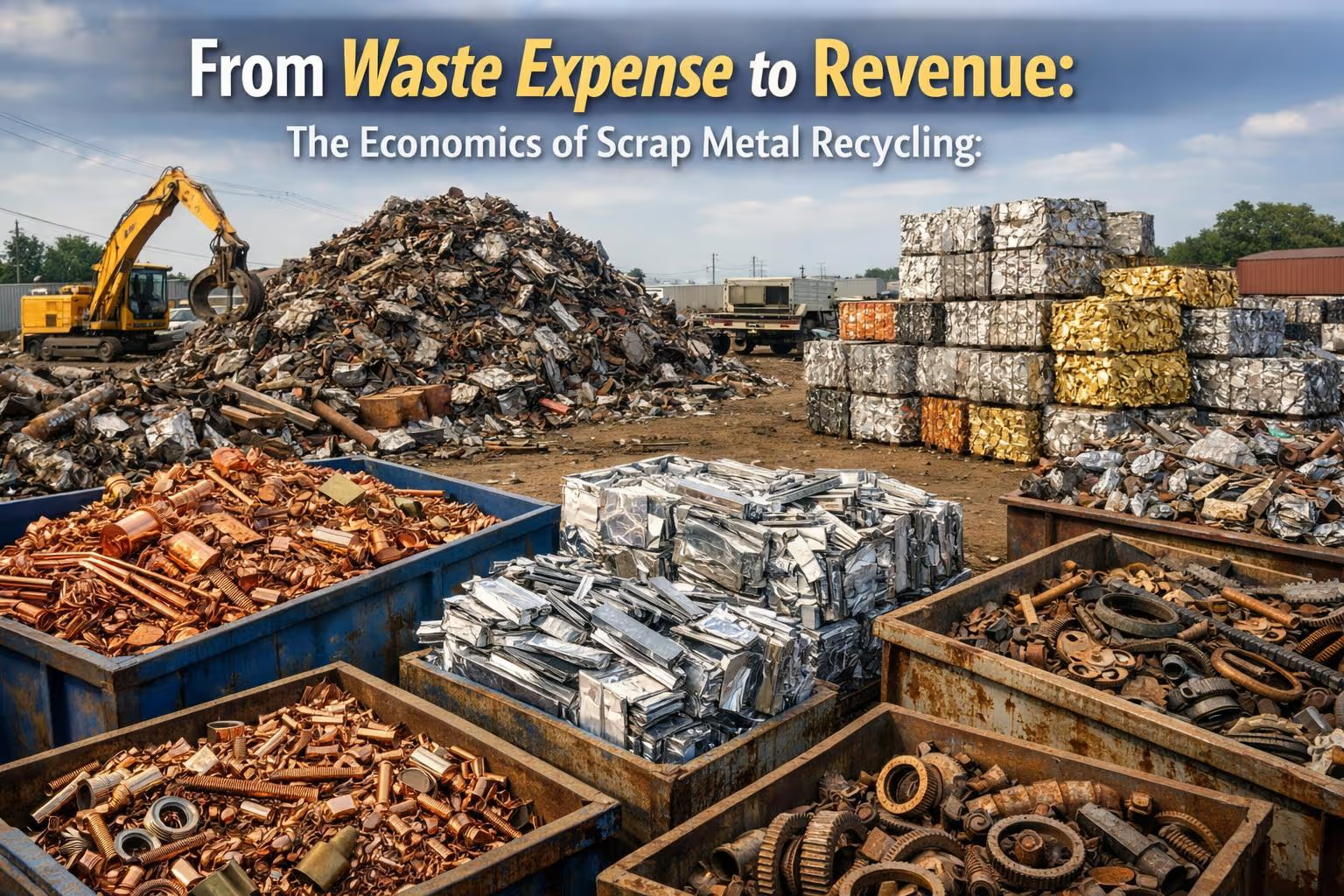
That pile of scrap metal in your yard isn't garbage. It's inventory you haven't sold yet.
Most Sacramento businesses treat metal waste like any other disposal problem—call a hauler, write a check, move on. But here's what that approach actually costs you: you're paying to remove something that has real market value, and you're walking away from revenue that could offset your waste budget entirely.
Scrap metal recycling flips that equation. Instead of watching dollars leave your operation in a dumpster, you recover value from materials you've already paid for once. For businesses generating consistent metal waste—construction sites, auto shops, warehouses, hospitals—this shift from expense to income stream changes how you think about material management.
Why Scrap Metal Is a Recoverable Asset, Not Waste
Every piece of metal in your facility started as a purchased commodity. Steel beams, copper wiring, aluminum fixtures, brass fittings—all of it was bought at market prices before it became part of your operation. When that material reaches end-of-life, it doesn't become worthless. It becomes scrap, and scrap trades in a legitimate secondary market.
The recycling industry processes millions of tons of scrap annually. Recyclers collect materials from businesses, sort and process them, then sell to mills and foundries that turn recovered metal into new products. Your "waste" becomes raw material for the next manufacturing cycle.
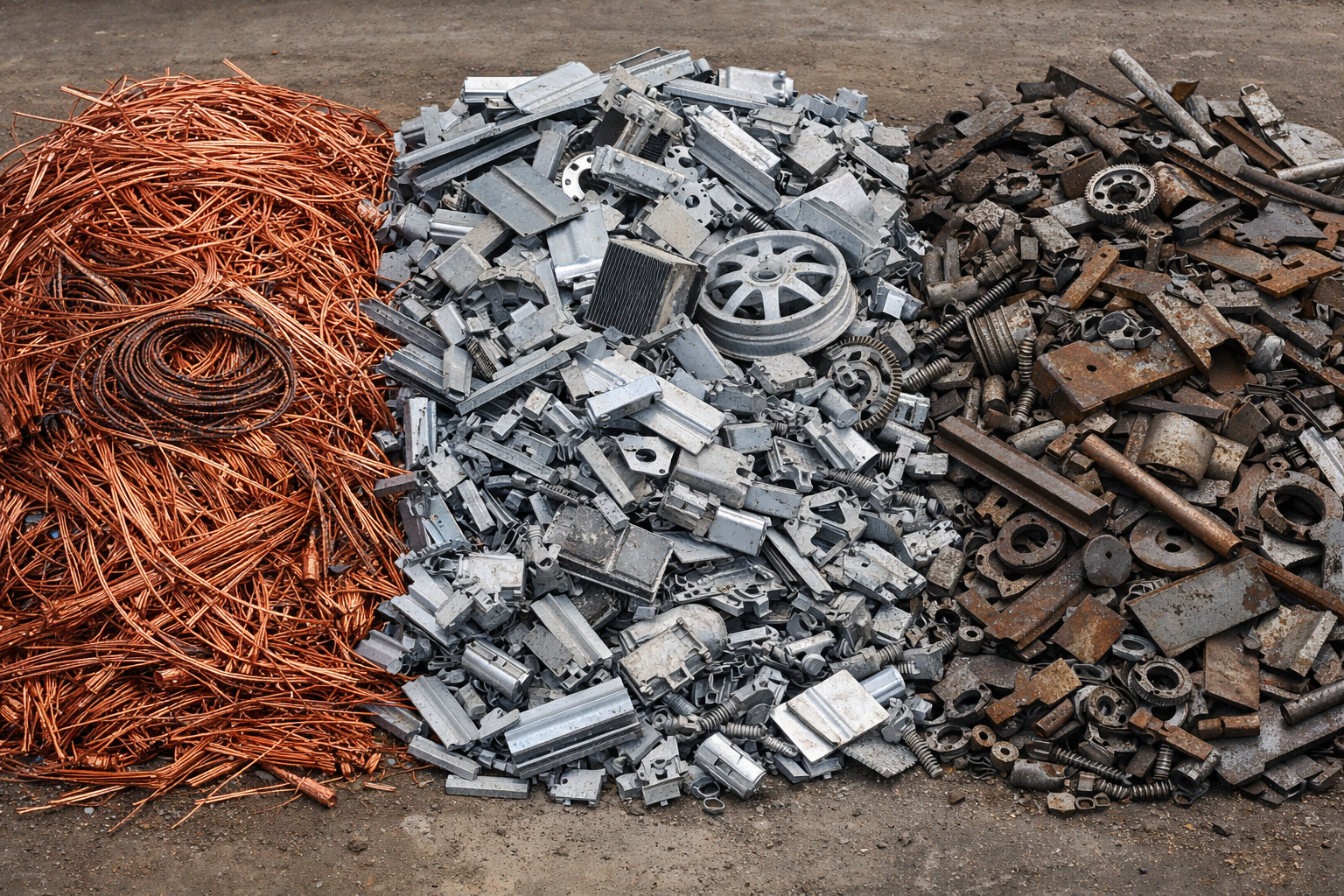
Common recoverable metals include:
Copper — wiring, pipes, motors, HVAC components
Aluminum — siding, fixtures, equipment housing, window frames
Steel and iron — structural components, machinery, rebar, shelving
Brass — valves, fittings, plumbing components
Stainless steel — food service equipment, medical devices, tanks
The key distinction from actual waste: these materials hold intrinsic value based on commodity markets. Unlike trash that costs money to haul away, scrap metal can generate income when handled through proper recycling channels.
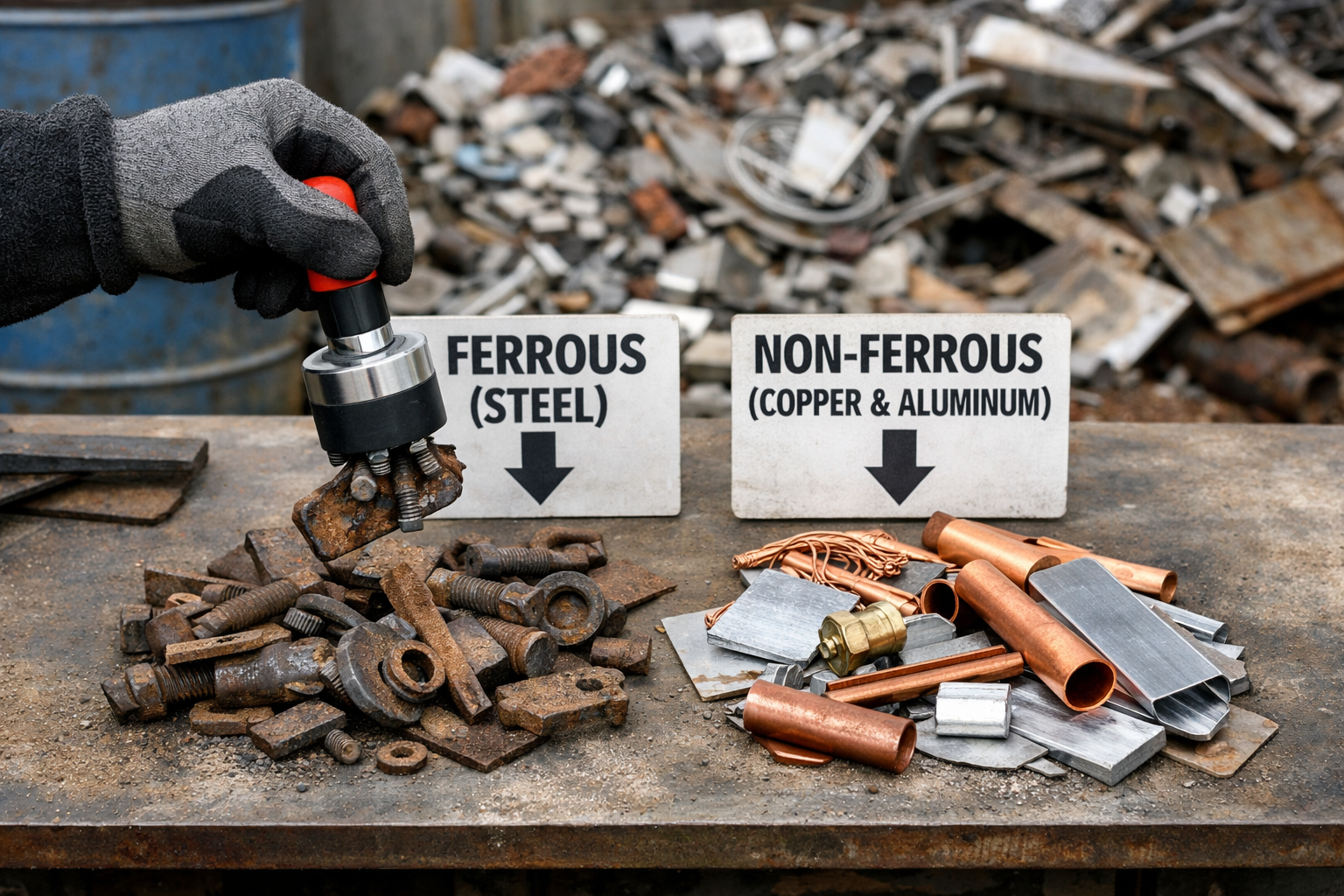
How to Identify What You Have: The Magnet Test
Before you can recover value from scrap, you need to know what you're working with. The simplest method takes about three seconds.
Grab a magnet. A basic refrigerator magnet works fine. Touch it to the metal in question.
If the magnet sticks: You have ferrous metal—steel or iron. These are the most common scrap materials and typically bring lower per-pound rates.
If the magnet doesn't stick: You likely have non-ferrous metal—copper, aluminum, brass, or stainless steel. These command significantly higher prices.
This quick test helps you understand the general composition of your scrap pile before you ever talk to a recycler. A load that's mostly non-ferrous will yield substantially more than the same weight in steel.
For copper specifically, look for the distinctive reddish color. Copper wire (even when insulated), copper pipes, and copper tubing from HVAC systems are among the most valuable common scrap items. Brass has a yellowish tint and shows up in older plumbing fixtures, valve bodies, and fittings.
Knowing what you have—even approximately—puts you in a better position to understand quotes and ensure you're getting fair value.
The Numbers: Disposal Costs vs. Scrap Revenue
Let's run through a realistic comparison for a Sacramento-area operation generating moderate scrap volume.
Scenario: A manufacturing facility produces roughly 2,000 pounds of mixed scrap metal monthly—steel offcuts, worn equipment parts, obsolete fixtures, some copper wire from electrical work.
Traditional Disposal Approach
Mixed dumpster service for that volume typically runs $400–600 per month, depending on pickup frequency and container size. Metal is heavy, and hauling charges reflect that weight. The material ends up in a landfill mixed with actual garbage.
Annual cost: approximately $4,800–7,200
Scrap Recycling Approach
That same 2,000 pounds, collected by a recycler, has market value. Basic steel scrap (the majority of most loads) currently trades in the range of $0.05–0.10 per pound at lower grades. But most business scrap contains at least some higher-value material—copper wiring from equipment, brass fittings, aluminum housings.
A typical mixed commercial load with even modest copper or aluminum content might return $150–400 monthly, depending on composition and current market prices.
Annual return: approximately $1,800–4,800
The Real Swing
Instead of spending $500 per month on disposal, you might receive $250. That's a $750 monthly difference—roughly $9,000 annually—on a relatively modest scrap volume.
These figures scale with your operation. Construction sites clearing a demolition project, warehouses replacing racking systems, or hospitals upgrading equipment deal with substantially larger quantities. A single equipment replacement project can generate thousands of pounds of recoverable metal.
Why Mixed Dumpsters Cost You Twice
Here's where many businesses unknowingly hurt themselves. Throwing scrap metal into regular dumpsters triggers two separate financial penalties.
First, you pay disposal fees on material that has value. Dumpster services charge by pickup frequency, container size, or tonnage. Metal is dense—a cubic yard of steel scrap can weigh over 1,000 pounds. You're paying premium hauling rates to remove something worth money.
Second, you forfeit the scrap's market value entirely. Once metal hits a mixed waste stream, it's gone. Some transfer stations do extract metals, but you never see that recovery. The value exits your business permanently.
This double loss becomes significant for metal-heavy operations. Auto shops dealing with brake rotors and wheel rims. Construction contractors with rebar offcuts and copper wire. Warehouses pulling out old steel racking. Manufacturing plants with daily production scrap.
A dedicated scrap pickup relationship changes this entirely. Recyclable metals get separated from actual waste. You pay appropriate disposal rates only on true garbage, while recoverable materials generate income instead of expense.
For Sacramento-area contractors specifically, this matters for compliance too. CALGreen requires diversion of at least 65% of construction and demolition debris from landfills [1]. Recycling scrap metal counts toward that diversion requirement while simultaneously generating revenue—you're meeting regulatory obligations and improving your bottom line.
How Scrap Metal Pricing Works
Understanding the basics helps you evaluate quotes and make better decisions about when to schedule pickups.
Metal type matters most. Non-ferrous metals (copper, aluminum, brass) command substantially higher prices than ferrous metals (steel, iron). A load of clean copper wire yields many times more per pound than mixed steel. This is why the magnet test matters—knowing your load's composition helps you understand what to expect.
Condition affects value. Clean, sorted materials bring better rates than contaminated or mixed loads. Bare bright copper wire (stripped of insulation) is worth significantly more than insulated wire. Aluminum free of attachments prices higher than pieces with steel bolts or plastic components.
Market conditions shift constantly. Scrap prices track commodity markets, which respond to construction activity, manufacturing demand, global trade patterns, and general economic conditions. The price a recycler pays today might differ from rates a month ago. This isn't anyone trying to shortchange you—it's how commodity markets work.
Volume creates leverage. Larger loads often qualify for better per-pound rates. A one-time pickup of 500 pounds generates less favorable pricing than an ongoing relationship producing several thousand pounds monthly. Regular, predictable volume is worth something to recyclers.
Estimating weight: Most businesses struggle to gauge what they have. As a rough reference, a standard 55-gallon drum packed with mixed steel offcuts weighs approximately 400–500 pounds. A gaylord box (the large cardboard containers on pallets) filled with copper wire might weigh 800–1,200 pounds depending on how tightly it's packed.
Building Scrap Recovery Into Your Operations
Treating scrap as an asset requires some operational adjustments, but nothing complicated.
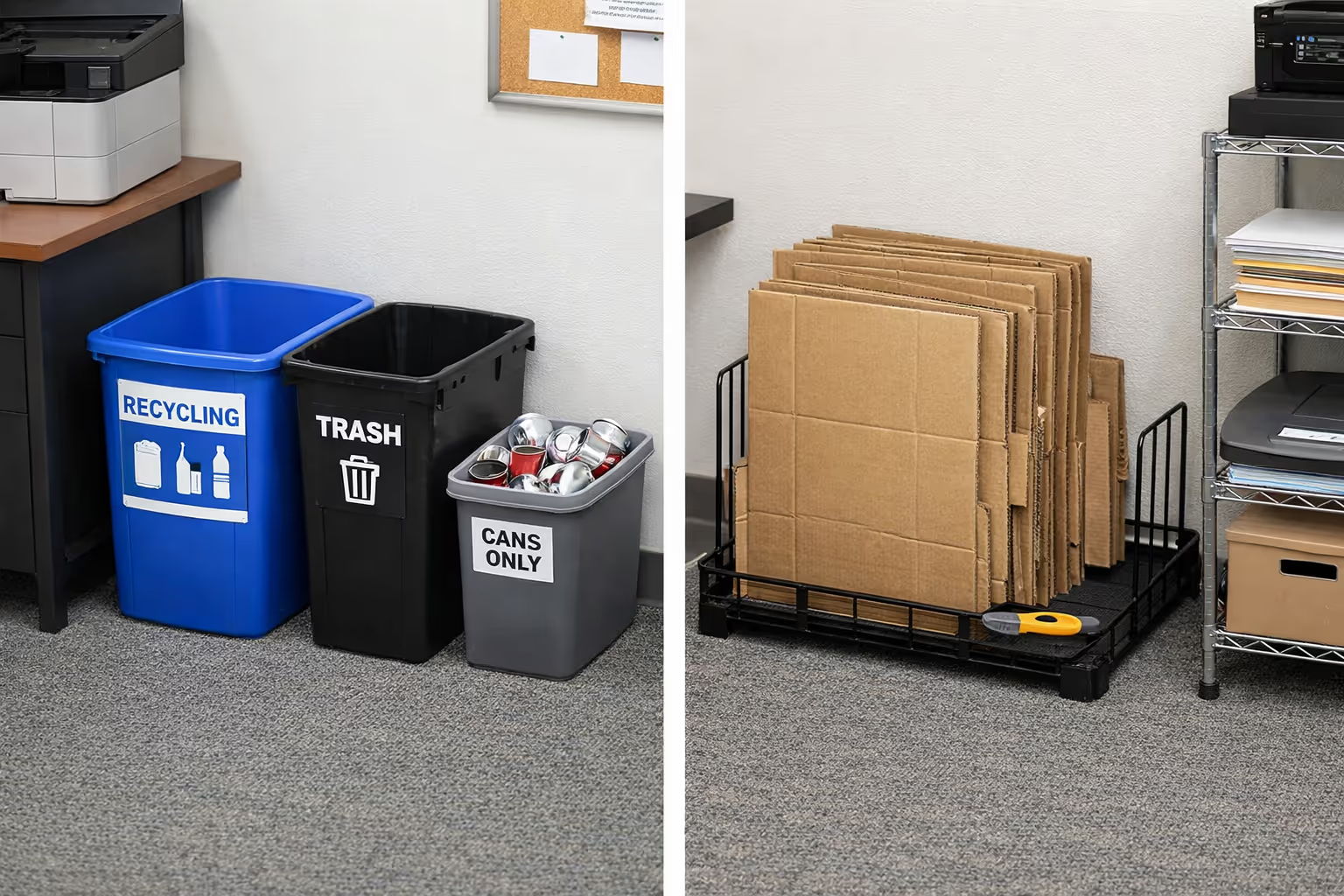
Designate collection areas. Set aside space for accumulating scrap metal separate from regular trash. Even a corner of your yard or a dedicated bin prevents valuable material from accidentally ending up in dumpsters. For larger operations, consider separate containers for ferrous and non-ferrous materials.
Sort when practical. Basic separation increases overall return. You don't need perfect sorting—recyclers handle final processing and grading. But keeping copper separate from steel, or aluminum separate from mixed scrap, ensures you receive appropriate pricing for higher-value materials rather than having everything weighed as a mixed load.
Schedule regular pickups. Rather than waiting until scrap becomes a space problem, establish recurring collection schedules. This keeps your facility clear while generating consistent income. For most commercial operations, monthly or bi-weekly pickups work well.
Track what you generate. Understanding your scrap output helps you forecast revenue and identify patterns. If equipment replacements or specific project phases produce metal waste, plan pickups accordingly. Over time, you'll develop a sense for what your operation generates and what it's worth.
Review pricing periodically. Markets change. A conversation with your recycler every few months keeps you informed about current rates and ensures you're receiving fair value based on prevailing conditions. A good recycler will be transparent about how they're pricing your materials.
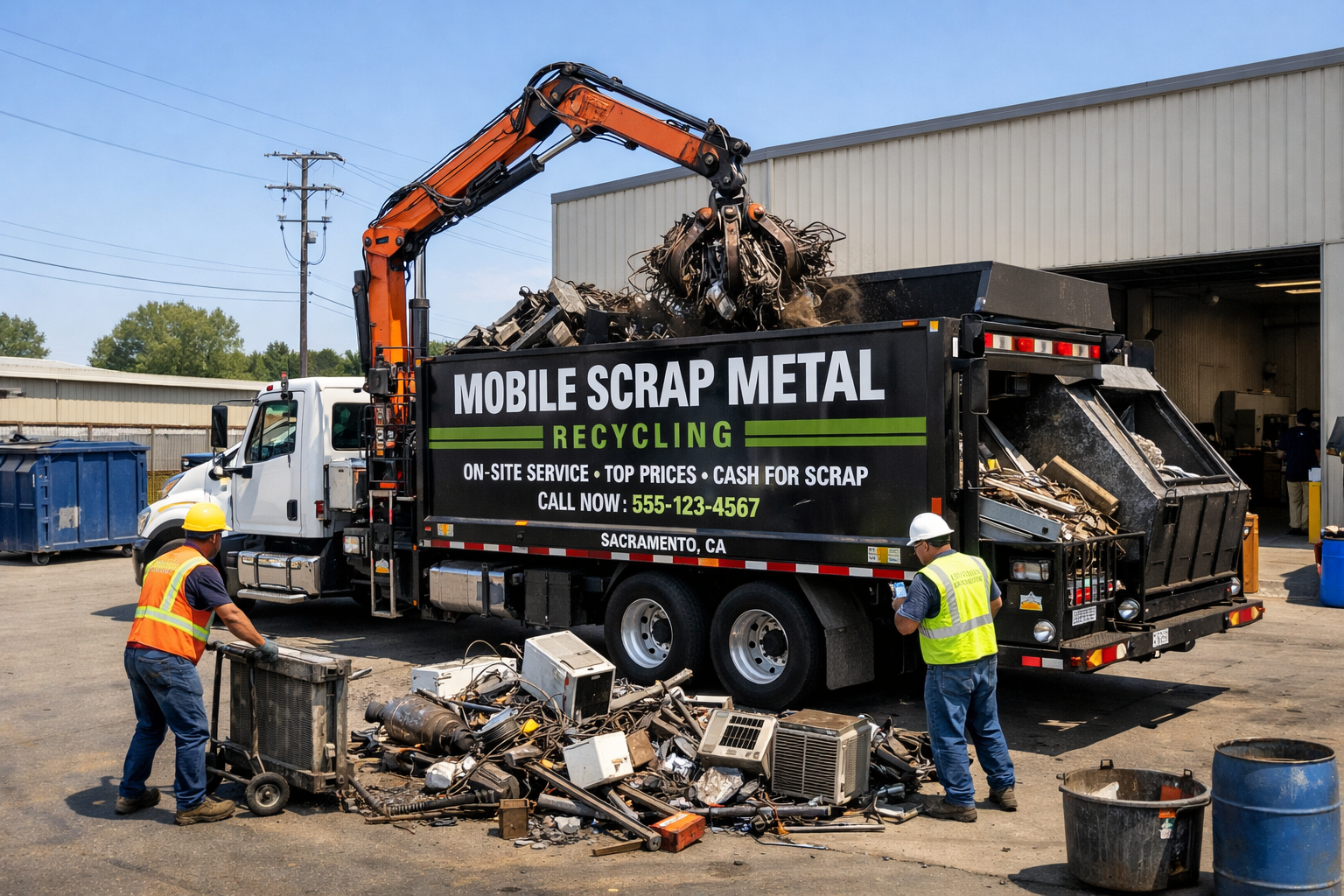
What Makes Mobile Pickup Different from Hauling It Yourself
Some businesses load trucks and drive scrap to a yard themselves. If you've done this, you know the reality: waiting in line behind other trucks, dealing with yard conditions (flat tires aren't uncommon), pulling employees off productive work, burning fuel and vehicle miles.
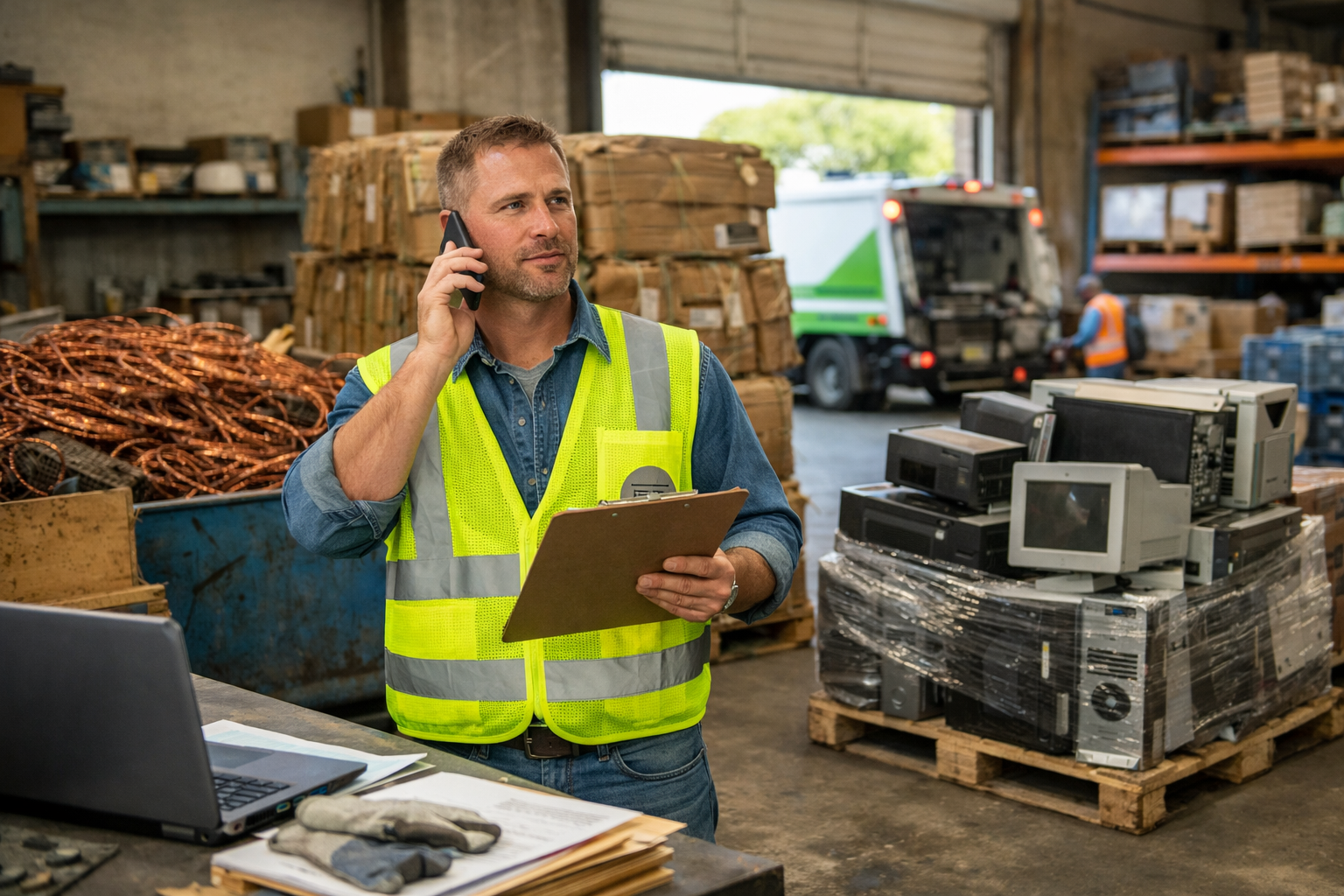
A mobile recycling service changes the math entirely. Instead of your team handling logistics, the operation comes to you.
For businesses, this means:
No employee time lost to hauling—your crew stays on the job
No vehicle wear, fuel costs, or liability exposure from hauling heavy loads
No minimum-load requirements that force you to stockpile material longer than you'd like
No need to own scales or sorting equipment
Professional handling with documentation for your records
The recycler evaluates materials on-site, provides transparent documentation of weights and grades, and handles payment according to established terms. Your team focuses on actual work rather than waste logistics.
This approach particularly benefits operations without dedicated waste management staff. The facilities manager at a hospital, the superintendent at a construction site, the owner of an auto shop—none of these roles include "make multiple trips to the scrap yard" in the job description. Mobile pickup removes that burden entirely.
Industries Where Scrap Economics Have the Biggest Impact
Certain sectors generate enough metal waste that scrap management significantly affects their operating costs.
Construction and demolition: Rebar offcuts, structural steel, copper wiring from electrical rough-in, aluminum framing, HVAC equipment—construction projects produce consistent, high-volume scrap. In California, CALGreen compliance requires documented diversion of construction debris [1]. Mobile recycling provides both the diversion pathway and the documentation to prove it.
Auto and tire shops: Brake rotors, wheel rims, engine components, exhaust systems, and body panels create steady metal accumulation. Shops that recycle rather than trash these materials often cover a meaningful portion of their overall waste costs through scrap income.
Manufacturing facilities: Production processes generate offcuts, rejected parts, worn tooling, and maintenance scrap. These materials appear daily, making regular pickup relationships particularly valuable. Treating production scrap as recoverable rather than disposable improves margins incrementally but consistently.
Warehouses and distribution centers: Steel racking, pallet jacks, conveyor components, equipment housing, and obsolete fixtures all become scrap eventually. Large facilities replacing infrastructure during expansion or renovation can recover significant value from what they're removing.
Healthcare facilities: Hospital beds, medical equipment frames, HVAC components, and building fixtures contain valuable metals. The Kaiser Permanente system, for example, regularly recycles equipment—bed frames and medical device housings contain substantial recoverable metal. Upgrading facilities presents an opportunity to recover value rather than simply dispose.
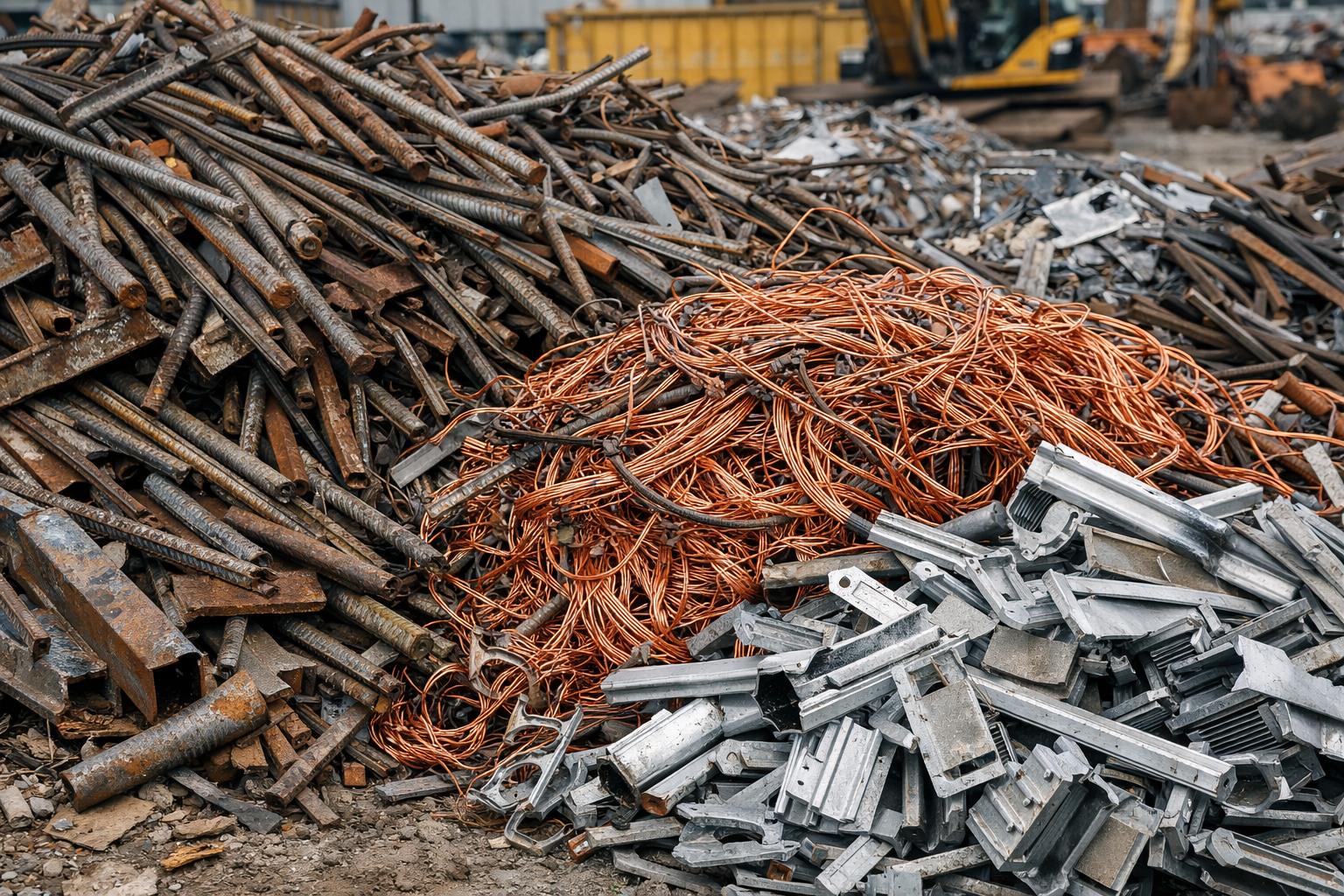
Getting Started: Know What You Have
Before scheduling your first pickup, take stock of what your operation generates.
Walk your facility. Identify where metal waste accumulates—storage areas, loading docks, equipment staging zones, even the dumpsters themselves. You might find material that's been getting thrown away simply because no one set up an alternative.
Estimate volume. You don't need precise weights for initial conversations. Rough approximations work fine. Is it a few hundred pounds monthly? Several thousand? Think in terms of containers: how many 55-gallon drums or gaylord boxes would hold what you generate?
Note metal types. General categories matter: copper, aluminum, steel, brass, mixed. Use the magnet test. Don't worry about exact grades—a recycler will evaluate specifics. But knowing you have "mostly steel with some copper wire" versus "about half aluminum" helps set realistic expectations.
Consider timing. Do you generate scrap consistently, or does it spike around particular projects or seasons? A construction company might have heavy volume during demolition phases and lighter volume during finishing work. Understanding your patterns helps structure pickup schedules that make sense.
With this information, you can have a productive conversation about what service arrangement works for your operation and what kind of return to expect.
Ready to See What Your Scrap Is Worth?
If your business generates scrap metal—even modest amounts—you're likely leaving money on the table with traditional disposal methods. The shift from waste expense to recoverable asset doesn't require major operational changes. It requires connecting with a recycler who can evaluate your materials and establish a pickup relationship that works for your situation.
For Sacramento and Northern California businesses, Willis Recycling provides on-site scrap metal pickup with fair, market-based evaluations. We handle the logistics so your team doesn't have to. Call (916) 271-2691 to discuss your situation and get a quick estimate based on what you're currently generating.
Frequently Asked Questions
How do I know if my scrap volume is worth recycling?
Most commercial operations generate enough metal to justify recycling over disposal. Even 500 pounds of mixed scrap has market value. A recycler can evaluate your typical output and recommend whether scheduled pickups or on-call service makes more sense. The threshold is lower than most businesses assume.
Do I need to sort my scrap metal before pickup?
Sorting isn't required—recyclers handle processing and final grading. However, basic separation of copper from steel ensures you receive appropriate pricing for higher-value materials rather than having them weighed as part of a mixed load at lower rates.
How often do scrap metal prices change?
Prices fluctuate with commodity markets, sometimes weekly. Establishing a relationship with a local recycler gives you access to current pricing information and ensures your materials are evaluated fairly based on prevailing market conditions rather than outdated quotes.
What's the difference between ferrous and non-ferrous metals?
Ferrous metals contain iron—steel and cast iron are the most common examples. A magnet sticks to them. Non-ferrous metals don't contain iron: copper, aluminum, brass, and stainless steel fall into this category. Non-ferrous metals typically command higher scrap prices due to their properties and manufacturing demand.
Can I recycle scrap metal from equipment that's been in service for years?
Age doesn't affect recyclability. Old equipment, obsolete fixtures, and worn machinery all contain recoverable metals. What matters is the type and condition of the metal itself, not how long it's been in use. Decades-old copper wire is still copper.
About Willis Recycling
Willis Recycling is a family-owned mobile recycling service based in Sacramento, serving businesses throughout Northern California. With nearly two decades of industry experience, we specialize in on-site scrap metal and cardboard pickup for construction sites, warehouses, auto shops, healthcare facilities, and commercial operations of all sizes. Our team handles evaluation, removal, and documentation—so your crew can stay focused on running your business. We show up when we say we will, provide fair evaluations based on current market conditions, and make the process straightforward.
Cited Works
[1] California Department of Resources Recycling and Recovery — "CALGreen Nonresidential Mandatory Measures: Construction Waste Management." https://calrecycle.ca.gov/lgcentral/library/canddmodel/instruction/requirement/