California's recycling laws are among the strictest in the country. If you run a business here, staying compliant isn't just about doing the right thing—it's about keeping your operations running without interruptions or unexpected costs.
We've worked with businesses across Northern California for nearly two decades, and we've seen what happens when recycling compliance falls through the cracks. The good news is that most problems are fixable, often more easily than people expect. This guide breaks down what California law actually requires, what happens when requirements aren't met, and how to identify and close gaps before they become expensive headaches.
What California Law Actually Requires From Businesses
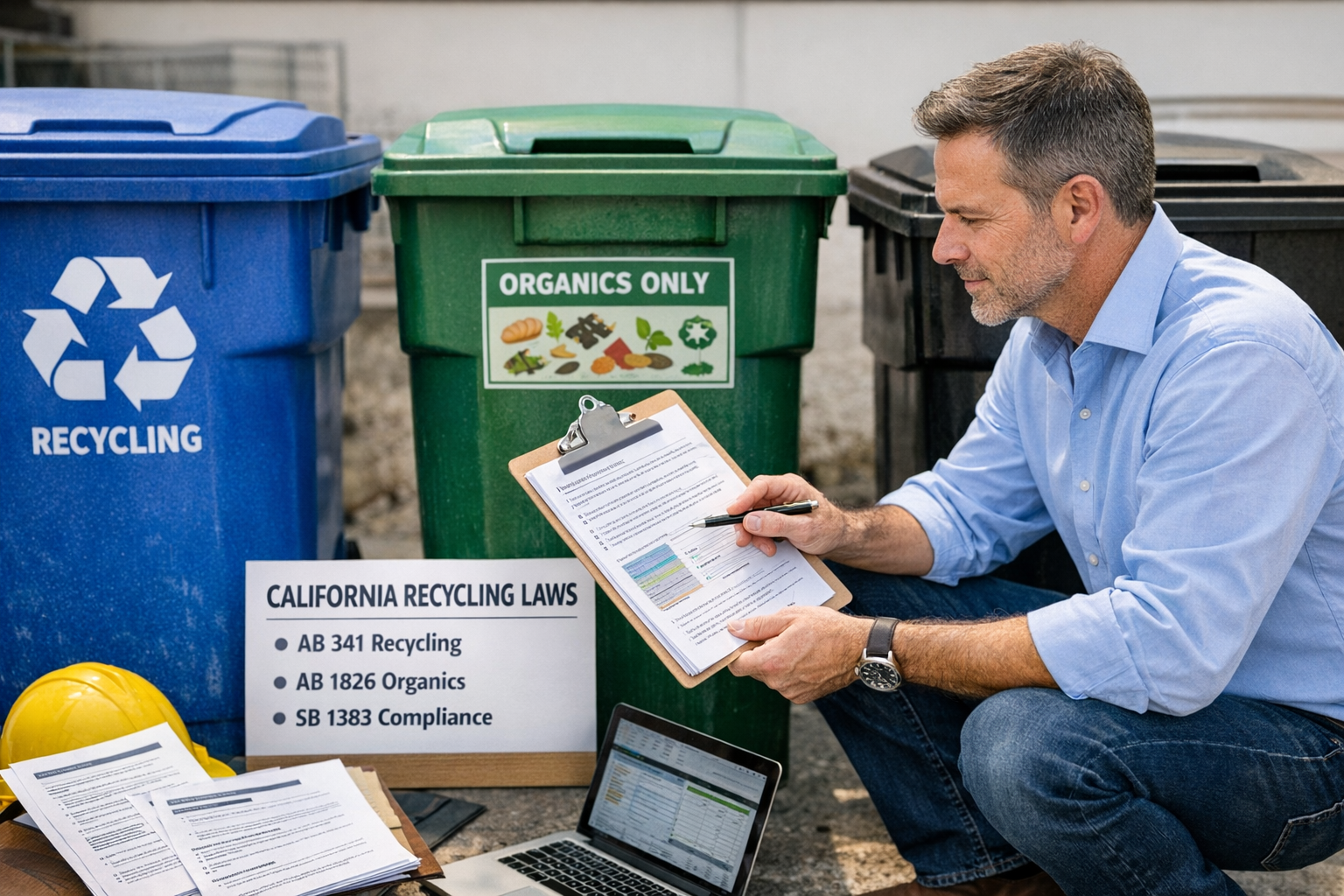
Three main regulations govern commercial recycling compliance in California. Each one targets different waste streams and applies to different types of businesses.
AB 341: Mandatory Commercial Recycling
Assembly Bill 341 requires businesses that generate four or more cubic yards of solid waste per week to have a recycling program in place [1]. This includes arranging for recycling service through your waste hauler or self-hauling recyclable materials to a facility.
The law applies to most commercial operations including offices, retail stores, restaurants, and industrial facilities. Multi-family residential properties with five or more units also fall under this requirement.
AB 1826: Mandatory Commercial Organics Recycling
Assembly Bill 1826 extended recycling requirements to organic waste—food scraps, green waste, food-soiled paper, and similar materials [2]. Initially this applied to businesses generating eight cubic yards or more of organic waste weekly, but thresholds have decreased over time.
Covered businesses must arrange for organic waste recycling services and take reasonable steps to ensure employees and contractors properly separate these materials.
SB 1383: Short-Lived Climate Pollutant Reduction
Senate Bill 1383 represents California's most aggressive push yet. This law requires the state to reduce organic waste disposal by 75% compared to 2014 levels [3]. For businesses, this means mandatory organic waste collection, contamination monitoring, and in some cases, edible food recovery programs.
SB 1383 affects nearly all businesses regardless of size. It requires haulers to report contamination, and local jurisdictions must conduct compliance inspections.
Waivers and Exemptions: When the Rules May Not Apply
Not every business faces the full weight of these requirements. California allows local jurisdictions to grant waivers in specific circumstances, and understanding these exemptions can save you unnecessary effort and expense.
De Minimis Waivers
If your business generates very small amounts of organic waste, you may qualify for a de minimis waiver. The threshold varies by jurisdiction, but generally applies to businesses producing less than a specified volume of organic waste per week.
To find out if you qualify, contact your local waste management authority or environmental health department. They can tell you the specific threshold in your area and walk you through the application process.
Physical Space Waivers
Some businesses simply don't have room for additional containers. If your facility lacks adequate space for organic waste bins—and there's no practical workaround—you may be eligible for a physical space waiver.
This typically requires documentation showing that adding containers would create safety hazards, violate fire codes, or otherwise be genuinely impractical. Your local jurisdiction will have specific criteria and application procedures.
How to Apply for a Waiver
Waivers aren't automatic. You'll need to:
Contact your local waste management authority to learn their specific waiver criteria
Gather documentation supporting your case (photos, measurements, waste generation records)
Submit a formal application and respond to any follow-up questions
Renew periodically—most waivers aren't permanent
Even if you think you might qualify, don't assume you're exempt until you have written confirmation from your local authority.
How Fines Actually Work in California
Understanding the penalty structure helps you assess your real risk level. Enforcement happens at both the state and local level, and penalties can add up for ongoing violations.
CalRecycle Enforcement
CalRecycle oversees statewide compliance and can impose administrative penalties of up to $10,000 per day for violations of recycling requirements [4]. These penalties apply to repeat offenders or businesses that ignore multiple warnings.
Most first-time violations result in a warning or notice of violation rather than immediate fines. CalRecycle typically follows an escalation process: education first, then warnings, then penalties for continued non-compliance.
Local Jurisdiction Enforcement
Your city or county enforces SB 1383 requirements directly. Local penalties vary but can range from $50 to $500 for first violations, escalating to $100 to $1,000 for second violations within 12 months [5]. Chronic non-compliance can result in daily penalties that accumulate over time.
Some jurisdictions have been more aggressive than others in enforcement. Check with your local environmental health department or waste management authority to understand the specific timeline in your area.
The Real Cost Beyond Fines
Direct penalties only tell part of the story. Non-compliance can also trigger:
Contract complications: Some commercial leases and vendor contracts now include environmental compliance clauses
Permit issues: Building permits and business licenses may require proof of waste management compliance
Reputation impact: Public records of environmental violations can affect customer perception, particularly for businesses in sustainability-focused industries
Quick Self-Assessment: Where Does Your Business Stand?
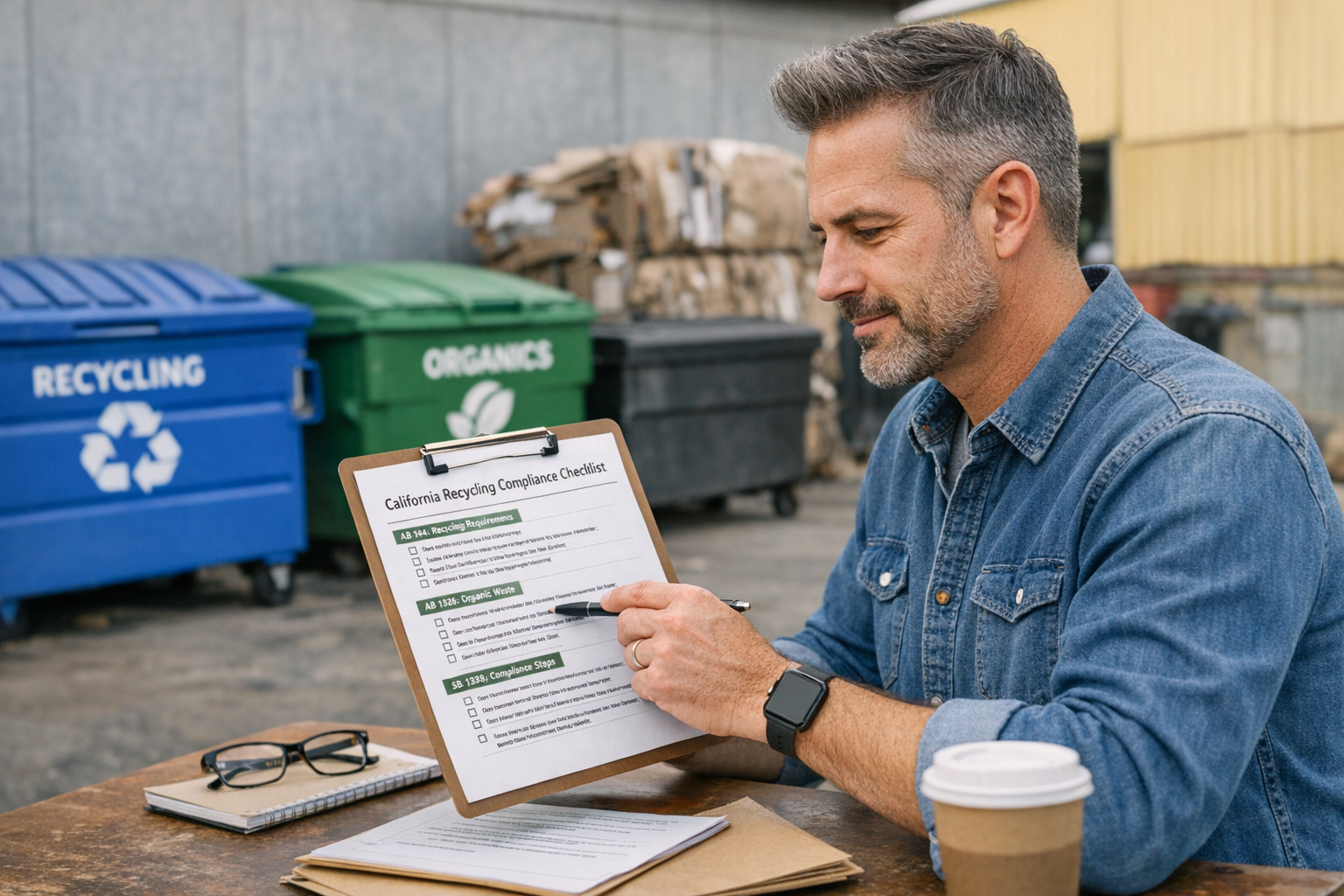
Use this checklist to identify likely compliance gaps. If you answer "no" or "I'm not sure" to any of these questions, you likely have something to address.
Recycling Program (AB 341)
Do you have a recycling container on-site?
Is your recycling service documented in your waste hauler contract?
Do employees know what materials go in recycling versus trash?
Is recycling actually happening, or are recyclables ending up in the garbage?
Organic Waste (AB 1826 and SB 1383)
Does your business generate food waste? This includes restaurants, grocery stores, hospitals, hotels, and many offices with break rooms
Do you have a separate container for organic waste?
Is organic waste collection specified in your hauler agreement?
Have you received any contamination notices from your waste hauler?
Food-generating businesses face the most scrutiny under current enforcement priorities.
Documentation and Training
Do you have written waste management procedures?
Are there training records showing employees understand the sorting requirements?
Do you have records of recycling and organic waste collection services?
SB 1383 specifically requires businesses to keep records demonstrating compliance.
Common Red Flags
These situations often indicate compliance problems:
| Situation | Likely Issue |
| Single trash container with no recycling | Missing basic AB 341 compliance |
| No food waste collection at restaurant or grocery | Missing SB 1383 compliance |
| Hauler sending contamination notices | Program exists but isn't working |
| No employee training documentation | Compliance cannot be demonstrated |
| Recyclables piling up with no pickup scheduled | Service gap |
Getting Back on Track: A Simple Action Sequence
If you've identified gaps, here's how to address them efficiently.
Step 1: Contact Your Waste Hauler (This Week)
Call your current waste management company and ask specifically about:
Recycling container options and pickup schedules
Organic waste collection services available in your area
Current pricing for adding these services
What materials they accept in each container
Whether they can provide a waste assessment or audit of your current setup
Many haulers are required to offer waste assessments, and this can help you understand exactly what you're generating and what services you need. Don't be shy about asking—it's part of their job to help you comply.
Many businesses discover that recycling services are already available through their existing provider at reasonable additional cost—sometimes minimal depending on your current contract.
Step 2: Assess Your Waste Stream (Within Two Weeks)
Walk through your facility and identify:
Where waste is generated: Break rooms, production areas, shipping and receiving, offices
What types of waste predominate: Paper and cardboard? Metal? Food scraps? Mixed materials?
Current container placement: Are recycling and organic bins convenient where waste is actually created?
This quick audit reveals both what you need and where to put it.
Step 3: Set Up Proper Container Systems (Within One Month)
Based on your assessment:
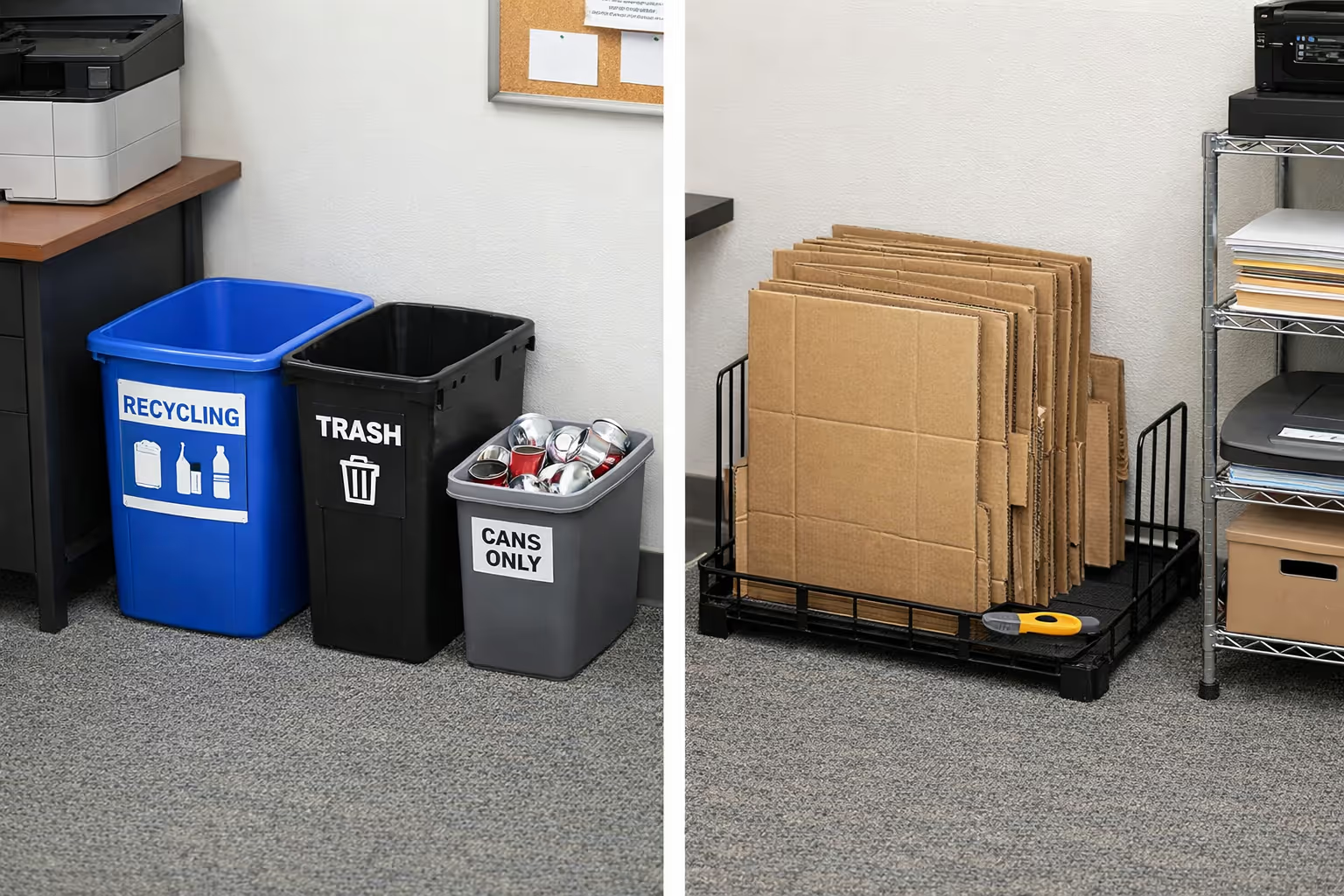
Place recycling containers next to every trash container
Add organic waste bins in food preparation and consumption areas
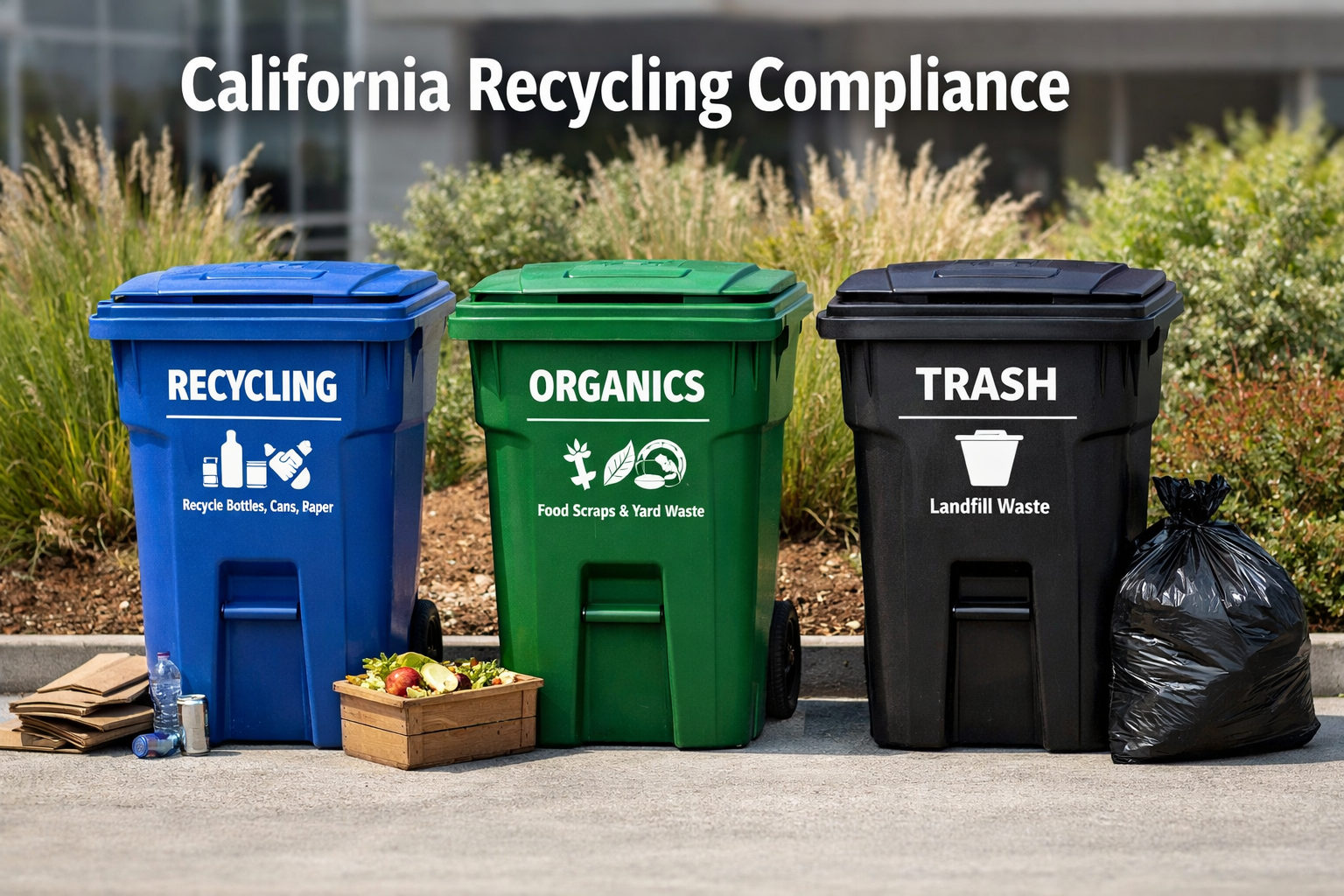
Label all containers clearly with both text and pictures showing what goes where
Consider color-coding: blue for recycling, green for organics, black or gray for trash
Convenience drives compliance. If employees have to walk across the facility to recycle, they won't do it consistently.
Step 4: Train Your Staff (Within Six Weeks)
Training doesn't need to be elaborate, but it must happen. Cover:
What goes in each container type
Why compliance matters (briefly)
Who to ask if they're not sure about a specific item
Document that training occurred. Keep a sign-in sheet or training log.
Step 5: Establish Monitoring (Ongoing)
Check your containers weekly at first to catch problems early. Look for:
Contamination in recycling or organic bins
Recyclables ending up in trash
Full containers that aren't being serviced often enough
Address issues immediately. Small problems become enforcement issues if they persist.
Understanding the Two Parts of Commercial Recycling
Here's something that confuses a lot of business owners: commercial recycling compliance typically involves two different types of service providers, and mixing them up creates headaches.
What Your Municipal Hauler Does
Your franchise waste hauler—the company that picks up your regular trash—typically handles:
Standard recyclables (bottles, cans, paper, small cardboard)
Organic waste and food scraps
Regular trash
This is the service covered under your city or county's franchise agreement. For organic waste compliance under SB 1383, this is usually your primary point of contact.
What a Private Recycling Service Like Willis Recycling Does
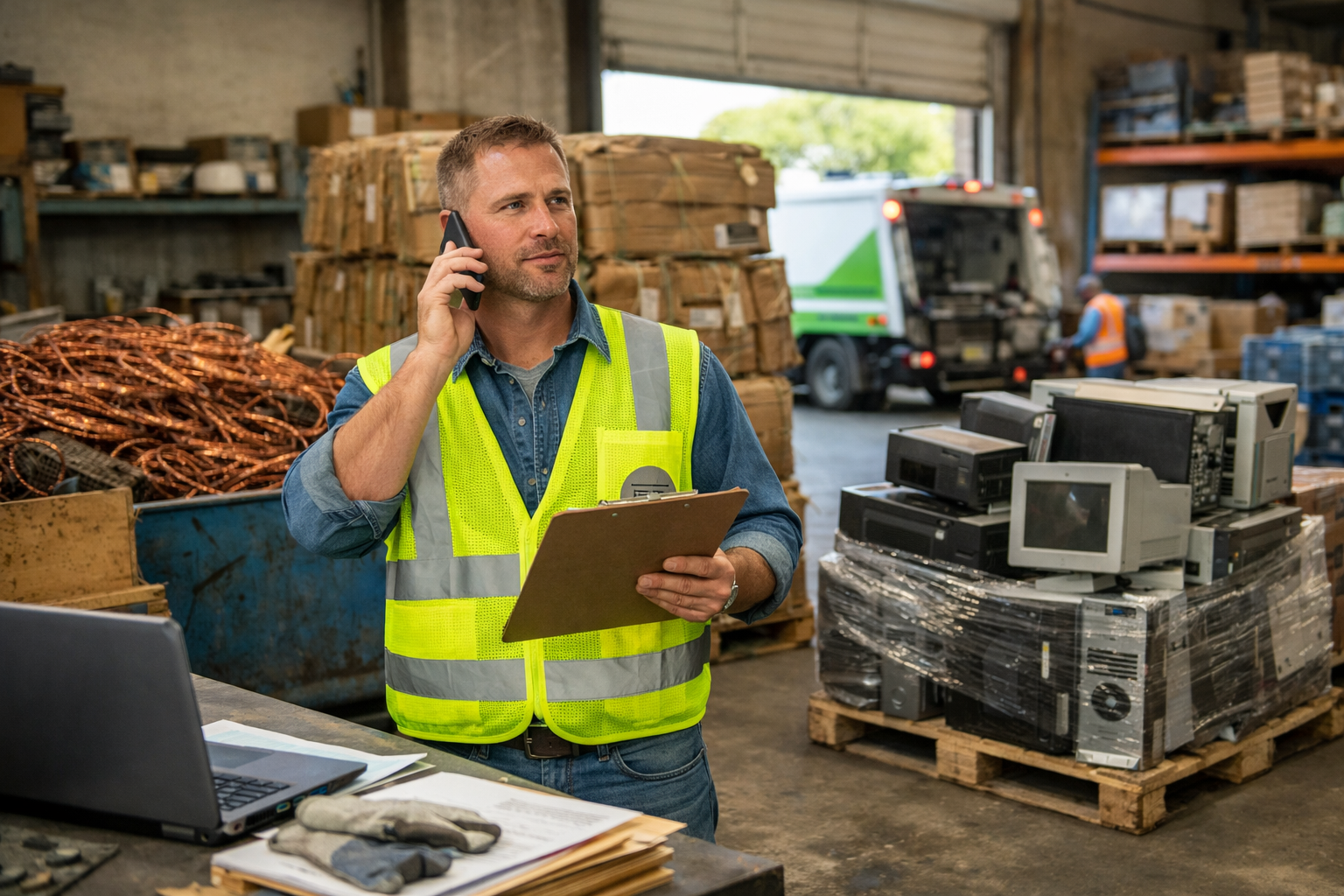
Private recycling services like ours handle different materials that don't fit into the standard hauling model:
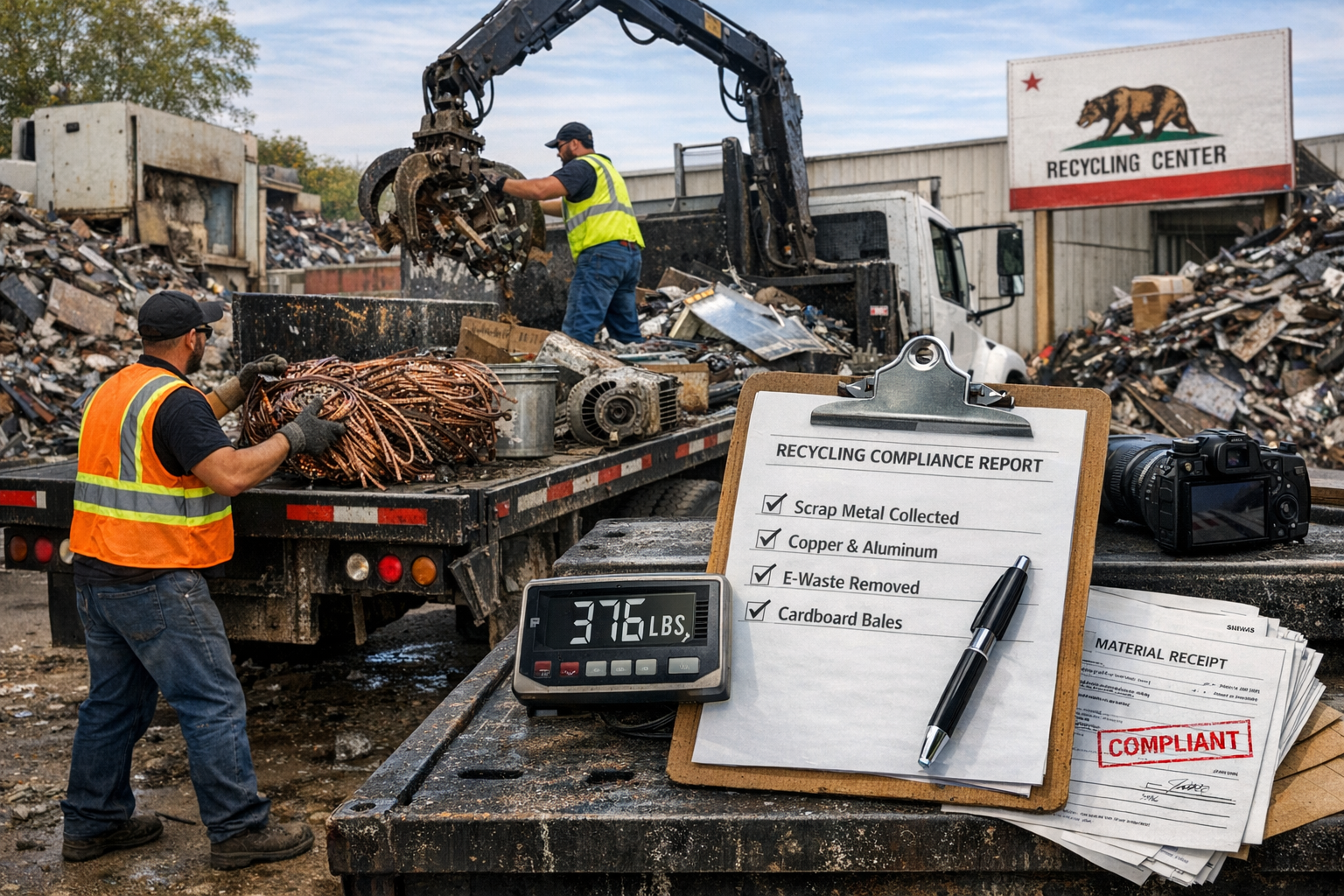
Bulk scrap metal: Copper, brass, aluminum, steel, iron, insulated wire
Large cardboard accumulations: Baled cardboard from retail and warehouse operations
E-waste and equipment: Old computers, HVAC units, industrial equipment
Construction and demolition recyclables: Metal off-cuts, wire, fixtures
These materials often have commodity value, and specialized handling keeps them out of the waste stream while potentially returning value to your business.
When You Need Both
Most businesses generating significant recyclable materials need both:
Municipal hauler service for daily/weekly trash, standard recycling, and food waste
Private recycling pickup for bulk metals, cardboard bales, equipment, and construction materials
This isn't an either/or situation—it's about matching the right service to the right material.
Handling Scrap Metal, Cardboard Bales, and E-Waste
For scrap metal, cardboard bales, and similar recyclable materials, on-site pickup services can simplify compliance while potentially returning value to your business.
Willis Recycling provides mobile pickup for commercial operations throughout the Sacramento region and Northern California. The service includes:
On-site evaluation of your recyclable materials
Scheduled removal of scrap metals, cardboard bales, and e-waste
Documentation showing proper handling for your compliance records
Fair compensation for valuable materials based on current market conditions
Materials commonly handled include copper, brass, aluminum, steel, insulated wire, HVAC units, and large cardboard accumulations. This addresses the recyclables portion of your compliance obligations while clearing space and potentially offsetting costs.
For Organic Waste Compliance
For organic waste compliance, your franchise waste hauler is typically the right contact. Most major haulers now offer food waste collection services designed to meet SB 1383 requirements. Some areas also have specialized composting services for businesses with high organic waste volumes.
If you generate edible surplus food, organizations like food banks may be able to accept donations. SB 1383 specifically requires certain large food generators to participate in food recovery programs.
Industry-Specific Considerations
Different business types face different compliance challenges.
Construction and Demolition
California's CALGreen building code requires at least 65% diversion of construction and demolition debris from landfills [6]. This means documenting that scrap metal, wood, concrete, and cardboard from your job sites are recycled rather than dumped.
Mobile pickup services for scrap metal and other recyclables can help meet these requirements while keeping job sites clear. Having documentation of proper disposal is essential for final inspections and project sign-offs.
Restaurants and Food Service
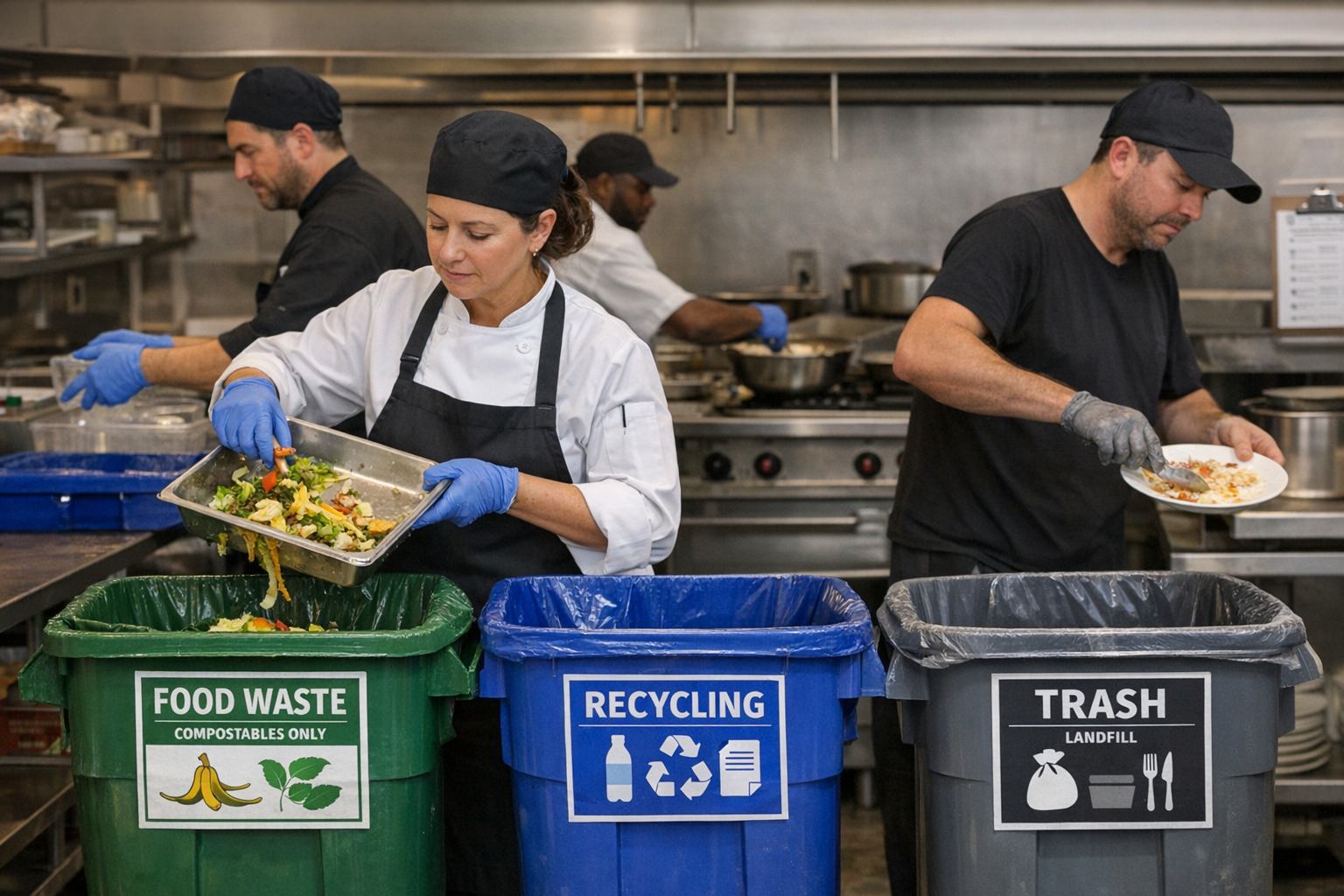
Food service operations face the most intensive organic waste requirements. Your priorities should be:
Separating food scraps from other waste
Arranging organic waste hauling through your municipal provider
Implementing back-of-house training for kitchen staff
Considering a food recovery partnership for surplus prepared food
Retail and Warehousing
Cardboard typically dominates the waste stream for retail operations. If you're baling cardboard, ensure you have a system for getting those bales picked up regularly. Accumulating bales without a pickup plan creates both compliance gaps and operational problems.
Healthcare and Facilities
Large facilities like hospitals generate diverse waste streams requiring careful segregation. Equipment replacement cycles create periodic surges in recyclable metal. Planning for these events with scheduled pickup services prevents backlogs.
What If You Receive a Violation Notice?
If you get a notice from your city, county, or CalRecycle:
Read it carefully to understand exactly what violation is alleged
Respond by the deadline specified in the notice
Document what you're doing to address the problem
Keep records of communications with the enforcement agency
Most enforcement actions begin with educational contact or warnings. Demonstrating good-faith efforts to comply typically prevents escalation to financial penalties.
If you're in active correspondence with an enforcement agency, consider consulting with an environmental compliance specialist for specific guidance on your situation.
Frequently Asked Questions
What size business needs to worry about recycling compliance in California?
Most businesses are covered by at least one regulation. AB 341 applies if you generate four or more cubic yards of solid waste weekly. SB 1383 applies to virtually all businesses regardless of size for organic waste requirements. Even small operations should have basic recycling and organic waste separation in place, unless they've obtained a valid waiver from their local jurisdiction.
How much are California recycling fines for businesses?
Penalties vary by jurisdiction and violation type. Local SB 1383 penalties typically range from $50-$500 for first violations, escalating for repeat offenses. CalRecycle can impose penalties up to $10,000 per day for serious or ongoing violations, though this level is reserved for egregious cases. Most businesses receive warnings before facing fines, and demonstrating good-faith compliance efforts goes a long way.
Can I handle compliance myself or do I need a consultant?
Most small to mid-sized businesses can achieve compliance without specialized consultants. The key steps—arranging hauler services, placing proper containers, and training staff—are straightforward. Larger operations with complex waste streams or those facing active enforcement may benefit from professional assistance. Start with your waste hauler's assessment services before paying for outside help.
How often do inspections happen?
Inspection frequency varies by jurisdiction and is often complaint-driven. High-priority businesses like restaurants and grocery stores may see more frequent visits. Maintaining good documentation protects you whether an inspector shows up tomorrow or three years from now.
What happens to scrap metal and cardboard when I recycle it?
Recyclable materials enter the commodity market. Metals are processed and sold to manufacturers who use them to produce new products. Cardboard is pulped and manufactured into new paper and packaging. This circular process reduces demand for virgin materials and keeps usable resources out of landfills.
About Willis Recycling
Willis Recycling is a family-owned mobile recycling service based in Sacramento with nearly two decades of industry experience. The company provides on-site pickup for scrap metals, cardboard bales, and e-waste throughout Northern California, serving construction firms, retailers, healthcare facilities, and other commercial operations.
All pickups include proper documentation for compliance records, and the team handles sorting, loading, and transport so your staff can focus on their primary responsibilities. The service has maintained a 5-star rating through consistent, professional operations and fair evaluations.
Ready to address the recyclables portion of your compliance requirements? Call Willis Recycling at (916) 271-2691 to schedule a pickup or get a free on-site evaluation of your materials.
Cited Works
[1] CalRecycle — "Mandatory Commercial Recycling (AB 341)." https://calrecycle.ca.gov/recycle/commercial/
[2] CalRecycle — "Mandatory Commercial Organics Recycling (AB 1826)." https://calrecycle.ca.gov/recycle/commercial/organics/
[3] CalRecycle — "Short-Lived Climate Pollutants (SB 1383)." https://calrecycle.ca.gov/organics/slcp/
[4] CalRecycle — "Enforcement and Compliance." https://calrecycle.ca.gov/lea/enforcement/
[5] California Legislative Information — "SB 1383 Enforcement Provisions." https://leginfo.legislature.ca.gov/
[6] California Building Standards Commission — "CALGreen Code." https://www.dgs.ca.gov/BSC/CALGreen